“It is easier to bamboozle people than it is to unbamboozle them.”
A colleague forwarded this exact phrasing to me during a particularly difficult week with absolutely no context. She just dropped the quote into our chat window right after a frustrating meeting about a failing marketing campaign. Initially, I dismissed the message as a cynical cliché born from corporate burnout. However, I soon realized the profound truth hiding inside those quirky words after watching our team stubbornly defend a broken strategy. Consequently, I started digging into the history of this fascinating observation.
The True Origin Story
Many people assume Mark Twain coined this famous phrase. However, the origin story actually begins with a prominent British economist named John Maynard Keynes. Keynes published a highly influential book in 1919 called “The Economic Consequences of the Peace.” Within this text, he sharply criticized the Treaty of Versailles. Furthermore, he directed his sharpest wit at the political leaders who negotiated the agreement.
Specifically, Keynes focused on the dynamic between British Prime Minister David Lloyd George and U.S. President Woodrow Wilson. Lloyd George wanted to moderate the harsh terms placed upon Germany. Unfortunately, he found it impossible to change Wilson’s mind after months of persuasion. Therefore, Keynes wrote his legendary observation about the stubbornness of human belief.
The Birth of the Bamboozle
Keynes noted a tragic flaw in the diplomatic process. He watched Lloyd George desperately try to reverse course.
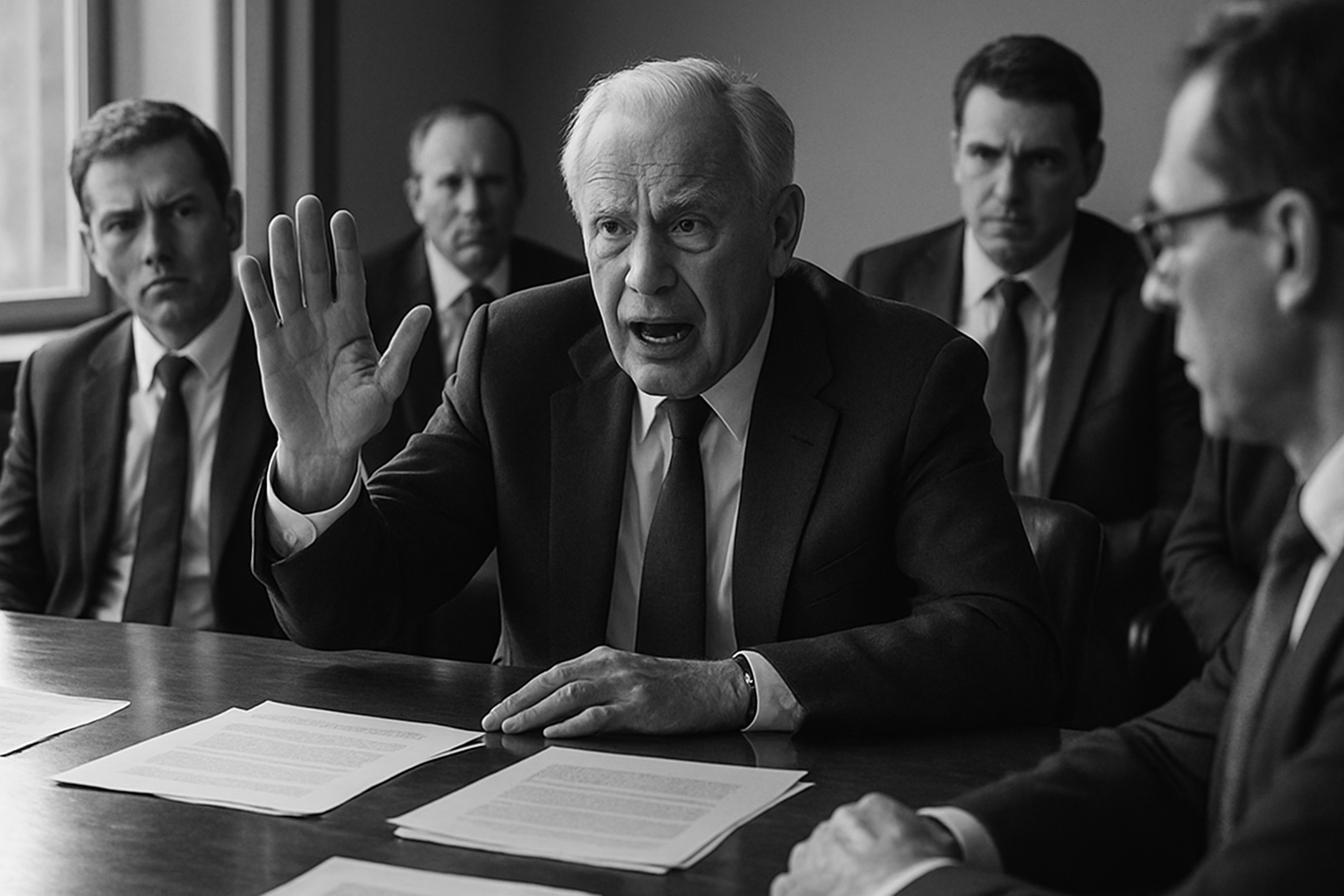
The British leader suddenly realized the treaty would ruin Europe. However, reversing the deception proved entirely impossible.
Keynes wrote that it was harder to de-bamboozle the old Presbyterian than it had been to bamboozle him. He explained the psychological reason behind this stubbornness. Admitting the error required Wilson to sacrifice his profound self-respect. Thus, the president clung to the fabricated narrative to protect his fragile ego.
Historical Context at Versailles
World leaders gathered at the Palace of Versailles following the bitter end of World War I. French Prime Minister Georges Clemenceau, Lloyd George, and Wilson controlled the high-stakes negotiations. Initially, Wilson believed the proposed treaty provisions punished Germany too harshly. Yet, the other powerful figures eventually convinced him to support the severe economic penalties.
Keynes watched this diplomatic dance with growing horror. He firmly believed the crushing demands would inevitably collapse the German economy. As a result, the entire European region would suffer catastrophic financial harm. He watched Lloyd George realize this exact danger at the eleventh hour. Meanwhile, Wilson refused to alter his newly formed convictions about the treaty.
The Psychology of the Peace
This rigid mindset inspired Keynes to invent his famous terminology. He realized that admitting deception requires a person to sacrifice their pride. Consequently, Wilson could not abandon his beliefs because doing so threatened his profound self-respect. The president had publicly committed to the harsh treaty terms. Therefore, changing his mind meant looking foolish before the entire world.
Keynes understood that leaders prioritize their public image over objective reality. Furthermore, he recognized the danger of manipulating powerful people. Once you convince a leader to adopt a false premise, you lose control of the narrative. The deception takes root deeply within their personal identity.
How the Quote Evolved
The catchy phrase immediately captured the public imagination. For example, a Canadian newspaper in Saskatoon paraphrased the economist’s witty remark in 1920. The journalist applied the concept to the American government’s struggle with the Senate. Thus, the specific jab at Wilson began transforming into a broader political truth.
Writers quickly realized the phrase applied to more than just one stubborn president. The word itself carried a playful yet sharp sting. Consequently, journalists started using it to describe local political battles. The concept of the bamboozle entered the daily political lexicon.
Norman Angell and the Public Mind
By 1927, Nobel Peace Prize winner Norman Angell adapted the expression further. He published a book exploring the psychological vulnerabilities of the general public. Angell argued that politicians easily manipulated common citizens during wartime. Furthermore, he declared that it is easier to bamboozle than to debamboozle the masses.

This pivotal shift removed the specific target from the original quote. Instead of mocking one stubborn president, the phrase now described a universal human flaw. Therefore, the saying became a timeless warning about mass deception. Angell warned that governments become helpless against the public passions they create.
The Mechanism of Press Demagogy
Angell dedicated an entire chapter to the mechanics of press demagogy. He observed how newspapers actively encouraged public folly to sell more copies. Consequently, the media built a powerful echo chamber of misinformation. Once the public embraced these sensational lies, politicians had to follow suit. They could not risk alienating their enraged voters.
Therefore, the initial bamboozle created a vicious cycle of political cowardice. Leaders became prisoners of the very lies they helped spread. Furthermore, Angell realized that facts completely lost their persuasive power in this environment. The emotional thrill of the deception always overpowered the boring reality of the truth.
Variations in the 1930s
Over the decades, writers and politicians morphed the wording into several distinct variations. Lionel Robbins, a leading British economist, recycled the concept in 1934. He applied the phrase to U.S. President Franklin D. Roosevelt during the Great Depression. Robbins noted that advisors found it easier to bamboozle a President than to debamboozle him.
Additionally, journalists began playing with the hyphenation and prefixes. Carter Field wrote a newspaper column in 1936 discussing blind political loyalty. He claimed it is much easier politically to bamboozle than to un-bamboozle. Eventually, writers dropped the hyphens entirely.
Solidifying the Modern Phrasing
Malcolm W. Bingay solidified the modern phrasing in a 1945 Detroit Free Press column. He wrote the exact words we use today. He stated simply that the difficulty is that it is easier to bamboozle people than it is to unbamboozle them. This streamlined version removed all specific political references. As a result, it became a universal proverb.
Unfortunately, modern internet culture frequently misattributes the saying to Mark Twain or Carl Sagan.

People love attaching famous quotes to beloved historical figures. In contrast, historians maintain that Keynes definitely sparked the original linguistic fire.
The Cultural Impact of Deception
This family of sayings resonates deeply within our modern information ecosystem. We constantly face a barrage of political propaganda and sophisticated marketing campaigns. As a result, the quote perfectly captures the frustration of fighting widespread misinformation. People naturally cling to their initial beliefs to protect their fragile egos.
The catchy nature of the word “bamboozle” also guarantees the quote’s survival. It sounds playful, yet it describes a deeply sinister manipulation of truth. Indeed, this linguistic contrast makes the warning highly memorable. We use humor to process the dark reality of human gullibility.
The Science of Belief Perseverance
Furthermore, psychologists study the exact phenomenon that Keynes casually observed a century ago. Source Researchers call this cognitive bias “belief perseverance.” Once a person accepts a false narrative, they aggressively reject any corrective data. Therefore, debunking a lie requires significantly more effort than telling the initial falsehood.
Scientists have proven that our brains perceive contradictory facts as physical threats. Consequently, we trigger a fight-or-flight response when someone challenges our core beliefs. This biological reality perfectly explains Wilson’s stubborn behavior at Versailles. He literally could not process the truth without experiencing severe mental distress.
The Backfire Effect
Modern researchers also identified a related concept called the backfire effect. Source Sometimes, presenting factual evidence actually strengthens a person’s belief in a lie. The individual feels attacked, so they double down on their original position.
Thus, attempting to unbamboozle someone can actively make the situation worse. This terrifying psychological trap validates Keynes’s gloomy observation. We literally wire our brains to resist correction. Therefore, the initial deception holds an immense evolutionary advantage over the subsequent truth.
Author’s Life and Broader Views
John Maynard Keynes remains one of the most influential economic thinkers in history. He fundamentally transformed how governments manage their financial systems during crises. Specifically, he argued that nations should actively spend money to escape severe economic depressions. Consequently, his revolutionary theories shaped global financial policy for decades.
Beyond his academic brilliance, Keynes possessed a razor-sharp wit. He frequently mingled with the famous Bloomsbury Group in London. This elite circle included celebrated writers like Virginia Woolf and E.M. Forster.

Naturally, this literary environment sharpened his ability to craft memorable, biting prose.
Economics as a Human Drama
Keynes always viewed economics through a deeply human lens. He understood that irrational emotions and stubborn pride drove financial markets. Thus, his famous quote perfectly aligns with his broader worldview. He knew that human psychology dictated global outcomes just as much as mathematical formulas.
He refused to treat people as perfectly rational actors. Instead, he observed their flaws, fears, and foolishness. This realistic approach made his economic theories incredibly practical. Furthermore, it allowed him to write history with the dramatic flair of a novelist.
Modern Usage in the Digital Age
Today, the quote frequently appears in discussions about social media algorithms and fake news. Fact-checkers intimately understand the painful truth behind the famous economist’s words. They spend countless hours trying to unbamboozle citizens who fell for viral hoaxes. Unfortunately, the original lie always travels faster than the eventual correction.
The internet accelerates the bamboozle process to terrifying speeds. A fabricated story can reach millions of readers in mere minutes. Meanwhile, the painstaking work of debunking that story takes days. Therefore, the truth constantly struggles to catch up with the lie.
Defending Against the Bamboozle
Additionally, educators use the phrase to teach critical thinking skills. Source Teachers warn students to rigorously evaluate information before accepting it as fact. After all, preventing the initial deception is our only reliable defense strategy.
We must train our minds to pause before sharing sensational news. Skepticism serves as our strongest shield against manipulation. Once the bamboozle takes root, extracting it becomes a monumental task. Consequently, proactive media literacy is absolutely essential for a healthy society.
Conclusion: The Enduring Truth
In summary, John Maynard Keynes gave us a profound psychological insight disguised as a witty insult. He watched world leaders make catastrophic mistakes simply because they refused to admit fault. Today, we see this exact same tragedy play out on social media platforms every single day.
We must remain constantly vigilant against manipulation. Protecting our minds from the initial bamboozle is our greatest responsibility. Ultimately, seeking the truth requires immense courage, humility, and a willingness to admit when we are wrong.