“I don’t believe in astrology; I’m a Sagittarian and we’re skeptical.”
The first time this line landed for me, it arrived with no greeting. A colleague dropped it into a Monday-morning chat thread. He had just survived a brutal launch week. Meanwhile, I had spent the weekend doom-scrolling horoscopes I swore I hated. The joke stung, because it sounded like me. Then it made me laugh, which felt like permission.
However, a good quote never stops at the laugh. It also leaves a trail. So I followed that trail into old joke collections, comic strips, and magazine letters. Along the way, the quote picked up new zodiac signs, new punchlines, and a famous name.

Why this quote works so well
This line wins because it contradicts itself in public. It claims skepticism, yet it uses a star sign as evidence. That clash creates the snap. Additionally, it flatters the reader who feels rational. Even if you enjoy astrology, you still get the joke. Therefore, the quote travels easily across friend groups.
The structure also invites endless customization. You can swap “Sagittarian” for any sign. You can also tweak the trait, like “scientific” or “too practical.” As a result, the line behaves like a meme before memes. People repeat it because it fits their voice.
Still, the popularity creates confusion. Many people attach the line to a famous thinker. Others assume it started as a modern internet quip. In contrast, the paper trail points to a much earlier comedic pattern.
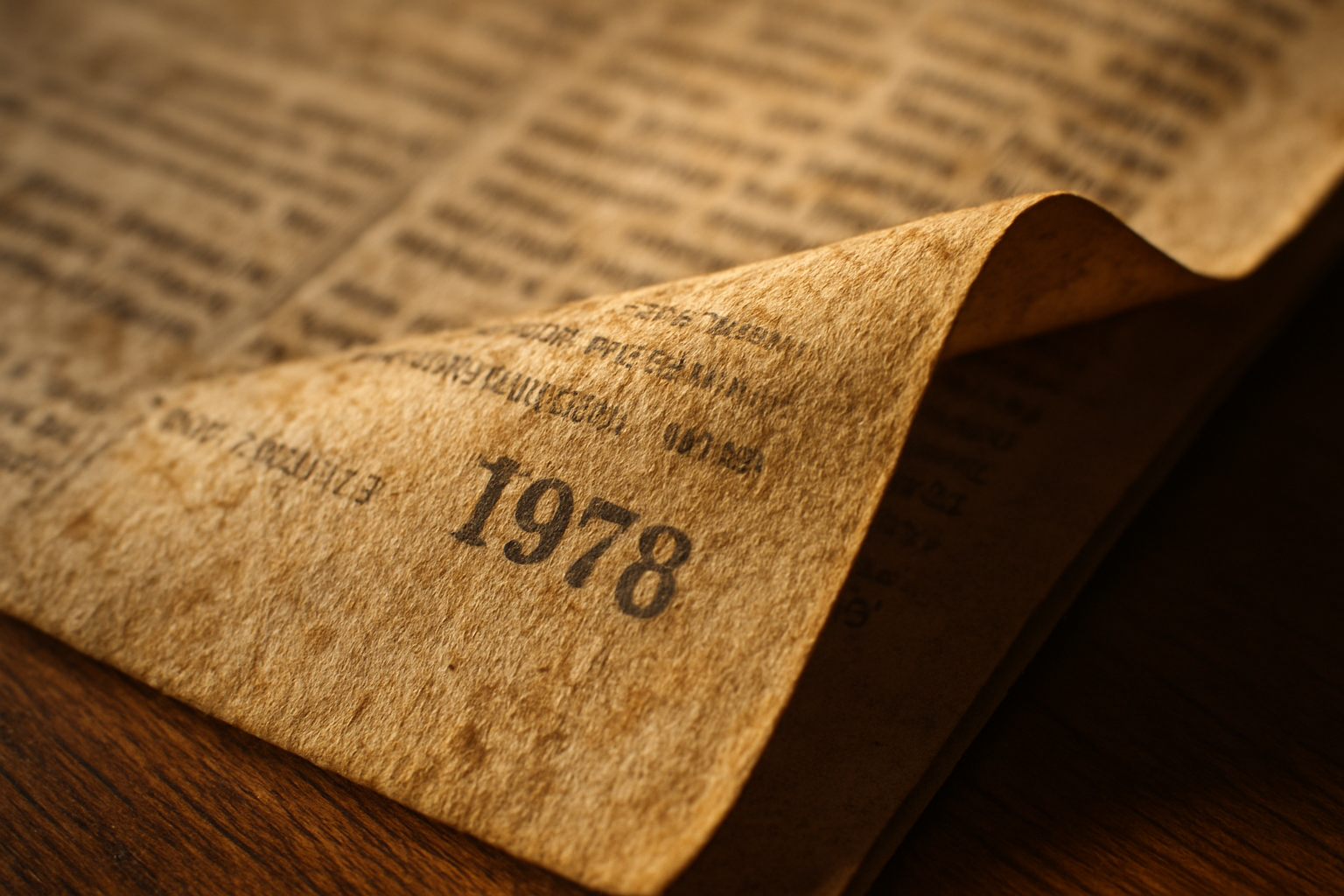
Earliest known appearance: the joke pattern shows up in 1978
The earliest solid evidence does not use Sagittarius at all. Instead, it shows the same logic with another sign. In 1978, a joke reference book captured a version about Aquarius. The line said someone did not believe in astrology, and everyone else born under Aquarius agreed. That matters because it proves the template already existed by then.
That same year, the template appeared in a widely syndicated comic strip. On March 2, 1978, “Frank and Ernest” ran a panel about an astrology shop. One character said, “I don’t believe in astrology — we Scorpios are too scientific for that sort of thing.” The comic format helped the joke spread fast. Moreover, newspapers preserved it in print, which gives researchers a firm date.
So the origin story starts with a pattern, not a person. People likely told similar lines in conversation earlier. However, researchers need print or archived evidence to anchor a claim. Therefore, 1978 becomes the first reliable milestone for this joke family.
Historical context: why astrology jokes flourished in late 20th-century pop culture
Astrology gained mainstream visibility during the 1960s and 1970s. Newspapers ran horoscopes next to sports scores. Additionally, bookstores stocked star-sign guides near self-help titles. This created a shared language. Even skeptics knew their sign.
At the same time, science-forward humor surged. People loved jokes that signaled rationality. Therefore, comedians could poke astrology while still sounding playful. The “I’m too scientific” twist fit that mood perfectly. It mocked astrology, yet it also mocked the speaker’s inconsistency.
Print media also amplified repeatable jokes. Comic strips syndicated nationally. Joke encyclopedias compiled one-liners for speeches and articles. As a result, a clever line could jump from a bar conversation into a book. Then it could jump again into a magazine letter column.
This context helps explain the quote’s later attribution. Once a line sounds “clever,” audiences want a clever author. Consequently, people reach for names like famous scientists or science-fiction writers.
How the quote evolved: from Aquarius and Scorpio to Sagittarius
After 1978, the joke kept mutating. Different sources swapped in Aquarius again during the 1990s. One major joke encyclopedia printed, “I don’t believe in astrology. But then I’m an Aquarius and Aquarians don’t believe in astrology.” This version leans into circular logic. It also sounds smoother in conversation.
Meanwhile, the Scorpio version emphasized “scientific.” That word matters because it frames astrology as anti-science. However, the Sagittarius version uses “skeptical,” which feels broader and more modern. “Skeptical” also fits public intellectual branding. Therefore, Sagittarius plus skepticism became a natural pairing.
Editors also standardized spelling. British sources often used “sceptical.” American sources often used “skeptical.” Additionally, some writers used “Sagittarius” while others used “Sagittarian.” These small changes made the quote feel local. Yet the comedic engine stayed identical.
So the “Sagittarian” line did not appear fully formed from one mouth. Instead, it emerged as the most shareable variant. That shareability later encouraged a famous attribution.

Variations and misattributions: why Arthur C. Clarke gets pulled in
Many people credit this quote to Arthur C. Clarke. That attribution feels plausible. Clarke wrote about science, space, and futurism. Additionally, he carried a public image of sharp wit. Therefore, readers accept the pairing without checking.
However, the strongest trail to Clarke does not start in a 1970s interview. It appears later, in a magazine letter. In 1997, a letter in Astronomy Now attributed a version of the line to Clarke, via a person named Paul Heskett. The letter framed it as something Clarke supposedly said. Yet the letter does not function like a recorded interview. It functions like a personal recollection. That difference matters.
Later, major quotation collections repeated the Clarke attribution. A 2001 humorous quotation book printed the line and cited the magazine letter. Then a 2008 humorous quotations dictionary repeated it again, citing the earlier book. Each step increased authority. Meanwhile, none of those steps produced a primary recording.
So the Clarke link rests on a single chain of testimony. It may be true. However, the earlier 1978 appearances prove the joke existed already. Therefore, even if Clarke said it, he likely repeated a circulating gag.
Other names float around as well. People sometimes list anonymous sources or other humor writers. Additionally, internet quote sites often copy each other. That copying creates false consensus. As a result, the “origin” becomes whatever appears first in search results.
Arthur C. Clarke’s life and views: why the attribution feels right
Clarke built his reputation on scientific imagination. He also collaborated with Stanley Kubrick on 2001: A Space Odyssey. Therefore, audiences associate him with rational inquiry.
He also enjoyed playful paradoxes in public conversation, at least by reputation. That reputation makes the quote sound “in character.” Additionally, the line carries a dry, British-style self-mockery. The spelling “sceptical” reinforces that tone.
Yet we should separate “fits his vibe” from “he coined it.” Many witty lines fit many witty people. Moreover, the joke’s modular structure suggests folk humor, not single authorship. So Clarke may have popularized it in some circles. However, the evidence does not prove he invented it.
If you want a careful claim, you can say this: print sources show the joke pattern in 1978, and later sources attribute a Sagittarius variant to Clarke via a 1997 letter. That phrasing stays honest. It also respects the timeline.
Cultural impact: why this one-liner became a modern classic
This quote lives at the crossroads of belief and identity. People often treat astrology as playful identity language. Meanwhile, skeptics often treat it as irrational. The line lets you occupy both spaces at once. Therefore, it works at parties, on dating apps, and in office chats.
Additionally, the quote performs “smartness” without sounding cruel. It targets the speaker, not the listener. That choice lowers defensiveness. As a result, even astrology fans can share it with a wink.
The line also thrives in short formats. It fits on mugs, tweets, and captions. It also fits inside a comic panel. Consequently, it keeps resurfacing whenever astrology trends again.
Even modern celebrities and media founders echo the underlying idea. Source In a 2014 interview, Jonah Peretti answered an astrology question by listing Capricorn traits and adding that he did not believe in astrology. He did not use the Sagittarian punchline. However, he used the same comedic move. He performed the contradiction on purpose.

Modern usage: how to quote it accurately today
If you want to share the quote, decide what you value most. Do you want the funniest wording? Or do you want the cleanest attribution?
For humor, many people use: “I don’t believe in astrology; I’m a Sagittarian and we’re skeptical.” It reads smoothly and lands fast. Additionally, it carries the most familiar rhythm.
For accuracy, you should treat it as a circulating joke with multiple early variants. If you mention Clarke, add a qualifier. For example, write: “Often attributed to Arthur C. Clarke, though earlier variants appeared in print in 1978.” That line respects readers. It also prevents misinformation.
You can also use a version tied to the earliest strong evidence. Source The 1978 comic strip gave us the Scorpio line about being “too scientific.” That version offers a clear date and source. Therefore, it works well in a research-forward post.
Finally, remember why people share it. They share it to signal humility. They also share it to puncture certainty. In contrast, sloppy attribution signals the opposite. So a careful caption often makes the joke even better.
Conclusion: a joke with many parents, and one enduring punchline
“I don’t believe in astrology; I’m a Sagittarian and we’re skeptical” feels like a single, polished quote. However, the history points to a traveling joke pattern. Print evidence shows close relatives in 1978, including Aquarius and Scorpio versions. Later, a 1997 magazine letter linked the Sagittarius wording to Arthur C. Clarke, and quotation books reinforced that link. Therefore, the safest story credits the culture first, and Clarke second.
Most importantly, the line still does its job. Source It reminds us how easily we contradict ourselves. Additionally, it lets us laugh at that contradiction without shame. In summary, that blend of wit and self-awareness keeps the quote alive.