“Sometimes you eat the bear, and sometimes the bear eats you.”
I first encountered this rugged proverb at two in the morning during a remarkably difficult week. My software startup had just lost its primary investor, and I sat staring at a glowing laptop screen in a freezing, dark kitchen. A former mentor forwarded me a brief email with absolutely no context, offering just this single sentence. I initially dismissed the cryptic message as a tired, unhelpful cliché. However, as I watched the cursor blink endlessly in the darkness, the raw honesty of the words finally clicked. We cannot control every outcome, no matter how intensely we prepare. Consequently, this simple phrase shifted my entire perspective on professional failure. I realized that the universe does not always reward hard work. Therefore, the saying brought me immediate comfort. This late-night realization sent me down a fascinating rabbit hole. I desperately wanted to uncover the true origin of the saying.
The Earliest Known Appearance
The historical journey begins with a highly surprising source. Ralph Waldo Emerson penned the earliest conceptual version of this phrase. In his 1870 essay collection titled “Society and Solitude,” Emerson explored the harsh realities of human survival. He described an impoverished man scratching out a meager living in the brutal wilderness. When this isolated man grows hungry, he actively hunts for sustenance.
However, Emerson bluntly noted the unforgiving math of untamed nature. The man cannot always kill and eat a bear. Sometimes, the bear actually eats him. Emerson did not write the exact modern phrasing we use today. Still, his stark observation clearly planted the cultural seed. People read these philosophical essays widely for several decades. As a result, the core concept seeped deeply into the American consciousness. Writers and thinkers slowly adapted the idea over time.

Life in the Late Nineteenth Century
Life during the late nineteenth century required constant physical struggle. Farmers and frontiersmen faced unpredictable, lethal dangers on a daily basis. Therefore, they needed practical language to explain sudden, catastrophic misfortune. In 1894, a local Louisiana newspaper perfectly captured this exact rural sentiment. Farmers residing in the Calcasieu swamp regularly hunted wild hogs during the autumn months. Occasionally, they encountered massive, aggressive bears in the dense swamp brush.
When these weary men returned to town, curious neighbors asked a very specific question. They wanted to know if the hunter got the bear, or if the bear got the hunter. This localized swamp banter illustrates the era’s pragmatic mindset beautifully. Survival remained a terrifying coin toss. Consequently, rural folks adopted dark humor to cope with the surrounding wilderness.
How the Phrase Evolved
The phrase slowly morphed as it traveled across the expanding country. In 1904, author Bertrand W. Sinclair published a popular story featuring a slight variation. A fictional character named Jack Gordon sat on a horse corral and delivered a folksy warning. He noted that hunting does not always go exactly as planned. Specifically, Gordon stated that sometimes you hunt the bear, and sometimes the bear hunts you.

Decades later, the specific wording shifted yet again. A 1939 geography textbook by Professor Carl O. Sauer used the concept to describe Arctic survival. Sauer explained that Eskimo hunters usually get the polar bear. However, he quickly clarified that sometimes the massive bear gets the man. By 1960, regional Ohio newspapers officially labeled the phrase an “old saying” among local hunters. The steady evolution from a literal warning to a figurative proverb took nearly a full century.
Racing and Sports Variations
As the saying gained widespread popularity, various public figures eagerly adopted it. Source Drag racers and professional athletes frequently used the phrase to explain sudden, unexpected losses. For example, in 1963, racing legend Roger Penske quoted the proverb during a major magazine interview. He used the “eat the bear” variation to describe the unpredictable nature of his dangerous sport.
Meanwhile, baseball fans often attribute the famous quote to Preacher Roe. The legendary Brooklyn Dodgers pitcher supposedly uttered the phrase after a particularly tough game. In 1985, a sports journalist claimed Roe said the bear ate them that specific day. Additionally, singer Jim Croce wove the saying into his 1972 song titled “Hard Time Losin’ Man.” Because so many celebrities repeated the phrase, the true historical origin became thoroughly obscured.

The Big Lebowski Impact
The proverb reached its absolute cultural zenith in 1998. The Coen brothers released their beloved cult classic film, “The Big Lebowski.” They brilliantly cast Sam Elliott as The Stranger, a cowboy-hat-wearing narrator with a thick Texas drawl. During a pivotal bowling alley scene, The Stranger orders a cold sarsaparilla. He then delivers the most famous modern rendition of the classic quote.
He tells the weary protagonist that sometimes you eat the “b’ar,” and sometimes the “b’ar” eats you. Source Elliott’s brilliant, deadpan delivery cemented the phrase in modern cinematic history. Fans of the movie constantly quote this specific, memorable scene. Consequently, a whole new generation enthusiastically adopted the century-old proverb. The Coen brothers perfectly captured the saying’s weary, stoic essence.
Emerson’s Philosophical Views
We must look back at Emerson to truly understand the quote’s underlying soul. Emerson championed radical self-reliance and deep respect for unpredictable nature. He did not view the bear as an inherently evil force. Instead, the bear represented the chaotic, uncontrollable elements of the entire universe. Emerson believed humans must strive and fight fiercely for daily survival. However, he also acknowledged our profound, undeniable physical vulnerability.
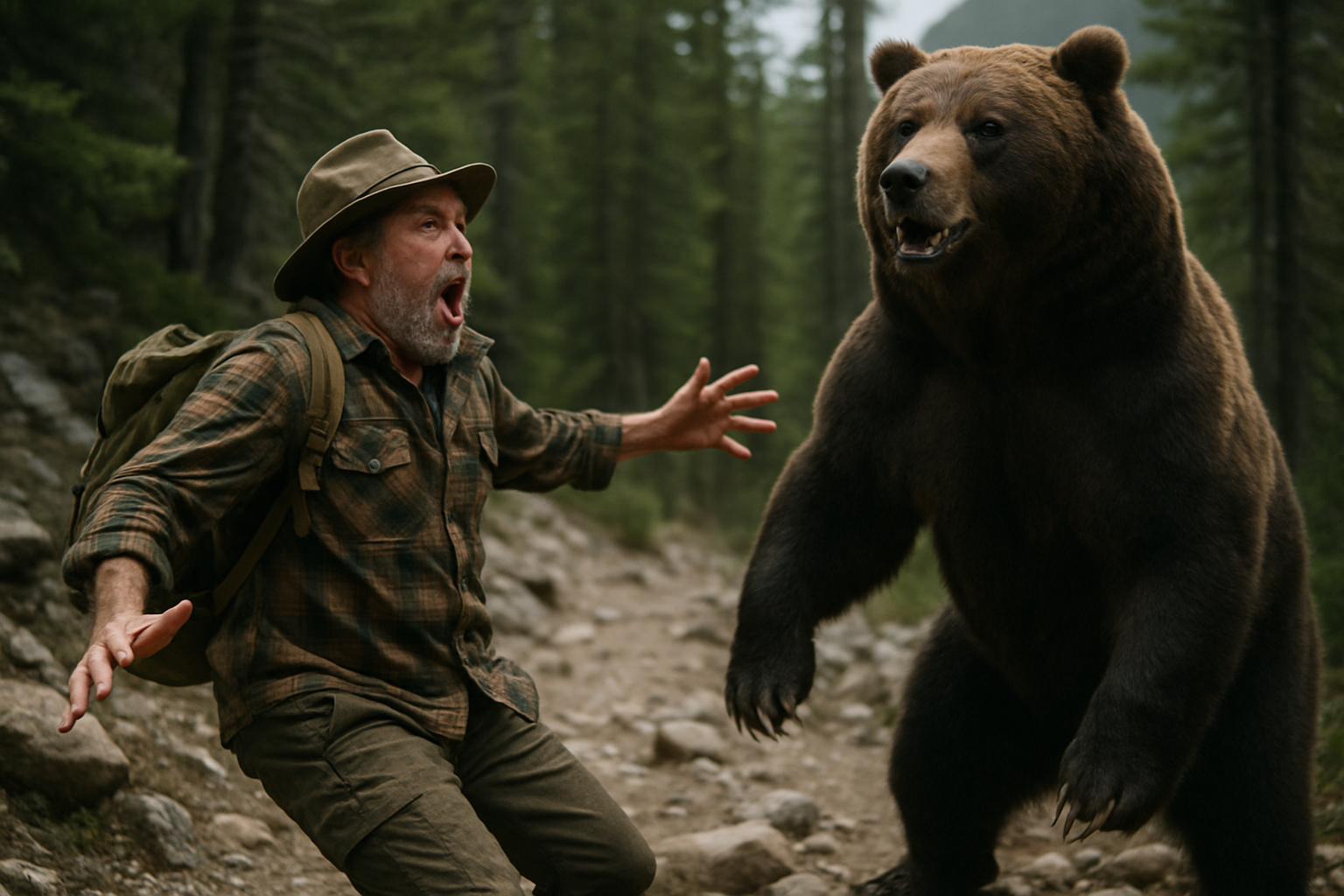
Nature simply does not care about our carefully laid plans. Therefore, Emerson’s original essay strongly emphasized human humility. We might conquer the harsh wilderness one day. The very next day, a sudden storm or a wild animal might conquer us completely. This deep philosophical foundation gives the saying its lasting emotional power. It constantly reminds us to remain humble during our greatest victories.
Modern Metaphorical Bears
Today, people use the bear proverb in corporate boardrooms, locker rooms, and casual daily conversations. We no longer face literal, flesh-eating bears on a regular basis. Still, we encounter terrifying metaphorical bears everywhere we go. A sudden financial crisis acts as a massive, destructive bear. A surprise medical diagnosis functions as a vicious, attacking bear. In contrast, landing a massive promotion means you successfully ate the bear.
The saying endures because it offers genuine psychological comfort. It effectively removes the bitter sting of personal failure. Sometimes, you do absolutely everything right and still lose the game. The universe simply rolls the cosmic dice against you. Ultimately, acknowledging this unpredictable dynamic brings a strange, comforting sense of peace. We keep hunting, we keep trying, and we gracefully accept the outcomes.
The Psychology of Coping
Psychologists often study how humans process unexpected failure and sudden disappointment. We naturally seek patterns and reasons when things go terribly wrong. However, assigning personal blame for every failure leads to severe depression. This proverb acts as a vital cognitive release valve for our brains. It externalizes the blame, shifting it onto an uncontrollable force of nature. Consequently, we protect our fragile egos from unnecessary, destructive self-punishment.
When the bear wins, we recognize the inherent randomness of the universe. Source We did not necessarily lack skill, preparation, or basic courage. The bear simply possessed overwhelming strength on that particular day. Therefore, the phrase encourages healthy resilience rather than toxic despair. We dust ourselves off, heal our wounds, and prepare for the next inevitable encounter.
Fascinating Regional Variations
The proverb also spawned numerous regional variations across the United States. Coastal communities sometimes swapped the bear for local, familiar predators. For instance, fishermen occasionally joked about eating the shark versus the shark eating them. However, the bear remained the undisputed, dominant symbol of American wilderness adversity. The animal’s immense size and frightening power make it the perfect universal metaphor.
Furthermore, the specific verbs changed depending on the local economy. Hunting communities preferred the phrase “hunt the bear” for obvious reasons. Meanwhile, agricultural towns leaned toward “get the bear” to describe general tasks. The modern “eat the bear” version likely gained traction in highly competitive, aggressive environments. Wall Street traders and professional athletes naturally gravitated toward the most visceral, violent variation. Ultimately, the core message of unpredictable fortune survived every single linguistic mutation.
The Stoic Connection
Interestingly, this modern proverb perfectly mirrors ancient Stoic philosophy. Roman philosophers like Marcus Aurelius frequently wrote about accepting uncontrollable events. They believed that individuals should only worry about their own direct actions. You can sharpen your spear, track the footprints, and aim carefully. However, you cannot control the wind, the terrain, or the bear’s sudden movements. Therefore, getting eaten by the bear falls outside your locus of control.
Modern resilience experts frequently teach this exact concept to corporate leaders. They use the bear metaphor to quickly explain complex psychological boundaries. When a project fails due to market conditions, the bear simply won. Consequently, leaders learn to separate their personal self-worth from unpredictable business outcomes. Moreover, this mindset prevents talented individuals from quitting after a single major setback. They understand that surviving the bear attack is a victory in itself. Ultimately, ancient wisdom and frontier humor share the exact same logical foundation.
The Enduring Legacy
The resilience of this proverb highlights our shared human experience. Language evolves, but our fundamental struggles remain remarkably consistent over time. A nineteenth-century swamp farmer and a modern software developer share the exact same anxieties. They both face forces entirely beyond their personal control. Therefore, they both need a shorthand way to express inevitable defeat.
This simple phrase bridges the gap between generations beautifully. It connects Emerson’s high-minded philosophy with Sam Elliott’s pop-culture drawl. Furthermore, it reminds us that losing does not diminish our inherent worth. Every single person eventually meets a bear they cannot defeat. In summary, the bear will always be out there waiting in the dark woods. We must simply gather our courage and step onto the trail anyway.