“The trouble with socialism is socialism; the trouble with capitalism is capitalists.”
A colleague forwarded this exact phrase to me during a particularly grueling week of corporate restructuring. The email, interestingly, arrived with absolutely no context. Just the quote sat alone in the body text. I initially dismissed it as a tired political cliché. However, I soon watched our executive team make decisions that perfectly illustrated the second half. Suddenly, the words felt less like a historical artifact. Instead, they felt like a live broadcast of our office dynamics. I, therefore, decided to dig into where this piercing observation actually originated. The Earliest Known Appearance In 1961, the renowned conservative commentator William F. Buckley Jr. sat down for an interview. . During this conversation, Buckley paused thoughtfully before dropping a memorable adage. He explicitly noted that someone else had told him the phrase. He spoke the exact words, “The trouble with socialism is socialism; the trouble with capitalism is capitalists.” Many readers, consequently, assumed Buckley coined the phrase himself. He, however, consistently denied creating the clever juxtaposition. He instead served as its primary amplifier during the turbulent 1960s.
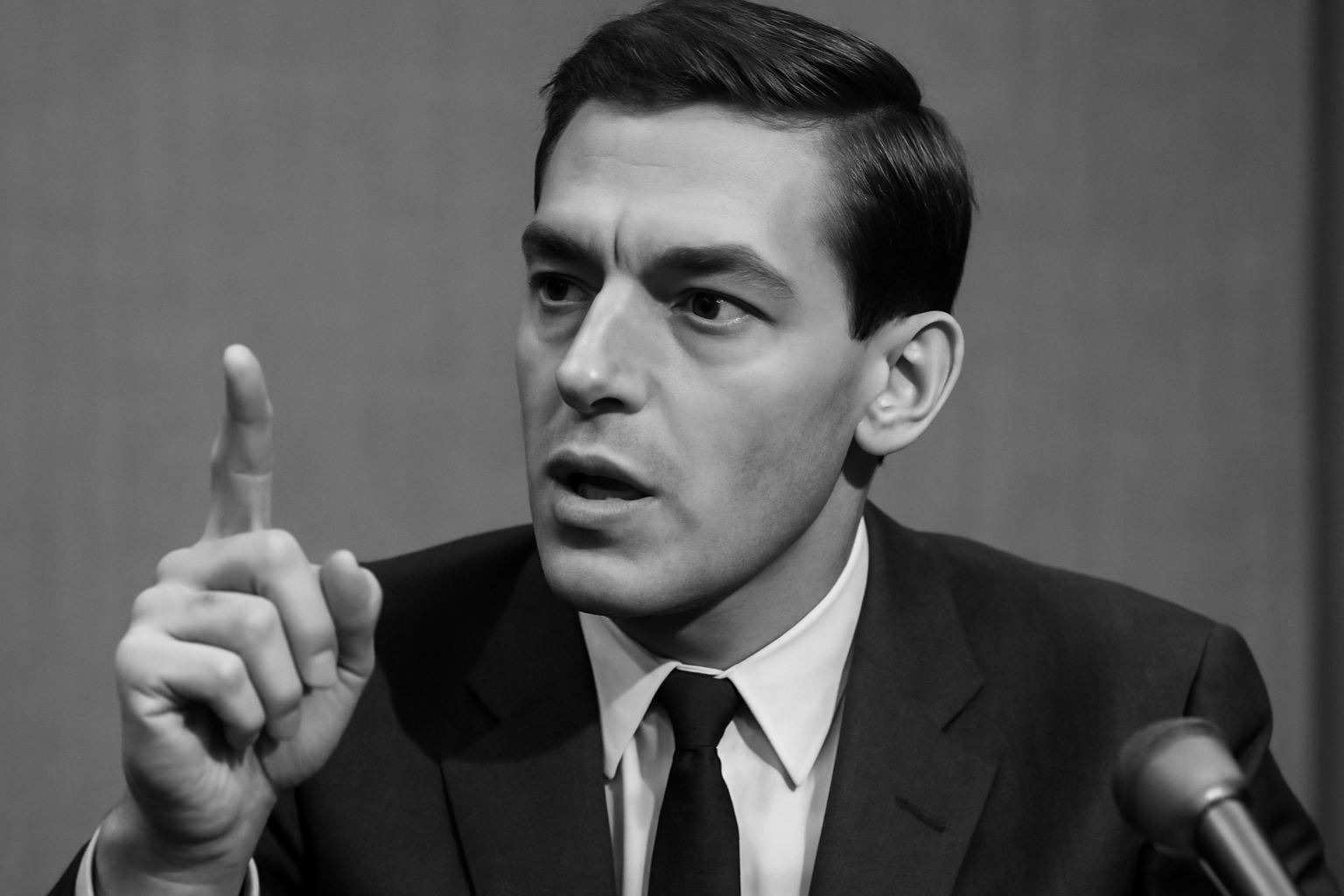
Tracing the Roots of the First Half To understand this quote, we must examine the political climate of the mid-twentieth century. The Cold War fiercely divided global economic thought. Critics of socialism, naturally, focused heavily on the systemic flaws of state-controlled economies. They argued that the system itself inherently failed, regardless of the leadership. The phrase, therefore, perfectly captured this systemic critique. It dismissed the ideology entirely. Critics of capitalism, meanwhile, often focused on human greed rather than the free market system itself. This distinct difference in critique ultimately forms the backbone of the famous quote. Herbert Hoover and the Capitalist Critique A similar sentiment about capitalism emerged much earlier in history. . Hoover reportedly complained that the only trouble with capitalism was the capitalists themselves. He believed they were simply too greedy. This early variation highlights a crucial historical thread. Even staunch defenders of free markets, interestingly, recognized the human flaws within the system. Newspapers circulated variations of this critique by 1935. Harold G. Moulton publicly stated that capitalists were the main problem with capitalism.

How the Complete Quote Evolved The fusion of these two distinct critiques into one balanced aphorism happened later. Buckley continued to use the phrase throughout the 1960s. He attributed the saying to an unnamed European observer in a 1966 syndicated newspaper column. This mysterious European observer added an air of continental wisdom to the sharp critique. Furthermore, it showed that Buckley was actively trying to credit the original source. He simply could not remember the exact name at that moment. The balanced structure of the quote made it incredibly memorable. It, as a result, began to spread rapidly through political circles. The Winston Churchill Misattribution Society inevitably attached this saying to Winston Churchill. Source . Churchill died in 1965, however, and no contemporary records link him to the phrase. People, naturally, love attributing clever quips to the famous British statesman. It lends instant authority and gravitas to any statement. Another comprehensive book of wisdom falsely credited Churchill again in 1987. This repeated misattribution, unfortunately, cemented the myth in the public consciousness. Today, you will frequently find the quote plastered across social media with Churchill’s face attached.

Unveiling the True Author Buckley officially solved the mystery of the European observer in 1978. Source He wrote another newspaper column and explicitly named the true author. He credited William Schlamm, a prominent European journalist and Austrian analyst. Schlamm had worked closely with Buckley during the formative years of the conservative magazine. . Schlamm, consequently, possessed a deep understanding of both European socialism and American capitalism. His unique background perfectly positioned him to craft such a nuanced observation. He had witnessed the flaws of both systems firsthand. The Life and Views of William Schlamm Willi Schlamm was a fascinating intellectual figure during the twentieth century. He initially participated in leftist movements in Europe. He later turned fiercely against communism. He emigrated to the United States and became a leading conservative voice. His critiques carried significant weight because he had navigated both ideological extremes. He, therefore, understood the theoretical appeal of socialism but abhorred its practical application. He similarly appreciated the wealth generation of capitalism but despised the moral failings of individual capitalists. The quote perfectly encapsulates his lifelong political journey. It reflects a deep, hard-won cynicism about human nature and economic systems. Modern Usage and Cultural Impact The quote remains astonishingly relevant to modern political discourse today. Conservative columnist Jonah Goldberg reflected on the adage in a 2010 tribute. Goldberg, interestingly, noted that Buckley intentionally repeated the quote every ten years. He wanted to ensure Schlamm’s wisdom survived for future generations. Commentators from various political backgrounds still invoke the phrase frequently today. It perfectly captures the frustration many citizens feel toward modern economic realities. The systemic failures of state control remain evident across the globe. The unchecked greed of certain corporate leaders, simultaneously, continues to dominate our daily news headlines.

The Enduring Power of the Juxtaposition Why does this specific arrangement of words resonate so deeply today? It relies on a brilliant rhetorical device called chiasmus, creating a structural parallel. The repetition of the word socialism creates a sense of inescapable systemic doom. Shifting from capitalism to capitalists, in contrast, introduces human agency and moral failing. The quote forces us to recognize that no system operates perfectly. Socialism fails because the machine itself is fundamentally broken. Capitalism struggles because the humans operating the machine are inherently flawed. This dual realization, ultimately, provides a sobering lens through which we evaluate our current political debates. The Mechanics of Quote Misattribution The false connection to Winston Churchill provides a fascinating case study. Quote misattribution often follows a highly predictable and repetitive historical pattern. A lesser-known intellectual crafts a brilliant observation about society or politics. A famous figure repeats the phrase during a highly publicized moment. Society eventually forgets the intellectual and assigns the brilliance to the historical titan. Scholars often call this frustrating phenomenon Churchillian Drift. People naturally want their favorite historical figures to be the ultimate source of wisdom. Schlamm’s nuanced observation, consequently, was completely swallowed by Churchill’s massive historical shadow. Buckley as a Curator of Ideas William F. Buckley Jr. deserves immense credit for his strict intellectual honesty. Many public figures would have simply absorbed the brilliant quote as their own. Buckley actively tried to keep Schlamm’s memory alive for decades instead. He recognized that his magazine was a collaborative intellectual project. Buckley acted as a faithful curator by repeatedly citing Schlamm over the decades. He understood that ideas matter significantly more than personal glory or fame. His deliberate repetition of the quote demonstrates a deep respect for his colleague. This loyalty remains exceptionally rare in the competitive world of political journalism. The Brookings Institute Connection We must also revisit the fascinating 1935 statement by Harold G. Moulton. Moulton was a highly respected centrist voice as the president of the Brookings Institute. He shocked many observers when he stated that capitalists were the problem. The Brookings Institute, for example, was never known for radical anti-capitalist rhetoric or socialist sympathies. His sharp critique, therefore, carried immense institutional weight and credibility. It proved that concerns about capitalist greed were not limited to socialist agitators. Mainstream economists were equally worried about the moral hazards of unchecked wealth accumulation. This historical footnote adds incredible depth to the later evolution of the quote. Analyzing the Socialist Critique Let us deeply analyze the first half of the famous equation. The phrase regarding the trouble with socialism is intentionally devastating. It implies that you do not need to look for external factors. You do not need to blame corrupt leaders or poor implementation. The ideology itself, therefore, represents the fatal flaw of the entire system. Schlamm believed that a system requiring total state control was fundamentally incompatible with freedom. The system is completely doomed from the moment of its conception. This stark assessment resonated deeply with Cold War audiences terrified of Soviet expansion. Analyzing the Capitalist Critique The second half offers a completely different diagnosis of economic failure. The phrase regarding capitalism implies that the theoretical framework is fundamentally sound. The massive failure occurs entirely at the human level of operation. The free market system breaks down when individuals succumb to greed or unethical practices. The ultimate solution, instead, is not to destroy capitalism entirely. Society must work diligently to restrain the capitalists through moral frameworks. Schlamm’s critique suggests that free markets require virtuous participants to function properly. The capitalist system inevitably descends into ruthless corporate exploitation without strong morality. The Role of the Cold War The ideological battles of the Cold War provided the perfect incubator. The Cold War strictly divided the world into two competing camps during the 1960s. Intellectuals on both sides constantly searched for powerful rhetorical weapons to deploy. Schlamm’s quote was particularly effective because it openly acknowledged the flaws of the West. Conservative intellectuals gained massive public credibility by admitting that capitalists were problematic. They did not present capitalism as a flawless, perfect utopian vision. They presented it as a flawed system run by deeply flawed humans instead. They maintained, however, it was still infinitely preferable to the systemic tyranny of socialism. Why the Quote Survives Today Political polarization has reached truly unprecedented levels in our modern era. People constantly retreat into ideological echo chambers, refusing to acknowledge any systemic flaws. Schlamm’s quote, as a result, forcefully disrupts this dangerous tribalism in our political discourse. It demands that we look critically at both sides of the economic spectrum. We clearly see the trouble with capitalists when a modern tech monopoly abuses its power. We see the trouble with socialism when a massive government program collapses under bureaucratic inefficiency. The quote remains a vital tool for independent thinkers everywhere. It strongly encourages nuance in a world that desperately prefers simple narratives. The Legacy of Willi Schlamm Willi Schlamm ultimately left behind a highly complex intellectual legacy. The general public largely ignores his contributions today. Publishers discontinued his books, and his essays remain buried in archives. This single, perfectly crafted sentence ensures his historical immortality, however. It stands as a powerful testament to the enduring power of concise writing. One brilliant observation can easily outlast entire volumes of dense political theory. Schlamm’s voice continues to echo through modern debates because Buckley kept the flame alive. It serves as a permanent reminder of the delicate balance between systemic structures and human nature.