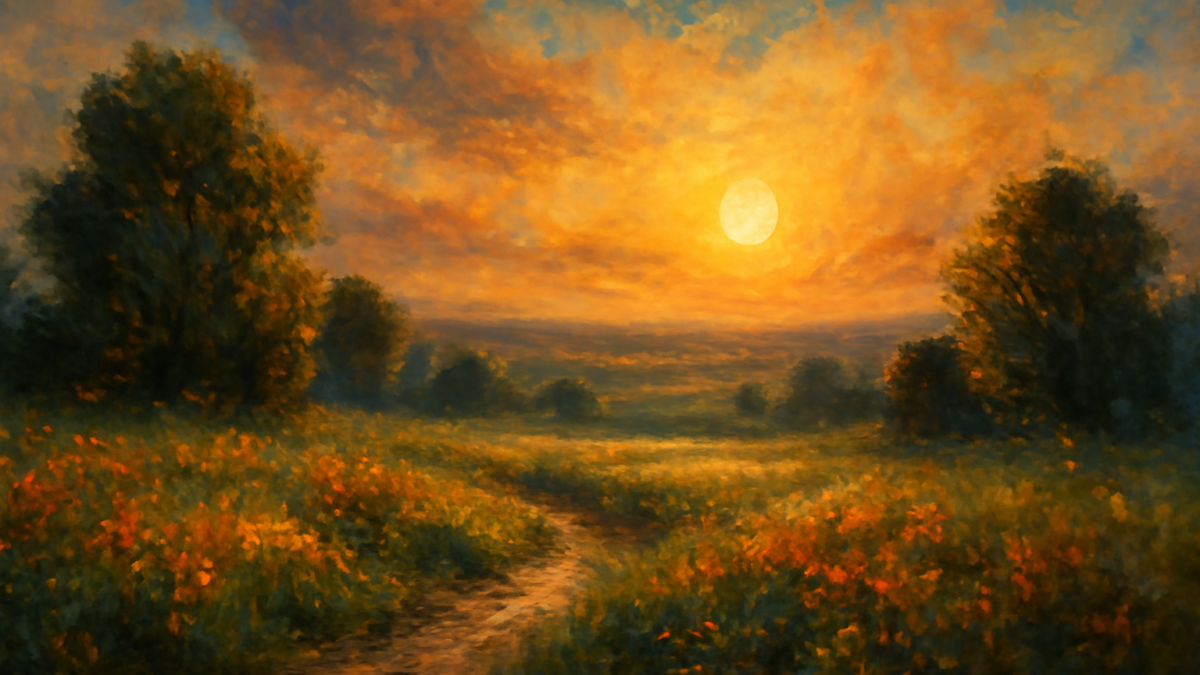
Anne Frank’s Testament to Beauty in Darkness
Anne Frank’s statement that we should “think of all the beauty still left around you and be happy” stands as one of the most poignant and misunderstood quotes in modern literature. The young girl who wrote these words was living in the secret annex of a building in Amsterdam, hidden from Nazi persecution along with her family and four others. Her diary entries have become one of the most widely read books in the world, yet many people know surprisingly little about who Anne Frank truly was as a person, beyond the tragic circumstances of her death. To fully understand the weight and significance of this particular quote, we must first examine the harrowing conditions under which it was written and the remarkable spirit of the girl who managed to find reasons for hope and gratitude while her world was collapsing.
Born Annelies Marie Frank in Frankfurt, Germany, in 1929, Anne was the daughter of Otto Frank, a businessman, and Edith Holländer Frank. The family belonged to the German-Jewish community, living comfortably in Frankfurt until the rise of Adolf Hitler forced them to flee Germany in 1933. They relocated to Amsterdam, where they attempted to build a new life in relative safety. Anne spent her formative years in Amsterdam, attending the Montessori school and growing into a lively, intelligent girl who was known for her wit, her love of movies, and her keen interest in the world around her. She had friends, she had dreams of becoming a writer or an actress, and by all accounts, she was a typical adolescent with typical adolescent concerns. This normalcy makes what came next all the more devastating and, paradoxically, all the more instructive about human resilience.
When Nazi Germany invaded the Netherlands in May 1940, the Frank family’s life changed forever. Jews were systematically stripped of their rights, their businesses, and their dignity. By 1942, with deportations to concentration camps beginning in earnest, the Franks decided to go into hiding. On July 6, 1942, Anne’s thirteenth birthday just weeks behind her, the family entered what they called the “Secret Annex”—a hidden section of her father’s business building accessed through a bookcase. For more than two years, eight people lived in these cramped quarters, unable to make noise during business hours, unable to look out windows, rationed to meager food supplies, and living under constant fear of discovery. The psychological toll of such confinement would have broken many adults, yet it was during these years that Anne Frank kept the diary that would eventually become her legacy.
What many people don’t realize is that Anne Frank was not inherently a philosophical person or a great writer when she began her diary. She was a teenage girl with typical teenage preoccupations—crushes, friendships, arguments with her mother, and adolescent self-consciousness. Her writing ability developed over the course of her confinement. She rewrote entries, experimented with narrative techniques, and became increasingly sophisticated in her observations. The diary was not originally written for publication; it was a private space where Anne could be herself, something precious in an environment where she was forced to suppress her natural exuberance. What makes her reflections on beauty and happiness so remarkable is that they were not the musings of a girl isolated from hardship, but rather the genuine insights of a young person actively experiencing deprivation and terror. In other words, Anne’s optimism was not naive; it was hard-won and deeply conscious of the darkness surrounding it.
The specific quote about beauty appears in the diary entry dated July 15, 1944, just weeks before Anne and her family would be discovered and arrested. By this date, Anne had been in hiding for over two years. The entry reveals a girl who was increasingly aware of her circumstances and increasingly philosophical about them. She writes about how she has had one wish during her time in hiding: “to be useful or to bring enjoyment to the people around me.” She then pivots to her reflection on beauty and happiness, suggesting that even in her confined circumstances, she could see reasons to be grateful. The quotation in its fuller context demonstrates that Anne wasn’t simply suggesting that beauty exists as a distraction from suffering; rather, she was making a deliberate choice to acknowledge beauty as a counter-force to despair. This wasn’t denial or escapism—it was a form of resistance.
What makes Anne Frank’s philosophy so compelling is that it anticipates much of what modern psychology now understands about resilience, gratitude, and mental health. Research has consistently shown that the ability to perceive beauty, maintain gratitude, and find meaning in difficult circumstances are not merely feel-good concepts but actual psychological mechanisms that increase survival and mental wellbeing. Anne Frank was not a trained psychologist, yet her instincts about human flourishing were profoundly sound. Furthermore, her insistence on the availability of beauty is notable because her circumstances offered so little of what we typically consider beautiful. She couldn’t walk in nature, couldn’t visit museums, couldn’t experience physical freedom. Yet she found beauty in human kindness, in the small routines of daily life, in nature glimpsed through restricted windows, and in her own intellectual and emotional development. She found beauty in the possibility of growth even in confinement.
In the decades since Anne Frank’s death in Bergen-Belsen concentration camp in March 1945, her quote has taken on a life of its own in popular culture, sometimes in ways that might have surprised her. It has been used in motivational contexts, in wellness movements, and in therapeutic settings—all contexts that seem