Will Rogers and the Temptation of Comfort
Will Rogers, one of America’s most beloved humorists and social commentators, offered the observation that “the road to success is dotted with many tempting parking spaces,” a quip that perfectly encapsulates both his wit and his philosophy about ambition and perseverance. Born on November 4, 1879, in Indian Territory (present-day Oklahoma) to a prosperous Cherokee ranching family, Rogers grew up in an environment that would shape his unique perspective on hard work, authenticity, and the American character. His father, Clement Vann Rogers, was a prominent businessman and Cherokee leader, while his mother, Mary America Schrimshier, came from a mixed-heritage family. This background gave Rogers an insider’s view of both Native American culture and the expanding American frontier, perspectives that would later inform his incisive social commentary.
Rogers initially pursued a career as a cowboy and Wild West performer, touring with various Wild West shows and circuses before transitioning to vaudeville in the early 1900s. His evolution from trick roper to entertainer was itself a lesson in adaptation and persistence, though his early performances were quiet and humble by vaudeville standards. What distinguished Rogers from other performers of his era was his decision to speak during his act, initially making light commentary while performing his rope tricks. This seemingly small innovation—talking while performing—became revolutionary, as audiences discovered that Rogers’ observations about life, politics, and human nature were as captivating as his physical talents. By the 1920s, he had become a major star of stage and film, eventually moving into radio broadcasting and newspaper columns, where his homespun wisdom reached millions of Americans.
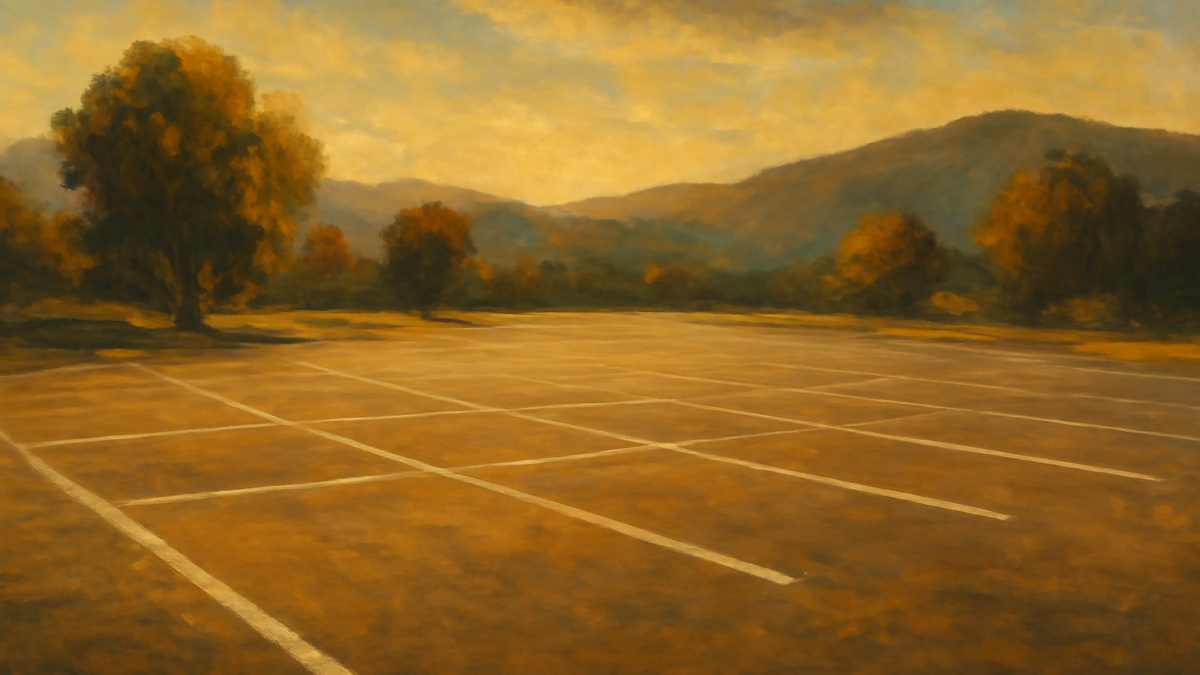
The quote about parking spaces, while deceptively simple on its surface, emerged from Rogers’ broader cultural moment in early twentieth-century America. The image itself references the automobile, which had transformed American life and mobility during Rogers’ lifetime, making it a perfect metaphor for his predominantly middle-class audience. The prosperity of the 1920s had created a culture increasingly focused on shortcuts and comfort, a theme Rogers frequently addressed in his writing and performances. His wit operated on multiple levels—there was the obvious literal meaning about not stopping prematurely in one’s journey toward goals, but also a sharper social critique about how Americans were becoming distracted by superficial comforts and conveniences at the expense of deeper achievements. Rogers had witnessed the boom-and-bust cycles of American capitalism, the excesses of the Jazz Age, and the cultural tensions between traditional values and modern materialism, all of which informed his skepticism about easy paths to success.
What many people don’t realize about Will Rogers is that he was far more politically engaged and intentional in his humor than the casual, folksy persona he cultivated might suggest. While he maintained a seemingly apolitical stance by making fun of politicians from both parties equally, Rogers was deeply committed to Democratic principles and supported Franklin D. Roosevelt’s New Deal policies during the Great Depression. He used his enormous platform—by the 1930s, he was earning over $500,000 annually and was arguably the most famous person in America—to advocate for everyday people struggling during the economic crisis. Furthermore, Rogers was one of the few major American entertainers of his era who openly acknowledged and celebrated his Native American heritage at a time when indigenous peoples faced severe discrimination and marginalization. He used his position to speak out against the injustices faced by Native Americans, though he did so carefully and often through humor, understanding the limitations of his era’s social tolerance.
The parking spaces quote has proven remarkably durable in American culture, appearing in business books, motivational seminars, and self-help literature for decades. In our contemporary context, the quote has been reinterpreted through various lenses—in the age of social media and instant gratification, it serves as a warning against the temptation to settle for mediocrity or accept the first sign of success. Business leaders cite it when discussing perseverance and the importance of maintaining focus in long-term strategic planning. The quote has even been adapted and paraphrased countless times, with versions about “rest stops,” “distractions,” and “comfortable detours” circulating widely, though Rogers’ original formulation remains the most memorable and quotable. This linguistic evolution itself reflects how deeply Rogers’ insight had penetrated American consciousness—the core idea was so resonant that people felt compelled to reinterpret it for their own contexts and industries.
What makes Rogers’ quote resonate across generations is its recognition of a fundamentally human truth: success requires not just ability or opportunity, but sustained effort and the willingness to resist comfort when comfort interferes with goals. The metaphor of parking spaces is brilliant because it acknowledges that these temptations are numerous, legitimate, and built into the very road itself. They’re not dramatic obstacles that require heroic resistance, but rather small, reasonable-seeming options for stopping and resting. This makes the quote psychologically astute—Rogers understood that most people don’t fail because they face impossible odds, but because they make a series of small, seemingly reasonable compromises that collectively undermine their ambitions. In our contemporary culture, where distraction has become almost pathological, where we’re surrounded by notifications, streaming services, and other “parking spaces” inviting us to pause our journeys, Rogers’ century-old observation feels not quaint but prophetic.
For everyday life, the quote’s wisdom extends beyond career ambition into any sustained endeavor—maintaining health, developing relationships, pursuing education, or creating meaningful art all require recognizing and resisting the comfortable stopping points that