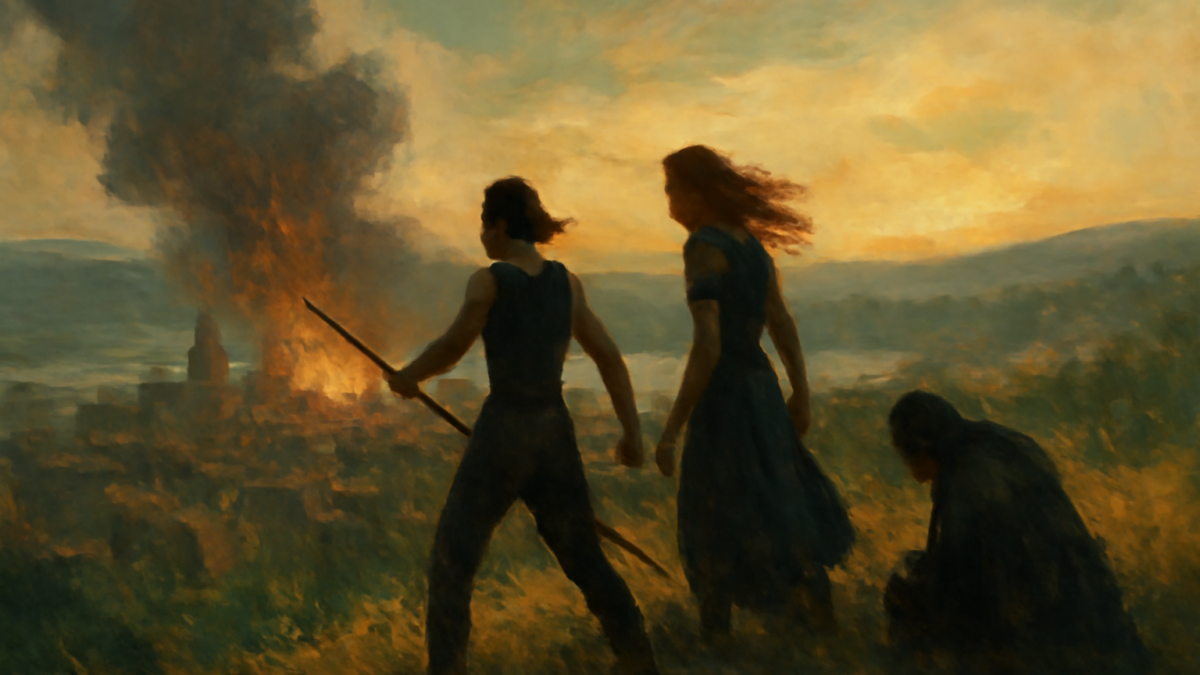
Veronica Roth’s Quote on Courage and Cowardice
Veronica Roth, the bestselling author of the Divergent series, made this pointed observation about masculinity and violence during an era of increasing cultural conversation about gender-based violence and toxic masculinity. The quote emerged primarily through interviews and social media engagement during the late 2010s, a period when discussions about feminism, #MeToo, and gender dynamics had become mainstream topics of public discourse. Roth wasn’t making an abstract philosophical argument; she was addressing a very real social problem that affected millions of women and girls. By reframing violence against women not as an expression of strength but as its opposite, she challenged deeply ingrained cultural narratives that had long confused dominance with power and brutality with masculinity. The quote gained particular traction because it was simple, direct, and cutting—there was no ambiguity or qualification in her language, just a clear moral statement delivered with the precision she had developed as a novelist.
Born in Chicago in 1988, Veronica Roth grew up in a household that valued both intellectual rigor and emotional intelligence. Her father was a psychiatrist and her mother a teacher, environments that encouraged her to think deeply about human behavior and motivation. She began writing fiction in her teens, crafting elaborate dystopian worlds even before she understood that this would become her career. What distinguishes Roth from many young adult authors is that her work wasn’t driven primarily by a desire for commercial success or fame; rather, she was compelled by genuine questions about human nature, societal systems, and the psychology of fear and courage. She attended Northwestern University, where she studied creative writing, and published Divergent in 2011 when she was just twenty-two years old. The book became a cultural phenomenon almost overnight, launching a franchise that would eventually include multiple sequels and blockbuster films, making Roth one of the most commercially successful authors of her generation.
What many people don’t realize about Roth is that she has been remarkably candid about her struggles with depression and anxiety, conditions that directly influenced her writing and her worldview. In various interviews, she has discussed how her mental health challenges shaped her exploration of fear in the Divergent series, where characters must confront their deepest fears to prove themselves. This personal vulnerability wasn’t something she felt obligated to share; rather, she chose to be honest about her struggles as a form of connection with her readers, many of whom were young people navigating their own mental health challenges. Additionally, Roth is a committed Christian, a fact that often surprises people who assume her dystopian, morally complex narratives indicate a secular perspective. Her faith has actually been central to her work, informing her interest in redemption, sacrifice, and the question of what it means to live ethically within corrupt systems. She has also been notably private about her personal life compared to many authors of her stature, choosing to maintain clear boundaries between her public authorship and her private family life.
The specific observation about violence and cowardice reflects a philosophical position that runs through much of Roth’s published work. In the Divergent universe, the greatest strength is not physical dominance but psychological courage—the ability to face truth, admit weakness, and choose principle over comfort. Her protagonist Tris is deliberately not portrayed as the strongest physically; instead, her power comes from her willingness to be honest, vulnerable, and self-sacrificing. By extension, when Roth characterizes men who attack women as cowards, she’s employing the same philosophical framework: true strength lies in restraint, protection, and the ability to resist domination. This is a radical repositioning of traditional masculine virtues, one that suggests that many behaviors long coded as masculine strength are actually inversions of it. The quote also carries an implicit challenge to the men who might hear it: if you accept this definition of courage, what does that demand of you? How must you reshape your understanding of your own potential?
Over the years, the quote has been shared thousands of times on social media, often by women who felt validated in naming something they had long felt but couldn’t articulate. It has appeared in feminist discourse, in discussions of toxic masculinity, and in educational contexts where educators are trying to help young people develop healthier understandings of gender. What’s particularly effective about this statement is its rhetorical force—it doesn’t ask permission or express doubt. Roth doesn’t say “I believe” or “perhaps” or hedge her language with qualifications. She states it as fact, as something we should recognize if we think clearly about it. This directness has made the quote sticky and memorable in a way that more carefully qualified statements might not be. It has been used in consciousness-raising contexts, in survivor support communities, and by activists working to reshape cultural conversations about male violence.
The cultural moment in which this quote gained prominence was crucial to its reception. The #MeToo movement had fundamentally shifted what conversations were possible in mainstream spaces, and suddenly women’s experiences of harassment, assault, and violence were being discussed publicly in ways they hadn’t been in decades. Roth’s statement arrived at a moment when people were actively reevaluating masculine behavior and asking hard questions about what real strength looks like. The quote also benefited from being authored by someone whose cultural credibility was already established—Roth wasn’t an unknown commentator or activist but rather a writer whose work had shaped the imaginations of millions of young people worldwide. This gave her words additional weight and reach. The fact that she had built a massive platform writing about fear, courage,