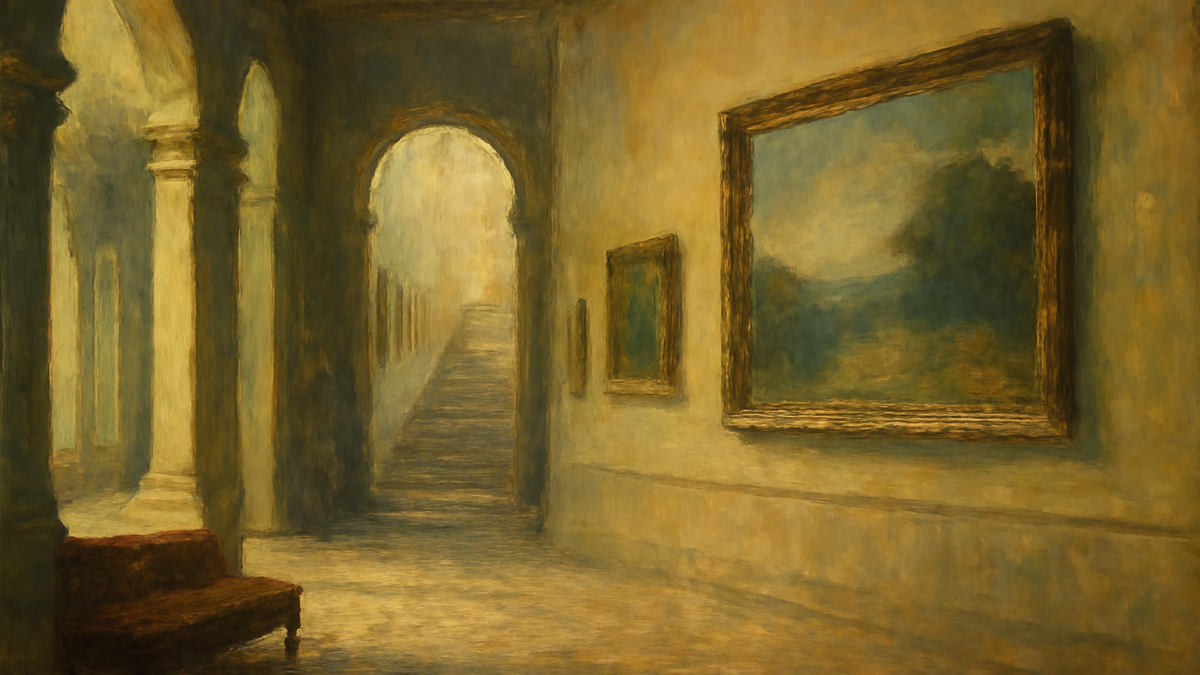
The Museum as Gateway: Degas on Art, Aspiration, and Freedom
Edgar Degas, the legendary French Impressionist painter, spent his life wrestling with paradoxes. He was a modern artist deeply rooted in classical tradition, a painter of contemporary scenes who venerated the Old Masters, and a man who championed the revolutionary while maintaining rigorous technical discipline. This particular quote, discussing the role of museums as dual instruments of both imitation and emancipation, perfectly encapsulates the tension that defined his artistic philosophy. It emerged during the late nineteenth century, a period when museums themselves were transforming from private collections of the aristocracy into public institutions meant to serve broader populations. Degas was responding to a genuine cultural moment, one in which society grappled with the democratization of art and the question of whether universal access to masterworks elevated or corrupted artistic practice.
Born Hilaire-Germain-Edgar De Gas in Paris in 1834 to a wealthy banking family, Degas enjoyed privileges that would shape his entire worldview. His father’s connections and considerable fortune meant the young Edgar could pursue art without the financial desperation that plagued most of his contemporaries. Yet rather than making him complacent, this security paradoxically fueled his ambition. He studied under Louis Lamothe, a pupil of Jean-Auguste-Dominique Ingres, and was steeped in academic conventions from the beginning. Unlike many Impressionists who rejected academic training, Degas never fully abandoned it—he always maintained that strong draftsmanship was foundational to serious painting. This classical grounding, combined with his innovative vision, made him something of a bridge figure in art history, respected by traditionalists while simultaneously pushing the boundaries of what painting could express.
What most people don’t realize about Degas is that he was profoundly isolated and often misanthropic as he aged. His eyesight deteriorated significantly in his later years, a physical affliction that mirrored what some interpreted as his emotional withdrawal from society. He never married, despite several romantic entanglements, and he was notoriously difficult in his personal relationships, prone to harsh judgments of both colleagues and friends. Yet this very isolation may have sharpened his observations of human behavior. Degas is famous for his paintings of ballet dancers, café scenes, and women at their toilettes—intimate, often candid moments captured with psychological depth. His studio practices were also unconventional; he obsessively used photography as a tool for studying movement and composition, making him one of the earliest fine artists to seriously integrate photography into his practice. This technical experimentation, combined with his refusal to exhibit with the Impressionists after 1886, demonstrated his stubborn independence and unwillingness to be categorized.
The quote about museums revealing the difference between the weak and the strong reveals Degas’ complex attitudes toward both art and human nature. He was no egalitarian in the modern sense; his words reflect a nineteenth-century perspective that accepted natural hierarchies of talent and capability. For Degas, museums served a triaging function—they exposed the limitations of those without genuine artistic gift, whose encounter with greatness would only breed slavish imitation. Simultaneously, for those with exceptional talent and vision, museums provided the raw material for transcendence. This wasn’t cruelty on his part so much as realism. Degas believed that authentic artistic innovation required not just exposure to beauty, but the cognitive and imaginative architecture to synthesize that exposure into something new. In this formulation, the museum becomes a kind of testing ground, and access to masterworks becomes meaningful only insofar as the viewer possesses the intellectual and artistic capacity to be transformed rather than merely influenced by them.
Understanding Degas’ relationship to artistic tradition is crucial to interpreting this quote’s full significance. Throughout his career, he copied and studied Old Masters obsessively, filling sketchbooks with studies after Poussin, Raphael, and Rembrandt. Yet these weren’t exercises in mimicry; they were excavations into the principles underlying great art. When he urged that museums “furnish the strong with the means of their emancipation,” he was describing his own practice. His study of classical composition enabled him to paint ballet dancers with a formal elegance that transcended mere documentation. His knowledge of Renaissance perspective allowed him to create startling compositions that seemed to capture reality yet possessed an underlying architectural perfection. The weak, in Degas’ vocabulary, were those who saw beautiful paintings and thought that proximity to beauty or even direct imitation could create more beauty. The strong recognized that studying masterworks meant understanding their underlying logic, then deploying that understanding in radically new contexts.
Over the past century and a half, this quote has been invoked by educators, curators, and critics who interpret it as a surprisingly progressive statement about the liberatory potential of art education. Many take it to mean that exposure to great art can free minds and expand consciousness—that museums, by making collections accessible to the public, provide citizens with tools for intellectual and spiritual emancipation. This interpretation has become so common that it often overshadows Degas’ more elitist original meaning. Art historians have used it to justify public funding for museums and to argue against gatekeeping practices that restrict access to cultural institutions. In this reframed context, “the strong” becomes anyone willing to engage seriously with art, regardless of birth or background. This democratic reading stands somewhat in tension with Degas’ own aristocratic sensibilities, yet it speaks to the quote’s genuine power—it contains multitudes,