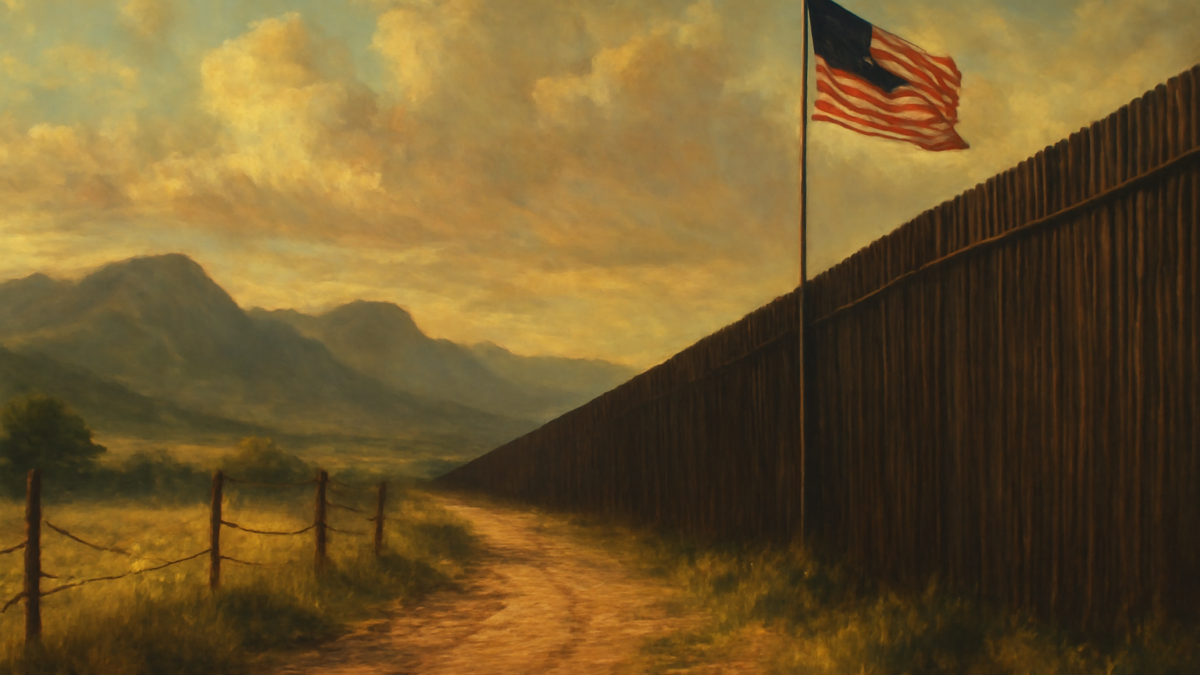
Donald Trump’s Immigration Philosophy: A Quote Analysis
This quote, characteristic of Donald Trump’s rhetoric regarding immigration policy, encapsulates one of the central themes that would define his 2016 presidential campaign and subsequent presidency. The statement reflects Trump’s emphasis on strict border control and legal immigration processes, a position he has maintained consistently throughout his public life. The quote emerged during a period when immigration policy became increasingly polarized in American political discourse, particularly following the 2008 financial crisis and the subsequent waves of undocumented immigration that captured media and political attention. Trump’s framing of the issue in binary terms—either borders exist or they do not—demonstrates his characteristic approach to complex policy matters: distilling them into stark, easily digestible contrasts that appeal to a sense of national sovereignty and order.
Donald Trump’s fixation on immigration and border security extends far deeper into his past than most casual observers realize. Before his 2016 political emergence, Trump had already developed a keen interest in restrictive immigration policies, particularly regarding undocumented immigration. In a 1990 Playboy interview, Trump expressed concerns about immigration levels and border control, suggesting this was not merely a calculated campaign position but rather a long-held conviction. His business empire, built largely on real estate development and hospitality, had exposed him to labor market dynamics and what he perceived as the complications arising from undocumented workers in American industries. Trump’s worldview, shaped by his New York real estate background and his focus on measurable, concrete results, naturally extended to viewing the border as a business problem to be solved through clear rules and enforcement.
The context of Trump’s ascent to political prominence cannot be separated from the American immigration landscape of the early twenty-first century. The September 11, 2001 attacks had already shifted national security concerns toward border control and immigration vetting, while the 2008 financial crisis created economic anxiety among working-class Americans who Trump effectively mobilized. The Obama administration, despite implementing record deportations that were largely overlooked in popular discourse, had become a lightning rod for criticism from the right regarding immigration enforcement. Trump entered this environment with a message that was simultaneously nationalist and populist: that American borders needed to be secured not out of bigotry but out of practical necessity for national security and economic protection. His use of the word “legally” in this quote reveals his rhetorical strategy—by grounding his position in the distinction between legal and illegal immigration, he positioned himself as merely advocating for law and order rather than hostility toward immigrants themselves.
An intriguing and lesser-known aspect of Trump’s business history involves his own employment patterns and relationships with immigration. While publicly advocating for strict immigration enforcement, investigations have documented that Trump’s various business enterprises, particularly his resort and hospitality properties, have employed significant numbers of undocumented workers and visa holders. This contradiction—between his public advocacy for strict immigration control and his private business practices—reveals either a pragmatic acceptance of immigration’s role in his industries or a blindspot regarding the implications of his policies. Additionally, Trump’s own ancestry, which includes German and Scottish immigrant heritage, is rarely emphasized in his immigration rhetoric, despite being relevant to understanding his relationship to the nation’s immigrant identity. His organization’s use of H-1B visas for specialty workers, even as he criticized the visa program publicly, demonstrates the complexity lurking beneath his straightforward statements about borders and legality.
The “either we have borders or we don’t” formulation became one of Trump’s most recognizable rhetorical patterns, used repeatedly in speeches, interviews, and social media posts throughout his campaign and presidency. This particular phrasing resonates because it speaks to a perceived loss of control and national coherence. The binary framing suggests that previous administrations had essentially chosen chaos over order, a narrative that deeply appealed to voters who felt economically displaced or culturally anxious about America’s changing demographics. The quote also reveals Trump’s tendency toward absolutism in political discourse—the idea that complex policy questions admit of clear, binary solutions rather than nuanced approaches. This rhetorical strategy proved extraordinarily effective in mobilizing a political base, as it transformed immigration policy from a technocratic discussion about visa caps and refugee quotas into a symbolic battle about American identity and sovereignty.
The cultural impact of Trump’s immigration rhetoric extended far beyond policy discussions. His emphasis on border security and legal immigration processes influenced the entire Republican Party’s messaging, making immigration restriction a central plank in conservative politics. Conservative media organizations amplified and legitimized his framing, while immigration activists and progressive organizations mobilized in direct response. The quote and its variations became touchstones in political debate, quoted by supporters as commonsense wisdom and attacked by critics as a smokescreen for xenophobia. Notably, the statement’s simplicity made it highly shareable and memorable—qualities that Trump clearly understood and deliberately cultivated. In the social media age, his ability to reduce complex policy matters to memorable phrases gave him an advantage in controlling the terms of political debate.
For understanding Trump’s broader political philosophy, this quote reveals his fundamental approach to governance and rhetoric. Trump views issues through the lens of deals, contracts, and clear rules—concepts from his business background that he believes should apply to state management. Immigration, in this framework, becomes a matter of enforcing contracts with the nation-state; you either respect American immigration law or you do not. This perspective accounts for why Trump’s rhetoric surrounding immigration often focuses on enforcement mechanisms like deportation and border barriers rather than on the cultural or humanitarian dimensions of immigration policy. His consistent emphasis on “legal” immigration, repeated in this quote, allows him to claim a position of fairness and non-discrimination while still advocating for dramatically