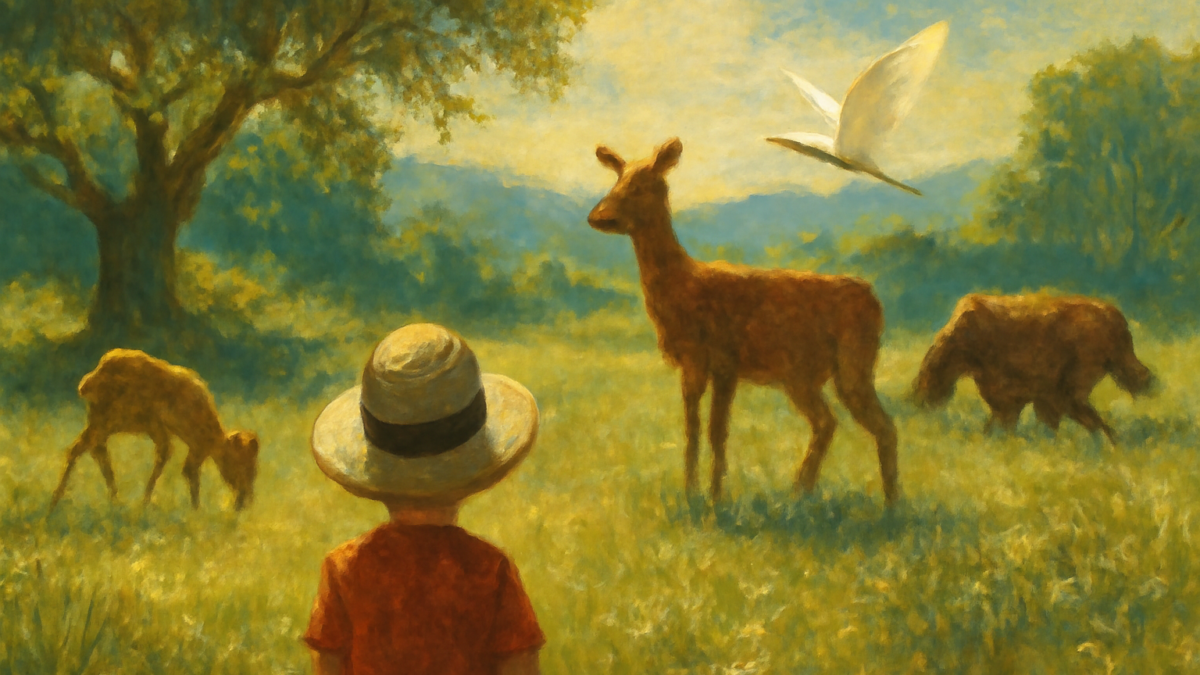
Maria Montessori’s Vision of the Child as Hope for Humanity
Maria Montessori, the Italian educator who revolutionized childhood learning in the early twentieth century, devoted her life to understanding the potential locked within every child. This particular quote encapsulates her fundamental belief that children, when provided with the right environment and freedom to explore, possess an innate capacity for growth that could fundamentally transform society. Montessori wrote these words during a period of tremendous social upheaval, when the world seemed locked in patterns of violence, inequality, and disconnection. Her vision was radical for its time: rather than viewing children as empty vessels to be filled with adult knowledge, she saw them as natural scientists and builders of civilization, capable of developing an entirely new model of human society if given the proper conditions. The quote reflects her conviction that investing in childhood education was not merely about academic achievement but about cultivating human beings capable of love, creativity, and genuine connection to their world.
Born in 1870 in Ancona, Italy, Maria Montessori became one of the first women to earn a medical degree in her country, a feat that required extraordinary determination and intellectual prowess. Her medical background profoundly shaped her educational philosophy, as she approached childhood learning with the precision and observation skills of a scientist rather than the dogmatic certainty of traditional educators. After earning her doctorate in 1896, she initially worked with children who had developmental disabilities in Rome, and this experience proved transformative. Montessori observed that these children, when given access to specialized materials and freedom to explore at their own pace, made remarkable progress. This revelation led her to question whether traditional educational methods might be equally limiting for all children, not just those with learning differences. Her curiosity about how children naturally learn would ultimately reshape education globally.
In 1906, Montessori opened her first classroom, the Casa dei Bambini (Children’s House), in a poor neighborhood of Rome. This modest beginning would prove to be the birthplace of a pedagogical movement that would eventually spread to six continents. What set Montessori’s classroom apart was her radical insistence on creating an environment designed for children’s sizes and needs rather than adults’, on carefully prepared materials that allowed for self-directed exploration, and on the role of the educator as an observer and guide rather than an authoritarian figure. She famously said she wanted to “follow the child,” meaning educators should watch what naturally captured children’s attention and interests, then provide opportunities for deeper exploration. The results were startling to observers: children who were considered troublemakers in traditional schools became focused, joyful learners; those from impoverished backgrounds demonstrated intellectual capabilities previously thought beyond their reach; and most remarkably, children seemed to experience an almost spiritual fulfillment in their work.
A lesser-known aspect of Montessori’s life is her passionate commitment to peace and social justice, themes that permeate much of her later writing and philosophy. While her educational methods gained international fame through the early twentieth century, Montessori herself became increasingly concerned with how education could serve as a tool for building a more peaceful world. She was nominated for the Nobel Peace Prize three times, a fact that many people unaware of her full legacy do not realize. During the rise of fascism in Italy, Montessori refused to align her methods with Mussolini’s authoritarian regime, which sought to control education for nationalist purposes. Her resistance cost her dearly: her schools were shut down in Italy, and she was forced into exile. This demonstrates that her philosophy was never merely about nice classroom activities or happy children, but about fostering independence of thought and moral autonomy that would naturally resist tyranny and oppression.
The quote about the child who has “felt a strong love for his surroundings” directly reflects Montessori’s observations about what happens when children are liberated from rigid curricula and allowed to develop relationships with their environment. She noticed that children in her classrooms developed almost tangible affection for their classroom spaces, for the natural materials they worked with, and for other living beings they encountered. This wasn’t a sentimental attachment but a deeply engaged relationship born from sustained attention and care. She believed this capacity for love and connection, cultivated in childhood, was the antidote to the alienation and compartmentalization she saw in industrial society. When a child developed genuine enthusiasm for work—not because they feared punishment or sought external rewards, but because the work itself was meaningful and developmentally appropriate—they were experiencing something Montessori considered sacred. This experience, she argued, fundamentally altered a person’s relationship to themselves and to society.
Over the past century, Montessori’s ideas have experienced remarkable cultural persistence and periodic renaissance. Following her death in 1952, her methods continued spreading, and they experienced a significant revival during the counterculture movements of the 1960s and 1970s, when her emphasis on individual freedom and self-direction aligned with broader questioning of institutional authority. In more recent decades, Montessori education has become increasingly popular among affluent families seeking alternatives to conventional schooling, though this trend has also somewhat distorted her original vision. The original Montessori schools served poor and marginalized children, and her methods were explicitly designed as tools for social transformation and equity. Today, her name is often invoked in discussions ranging from child psychology and neuroscience to environmental education and social-emotional learning, with neuroscience research increasingly validating her century-old observations about how children actually learn and develop. Yet there remains a gap between her full philosophical vision and how her methods are often implemented or understood in contemporary educational contexts.
The timeless reson