Jack London’s Philosophy of Strength and Survival
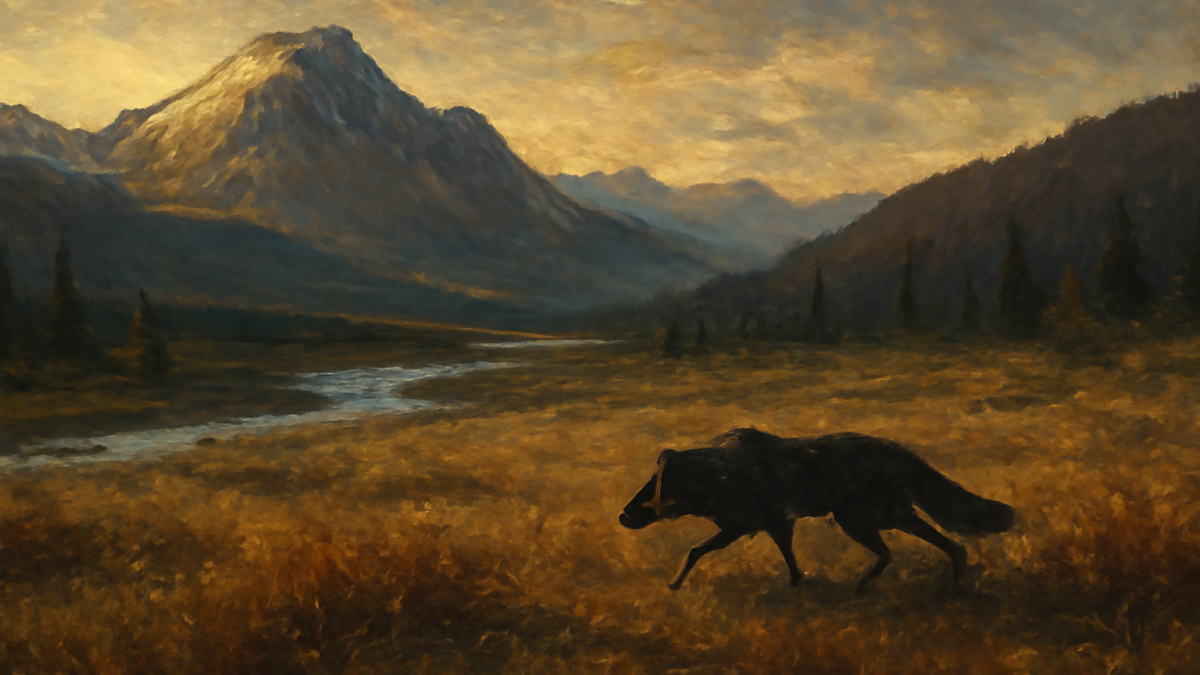
Jack London penned this vivid description of a powerful predator in his 1906 novel “The Call of the Wild,” a work that would become one of American literature’s most enduring explorations of primal strength and natural law. The quote describes Buck, a domesticated dog who transforms into a fierce creature capable of surviving in the Yukon wilderness during the Klondike Gold Rush. This passage encapsulates London’s central thesis about the raw forces governing existence—the notion that in nature, survival belongs exclusively to those with the strength and will to claim it. The novel emerged from London’s own experiences during the 1897 Gold Rush, when he briefly prospected in the Yukon Territory and witnessed firsthand the brutal competition for resources and the transformative power of wilderness on civilized men and animals alike. By the time he wrote “The Call of the Wild,” London had already established himself as a prolific and commercially successful writer, but this particular work would crystallize the philosophy that would define his entire literary legacy.
London’s life was as dramatic and unconventional as his fiction, shaped by poverty, self-education, and relentless ambition. Born in 1876 in San Francisco to an unmarried mother who told him his father was a wealthy businessman (a claim he later discovered was false), London spent his childhood in working-class neighborhoods, often living in poverty. He worked numerous dangerous jobs—as an oyster pirate, a cannery worker, a sailor, and a coal heaver—experiences that gave him an intimate understanding of the struggles of the working class and the harsh realities of industrial society. Largely self-taught, London developed a voracious appetite for reading and began attending high school at fifteen, eventually spending a year at the University of California at Berkeley. His formal education was brief, but his intellectual curiosity was boundless, leading him to immerse himself in the works of Darwin, Nietzsche, Marx, and Spencer—thinkers whose ideas about evolution, survival, and the nature of human progress would profoundly shape his worldview and creative output.
What many people don’t realize about London is that his philosophy was far more complex and contradictory than the simple “survival of the fittest” narrative often attributed to him. While he embraced Social Darwinism and believed in the triumph of the strong, he was simultaneously a committed socialist who believed wealth should be distributed equitably and who dedicated much of his writing to exposing the plight of the working poor. He joined the Socialist Party in 1895 and remained a member for the rest of his life, using his platform to advocate for workers’ rights and social reform. This apparent paradox—celebrating individual strength while advocating for collective welfare—runs through all of London’s major works, revealing a man grappling with irreconcilable tensions in his own philosophy. Additionally, London was something of a scientific enthusiast and often incorporated genuine sociological and biological research into his fiction, though he frequently misinterpreted or exaggerated these findings to support his preferred narratives about human nature.
The cultural impact of this particular quote and the novel from which it comes cannot be overstated. “The Call of the Wild” became an immediate bestseller and remains one of the most widely taught novels in American schools, introducing generations of readers to London’s philosophy of natural strength and the lure of primitive existence. The book has been adapted into numerous films, stage productions, and even animated features, each interpreting Buck’s journey according to contemporary values and concerns. The quote itself has been wielded in various cultural contexts—sometimes to justify competitive capitalism and ruthless individualism, other times as a cautionary tale about the dangers of such philosophies. Environmentalists have cited it to advocate for wilderness preservation, while others have invoked it to rationalize everything from corporate boardroom tactics to personal training philosophies. The novel’s depiction of Buck’s transformation resonated powerfully with early twentieth-century anxieties about the supposedly enervating effects of civilization and spawned countless imitators and variations on the theme of return to nature.
What makes this quote resonate across time and cultures is its fundamental acknowledgment of a truth that most civilized society attempts to obscure: that life, at its core, operates according to principles of power, competition, and adaptation. London’s unblinking examination of these forces—rather than their romantic idealization—gives the passage its enduring force. In our contemporary moment, when we are simultaneously more connected and more competitive than ever, the quote speaks to persistent anxieties about our place in the world and our capacity to survive and thrive in challenging circumstances. Yet the quote also carries a darker resonance, one that London himself was aware of even as he celebrated strength. The “killer” described in his prose is amoral—neither good nor evil, simply efficient and focused on survival. For everyday life, the quote invites readers to consider uncomfortable questions: To what extent are we shaped by our environments? How much of our success depends on inherent strength versus circumstance? Is civilization a beneficial constraint or a weakness that leaves us vulnerable?
London’s own life provided a tragic commentary on the sustainability of his philosophy of strength. Despite his commercial success and celebrated status as a writer, London struggled with alcoholism, financial instability, and increasingly dark moods. He surrounded himself with the trappings of a strong man—he was an accomplished boxer and sailor, owned a large ranch in California, and famously traveled extensively—yet these external demonstrations of vigor could not stave off the internal deterioration that would lead to his death at forty in 1916. His suicide by morph