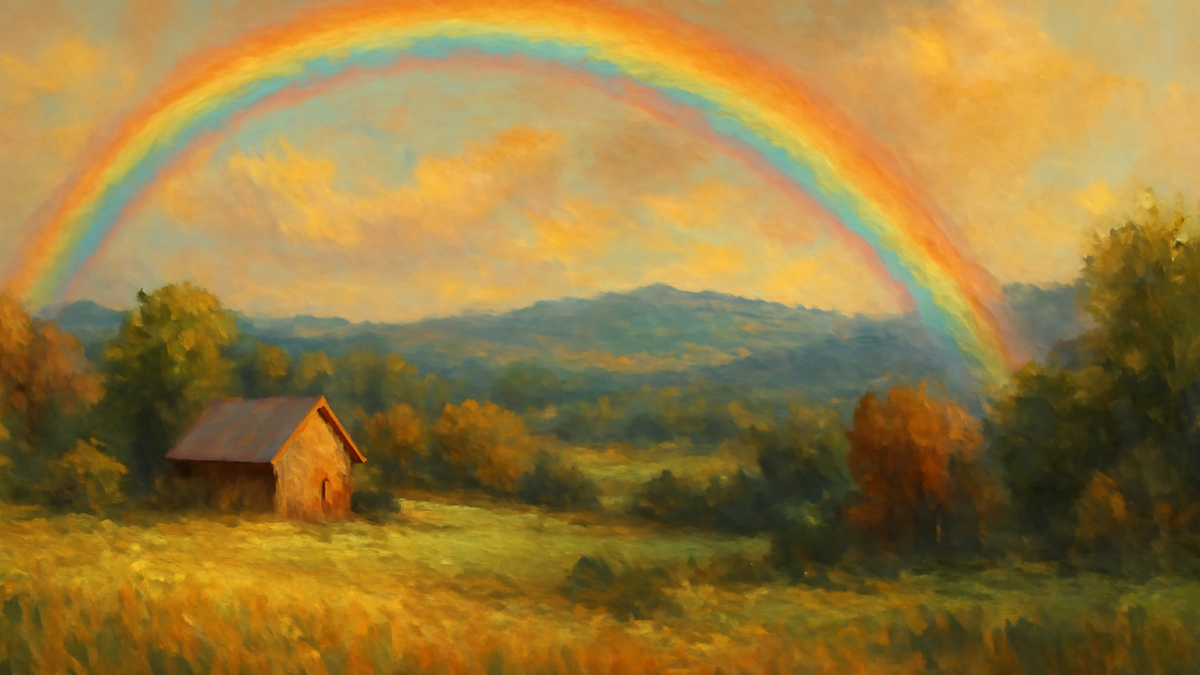
Dolly Parton’s Rainbow and Rain: A Life Philosophy in One Sentence
Dolly Parton’s deceptively simple observation, “The way I see it, if you want the rainbow, you gotta put up with the rain,” emerged from a woman whose entire life has been a masterclass in perseverance through adversity. This quote, which has become one of her most beloved and frequently cited pieces of wisdom, encapsulates a philosophy that Parton has lived with remarkable consistency throughout her decades-long career. The saying likely emerged during interviews in the 1980s or 1990s when Parton was consolidating her status as a cultural icon, though it became more widely circulated through the internet age as a meme and motivational staple. Like much of Parton’s public persona, the quote appears effortless and warm, yet it carries within it the hard-won understanding of someone who has genuinely weathered storms both personal and professional.
To understand why this particular quote resonates with such force, one must first understand Dolly Parton herself. Born on January 19, 1946, in a one-room cabin on the Little Pigeon River in Sevier County, Tennessee, Parton emerged from circumstances that would have crushed many spirits. Her family was desperately poor—so poor that her father, Lee, paid the doctor who delivered her with a sack of cornmeal because he had no money for the delivery fee. The Parton family lived in extreme poverty, often surviving on beans, cornbread, and whatever they could grow or hunt. Her mother, Avie Lee, came from a more educated background and instilled in her children a sense of possibility despite their material deprivation. Young Dolly watched her mother handle hardship with grace and creativity, lessons that would define her character. By all reasonable measures of determinism, Dolly Parton should have followed the typical trajectory of rural Appalachian girls in the 1950s: limited education, early marriage, and a life confined to the economic and social boundaries of her region.
Instead, Parton became one of the most successful entertainers in American history, with a career spanning over six decades and encompassing country music, pop crossover success, film, television, business ventures, and philanthropy. Her voice, distinctive with its distinctive vibrato and emotional depth, first gained recognition on local radio when she was just a child. By her early teens, she was performing on television shows, and by eighteen, she had moved to Nashville with just a few dollars in her pocket to pursue a music career—a bold move that terrified her but which she knew was necessary to escape the poverty of her upbringing. What makes Parton’s success particularly remarkable is not simply that she achieved it, but how she achieved it: through talent, relentless work ethic, strategic thinking, and an unusual combination of business acumen and artistic integrity. She wrote her own songs, produced her own records, and maintained creative control over her image in ways that were unusual for female entertainers of her era.
Yet despite her enormous success in music, with numerous Grammy Awards, chart-topping hits, and induction into the Country Music Hall of Fame, it is perhaps Parton’s resilience through personal tragedy that most directly validates her rainbow-and-rain philosophy. In 1978, Parton’s house burned to the ground in a devastating fire, destroying years of memories and possessions. Rather than succumb to despair, she rebuilt and continued forward. More significantly, she has lived with chronic pain from a car accident in her youth and has undergone multiple surgeries throughout her life, yet she rarely lets this affect her public appearances or work ethic. She lost her beloved mother in 2003, an event that deeply affected her. She has also been remarkably open about her struggles with self-doubt, insecurity, and the pressure of maintaining her image as a performer—struggles that many fans never suspected given her radiant public presence. What emerges from these experiences is not bitterness or resignation, but the hard-won philosophy expressed in the rainbow-and-rain quote.
One lesser-known aspect of Parton’s character that directly illuminates her philosophy is her extraordinary business acumen. While often portrayed as a singing superstar, Parton is equally impressive as a businesswoman and entrepreneur. She owns her own production company and has made numerous smart investments that have made her wealthy by any measure, but what’s particularly interesting is that she has used her business success to maintain creative control and independence. She turned down a hundred-million-dollar offer to renew her contract with RCA Records because she wanted freedom to make decisions on her own terms. This business independence meant she could take creative risks, collaborate with artists outside country music, and pursue projects she found meaningful rather than simply profitable. She established Dolly Records, her own label, and has been involved in various business ventures. This independence, earned through years of building trust and proving her business judgment, is not something that happened overnight—it required decades of “putting up with the rain” in the form of negotiations, conflicts, and decisions that were unpopular with various stakeholders.
Parton’s most enduring and visible legacy beyond music may be her philanthropic work, particularly the Imagination Library. Founded in 1995 in her hometown of Sevier County, Tennessee, the Imagination Library mails free books to registered children from birth to age five. What began as a small regional initiative has grown into an international program that has distributed millions of books to children in the United States, Canada, Australia, and the
The Meaning Behind Dolly Parton’s Rainbow Quote
At its heart, this quote is a beautifully simple reminder that struggle and reward are inseparable. The rain represents the hardships, setbacks, and difficult seasons we all face — the moments when everything feels gray and uncertain. The rainbow, of course, is the breakthrough, the success, the joy that waits on the other side. When Dolly says “the way I see it, if you want the rainbow, you gotta put up with the rain,” she isn’t just offering empty comfort. She’s stating a fundamental truth about how meaningful achievements are earned: not in spite of difficulty, but because of it.
Few people are better qualified to deliver that message than Dolly Parton herself. She grew up in a one-room cabin in the Smoky Mountains of Tennessee, the fourth of twelve children in a family with very little money. Her father, unable to pay the doctor who delivered her, traded a bag of oatmeal as payment. Despite those humble beginnings — or perhaps because of them — Dolly had an enormous dream. She moved to Nashville the day after she graduated high school in 1964, but success didn’t arrive overnight. She faced years of closed doors, dismissive industry figures, and the slow, unglamorous work of proving herself in a competitive and often unwelcoming business. She put up with plenty of rain before her rainbow arrived. That personal history is precisely what gives the quote its weight and authenticity.
This quote resonates with millions of people because it validates the hard parts of life without dwelling on them. It doesn’t promise that the rain will stop immediately or that the journey will be easy. Instead, it reframes hardship as a necessary part of the process — something to be endured with patience and even a sense of purpose. Whether someone is navigating a career setback, a painful relationship, a health crisis, or a personal loss, the idea that something beautiful can follow something difficult is a genuinely powerful source of comfort. Dolly’s warmth, credibility, and her own rags-to-riches story make her the perfect messenger for a truth that might feel hollow coming from someone who never really struggled.
Using This Quote in Everyday Life
It’s no surprise that this quote has found its way into so many corners of daily life. People share it on Instagram and Pinterest during tough personal seasons, print it on graduation cards to acknowledge that the real work is just beginning, and stitch it onto pillows and wall art as a daily reminder to keep going. Coaches and teachers use it to motivate students facing failure, and therapists have been known to bring it into sessions as a way to normalize struggle. When people want to encourage a friend who is going through something hard, “if you want the rainbow you gotta put up with the rain” is the kind of direct, no-nonsense wisdom that cuts straight to the point without sounding preachy. And for those moments when you need to remind yourself — not just someone else — “the way I see it, if you want the rainbow, you gotta put up with the rain” is the kind of quote worth keeping somewhere you’ll see it every day.