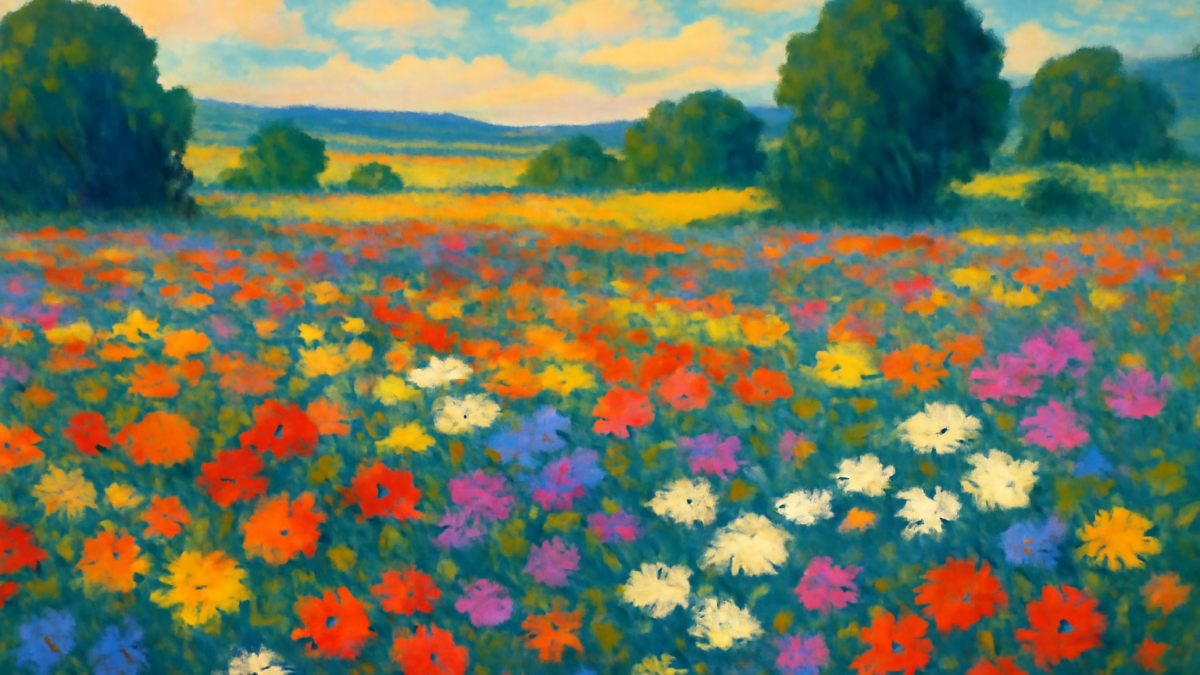
Henri Matisse and the Art of Looking: A Study of Vision and Joy
Henri Matisse, the French modernist master whose name has become synonymous with color and artistic liberation, spent much of his life encouraging people to see the world anew. The quote “There are always flowers for those who want to see them” emerged from his later years, when the artist had transitioned from painting grand canvases to creating vibrant paper cutouts from his apartment in Nice. This seemingly simple observation about flowers carries the weight of Matisse’s entire artistic philosophy—that beauty exists abundantly around us, but only those who actively seek it with intention and openness will truly perceive it. The statement reflects not merely an appreciation of nature, but a profound belief in the power of human perception to create meaning and joy in existence. For Matisse, who spent decades revolutionizing how we understand color, form, and composition, the ability to “see” was far more than a passive biological function; it was an active, creative engagement with the world.
Born in 1869 in the industrial town of Le Cateau-Cambrésis in northern France, Henri Matisse came to art relatively late in life and almost by accident. His mother had purchased a box of paints to entertain herself during a difficult period, and young Henri, fascinated by the materials, began experimenting with drawing. He initially pursued law as a career, dutifully attending law school in Paris, but during his early twenties, after suffering from appendicitis, he experienced what he would later describe as a revelation while convalescing at home. His mother encouraged him to continue drawing, and something awakened within him—a sense that this was his true calling. After recovering, he abandoned his legal studies entirely and enrolled at the Académie Carrière in Paris in 1891, shocking his family but setting himself on the path to artistic immortality. This unconventional beginning meant that Matisse approached art without the weight of traditional academic training that might have constrained his vision. He was free to experiment, to question, and to develop his own visual language.
Matisse’s career trajectory was marked by constant evolution and fearless experimentation, particularly in his exploration of color. By the early 1900s, he had become associated with the Fauvist movement, a radical departure from impressionism that prioritized bold, non-naturalistic colors applied with intense emotional directness. Works like “Woman with a Hat” (1905) scandalized the Paris art world with their seeming rejection of realistic representation, yet Matisse understood that his “wild beasts” approach to color was actually a deeper truth-telling about human experience and perception. He believed that color could express emotion directly, without the intermediary of realistic representation. This philosophy extended far beyond painting into his designs for textiles, ceramics, and eventually his paper cutouts. Throughout his life, Matisse was driven by what he called the desire to create “an art of balance, of purity and serenity,” which meant distilling visual experience to its essential emotional core. This commitment to finding profound simplicity within complexity would eventually lead to some of his most celebrated work created after he could no longer paint.
Less widely known about Matisse is that he suffered from severe depression and existential doubt throughout much of his career, despite the apparent joie de vivre evident in his work. His family life was complicated, marked by infidelities and emotional distance, and he struggled with the weight of artistic ambition and the fear of failing to achieve his vision. In 1941, at the age of 71, he underwent major abdominal surgery and nearly died on the operating table. During his recovery, unable to paint from bed, he began experimenting with colored paper and scissors, creating what would become known as his “cut-outs” or “gouaches découpées.” These final works, created during the last thirteen years of his life while he was largely confined to bed or a wheelchair, represented not a compromise but a liberation. Free from the physical demands of traditional painting, Matisse achieved a directness and spontaneity that he felt surpassed everything he had done before. His late work demonstrated a kind of spiritual transcendence, a ultimate distillation of his lifelong quest to capture pure visual and emotional truth. Many art historians argue that these final years, when most artists might have despaired at physical limitation, produced Matisse’s most profound and joyful creations.
The quote about flowers likely emerged from this period of creative abundance in his final years, when Matisse existed in a kind of meditative state, creating art in his Parisian apartment, increasingly isolated from the outside world yet somehow more connected to its essential beauty. He spent hours observing the light in his room, studying the way it transformed colors throughout the day, and contemplating the subtle relationships between forms. His assistant and later biographer, Lydia Delectorskaya, recalled how Matisse would spend entire days simply arranging and rearranging colored papers, occasionally glancing at the flowers he kept in vases around his workspace. The quote captures something crucial about his method during these years: he wasn’t inventing flowers from imagination, nor was he struggling to capture their appearance through painting. Rather, he was engaged in a continuous practice of looking—truly seeing—the flowers that were already present. This act of intentional observation was itself the creative act. For Matisse, the flowers represented not just botanical subjects but symbols of the joy and meaning that suffuses the world for those patient and perceptive enough to notice.
The cultural impact of this quote extends far beyond art