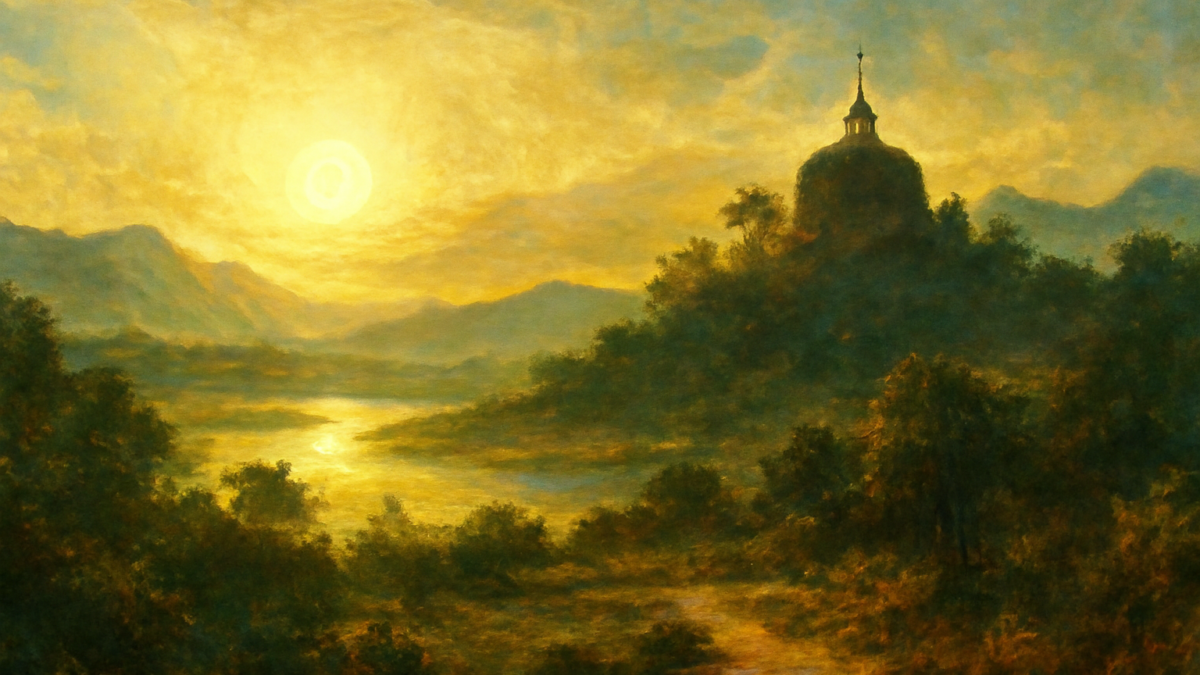
The Luminous Philosophy of “Make of Yourself a Light”
The quote “Make of yourself a light” is often attributed to Buddha, though its exact origins remain somewhat obscure in the historical record. This particular phrasing appears in various translations of Buddhist teachings, most notably in interpretations of the Dhammapada and other Pali Canon texts. The quote likely resonates most closely with Buddha’s final teachings, delivered in the Mahaparinirvana Sutra, where he emphasized self-reliance and inner illumination as the path to enlightenment. The context is one of profound practical wisdom: Buddha was addressing his disciples near the end of his life, urging them not to rely solely on external teachers or authority figures, but to cultivate their own inner light of understanding and wisdom. This teaching encapsulates the very essence of Buddhist philosophy—that enlightenment is not granted by a deity or external savior, but must be actively developed through one’s own effort and insight.
Siddhartha Gautama, who would become known as the Buddha or “the Awakened One,” was born around the 5th century BCE into the Sakya clan in what is now Nepal. His father was a king who attempted to shield his son from the suffering inherent in human existence, surrounding him with luxury and pleasure within palace walls. This gilded cage could not, however, contain Siddhartha’s curiosity about the world, and at approximately twenty-nine years old, he ventured beyond the palace boundaries for the first time. There he encountered an elderly person, a sick person, a corpse, and a wandering ascetic—sights that shattered his protected worldview and set him on a spiritual quest. For six years, Siddhartha practiced extreme asceticism, nearly starving himself in pursuit of truth, before realizing that such self-mortification was counterproductive. He eventually settled on what he called the Middle Way, a balanced approach between indulgence and self-denial.
What many people don’t realize about Buddha is that he was not a believer in worship or the supernatural. He explicitly rejected the notion that he should be revered as a god, and early Buddhism contained no elaborate supernatural pantheon despite what later interpretations added to the religion. Buddha was fundamentally a rationalist and empiricist, encouraging his followers to test his teachings through their own experience rather than accept them on faith. He famously told his disciples to question everything, including his own words, if their direct experience contradicted his teachings. This skeptical, investigative approach was revolutionary for a spiritual teacher in his era and remains striking today. Additionally, Buddha was one of history’s earliest feminists, officially ordaining women into monastic communities despite significant social resistance, and he regularly taught that women were equally capable of achieving enlightenment as men—a radical position in ancient India.
The phrase “make of yourself a light” emerges from Buddha’s concept of “atta deepo bhava,” which translates more literally as “be a lamp unto yourself.” This teaching appears in the Dhammapada Sutra 160 and again in his final words recorded in the Mahaparinirvana Sutra. The “light” in Buddhist philosophy represents wisdom, enlightenment, and clarity—the piercing awareness that dispels the darkness of ignorance. In Buddha’s teaching, this light is something each person must cultivate individually through mindfulness, meditation, ethical conduct, and wisdom. The metaphor is particularly powerful because light is universally understood as something that reveals truth, dissipates confusion, and creates safety. By encouraging people to “make” themselves a light, Buddha was emphasizing active creation and personal responsibility rather than passive reception. The teaching suggests that enlightenment is not a destination one reaches but a continuous process of self-cultivation and refinement.
Over the centuries, this quote has become one of the most resonant and widely quoted Buddhist teachings in the Western world. It has appeared in countless meditation centers, Buddhist literature, and even secular self-help texts. The quote’s cultural impact has been particularly significant in the modern era, where it appeals to contemporary values of self-empowerment, individualism, and personal agency. In the 1960s and 1970s, during the countercultural movement and the Western embrace of Eastern spirituality, this quote became a rallying cry for seekers rejecting institutional authority and institutional religion. It has since been invoked by spiritual teachers, motivational speakers, therapists, and activists—sometimes accurately reflecting Buddhist philosophy and sometimes stretched to support ideas Buddha might not have endorsed. The quote has also been used in popular culture, appearing in films, self-help books, and social media, often divorced from its original spiritual context but retaining its inspirational power.
The enduring appeal of “make of yourself a light” lies in its elegant simplicity and its profound implications. On one level, it’s a call to personal responsibility and self-improvement—you cannot wait for circumstances to change or for others to illuminate your path; you must do the work yourself. This resonates with contemporary audiences who are increasingly skeptical of external authorities and institutional solutions. On another level, it’s deeply communal and altruistic. A light, by its very nature, illuminates not just the person carrying it but everything around them. When you cultivate wisdom, understanding, and compassion within yourself, you inevitably affect those in your sphere. Your clarity helps others find their own way; your calm presence soothes anxiety in others; your integrity models ethical living. The quote thus bridges the seemingly contradictory Buddhist ideals of both personal enlightenment and compass