Pablo Neruda’s “Spring and the Cherry Trees”: A Love Letter in Verse
Pablo Neruda’s declaration “I want to do to you what spring does with the cherry trees” stands as one of literature’s most evocative expressions of passionate love, yet its origins and context remain somewhat mysterious to general readers. The line appears in Neruda’s writings during the height of his romantic period, likely composed during the mid-twentieth century when the Chilean poet was in his most prolific years. Though sometimes attributed to specific collections or love poems, the exact provenance of this particular quote has become somewhat obscured by its widespread circulation through contemporary social media and romantic anthologies, where it’s often shared without precise source attribution. Nevertheless, its essence perfectly encapsulates the poetic philosophy that Neruda championed throughout his career—the transformation of human emotion into sensory, natural imagery that transcends the boundaries between the lover and the beloved, between the human and the natural world.
To understand this quote’s profound resonance, one must first understand Pablo Neruda himself, born Ricardo Eliecer Neftalí Reyes Basoalto in 1904 in Parral, Chile. Neruda’s life was a fascinating contradiction of the intimate and the political, the personal and the universal. He came from relatively modest beginnings in a small Chilean town, where his father worked as a railroad employee, yet he would eventually become one of the most celebrated poets of the twentieth century, winning the Nobel Prize in Literature in 1971. What many people don’t realize is that Neruda was not primarily self-educated or discovered by accident—he was a precocious talent who published his first book of poems at just nineteen years old, demonstrating from his youth an extraordinary ability to capture the complexities of human emotion with crystalline clarity and surprising innovation.
Neruda’s career was remarkably diverse, spanning not only poetry but also diplomacy, political activism, and even culinary appreciation. Few people know that Neruda served as a diplomat for the Chilean government, representing his nation in various countries including Burma, Ceylon (now Sri Lanka), Java, and Spain. During the Spanish Civil War, Neruda was profoundly moved by the Republican cause and used his diplomatic position to advocate for Spanish refugees, demonstrating that his political consciousness was inseparable from his poetic voice. He was also a committed communist throughout much of his adult life, a commitment that shaped his worldview and led him to produce not only intimate love poetry but also powerful social and political verse that condemned imperialism and capitalist exploitation. Yet despite this serious political engagement, Neruda maintained a remarkable capacity for joy, sensuality, and celebration of the everyday pleasures of life—a balance that defines much of his most memorable work.
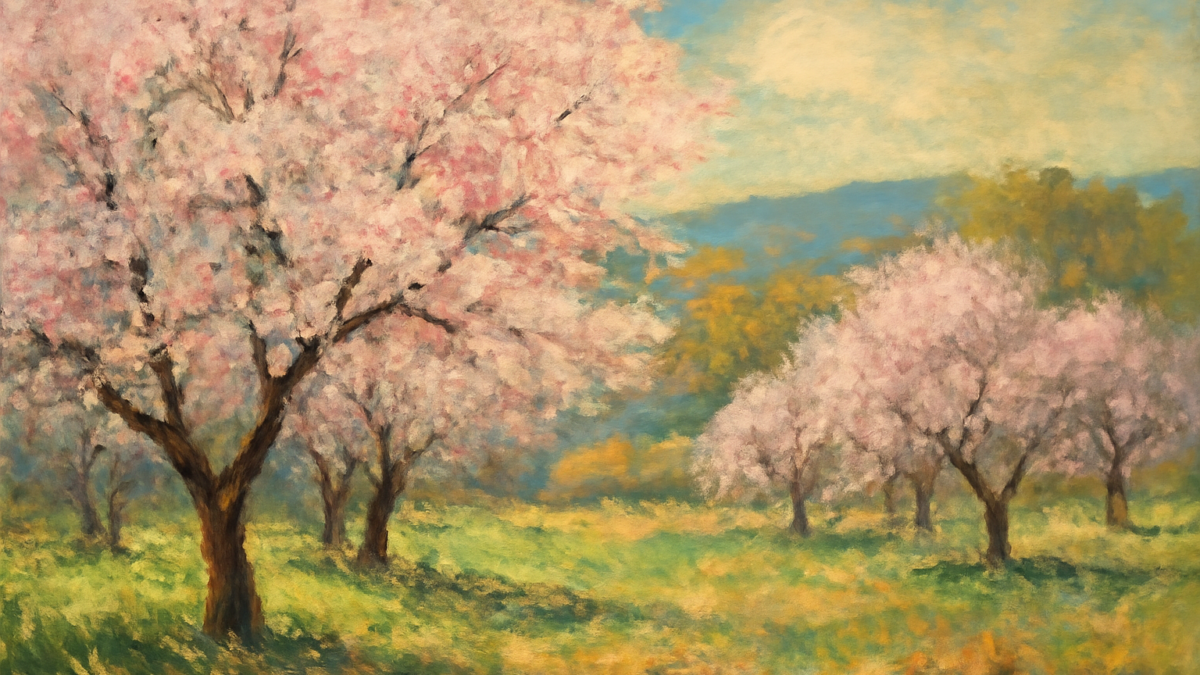
The quote about spring and cherry trees emerges from what scholars often call Neruda’s “Twenty Love Poems and a Song of Despair” period, though the line itself may originate from later collections. What makes this particular expression so distinctive is its use of natural transformation as a metaphor for love’s transformative power. Spring doesn’t destroy the cherry trees; rather, it awakens them, covers them with blossoms, fills them with vitality and purpose. The speaker’s desire to affect his beloved in this way suggests love as an essentially creative, life-giving force—not possessive or destructive, but generative and renewal-focused. This reflects a fundamental aspect of Neruda’s philosophical approach to love: he understood romantic passion not as a diminishment of the self but as an expansion, a blooming into fuller existence. The natural imagery, which permeates all of Neruda’s love poetry, serves to normalize and elevate human emotion by connecting it to cosmic, universal processes that transcend individual psychology.
Over the decades, this particular quote has become ubiquitous in contemporary popular culture, particularly through internet memes, greeting cards, and social media posts dedicated to romantic expression. It has been translated into numerous languages and quoted in films, television shows, and wedding ceremonies, often without attribution or context. This widespread circulation has given the line a life of its own, somewhat divorced from Neruda’s complete body of work and philosophical project. In many ways, this democratization of the quote—its transformation from elite literary artifact into folk wisdom—would have pleased Neruda, who believed poetry should speak to common people and address universal human experiences. Yet the detachment from Neruda’s broader political and philosophical context has also somewhat diminished the quote’s fuller implications. When we read only this line in isolation, we miss the surrounding meditation on desire, vulnerability, and the interconnection between the human and natural worlds that gives Neruda’s love poetry its distinctive resonance and depth.
The quote’s enduring power lies in what it suggests about the nature of love itself, particularly for contemporary readers seeking language to express intensely personal feelings. In an era when direct emotional expression is often mediated through screens and constrained by the inadequacy of everyday vocabulary, Neruda’s flowering metaphor offers a ready-made vehicle for authentic feeling. The image of spring transforming cherry trees is simultaneously specific and universal—everyone can visualize it, and yet everyone experiences this transformation differently based on their climate, their memories, their sensory history. This flexibility makes the quote adaptable to countless romantic contexts while maintaining its essential meaning. Moreover, the quote avoids some of the problematic aspects of traditional romantic language by emphasizing transformation rather than possession, growth rather than domination. The lover desires to awaken, activate, and enliven the beloved, not to own or control them—a subtle but important distinction that makes the sentiment feel more ethical