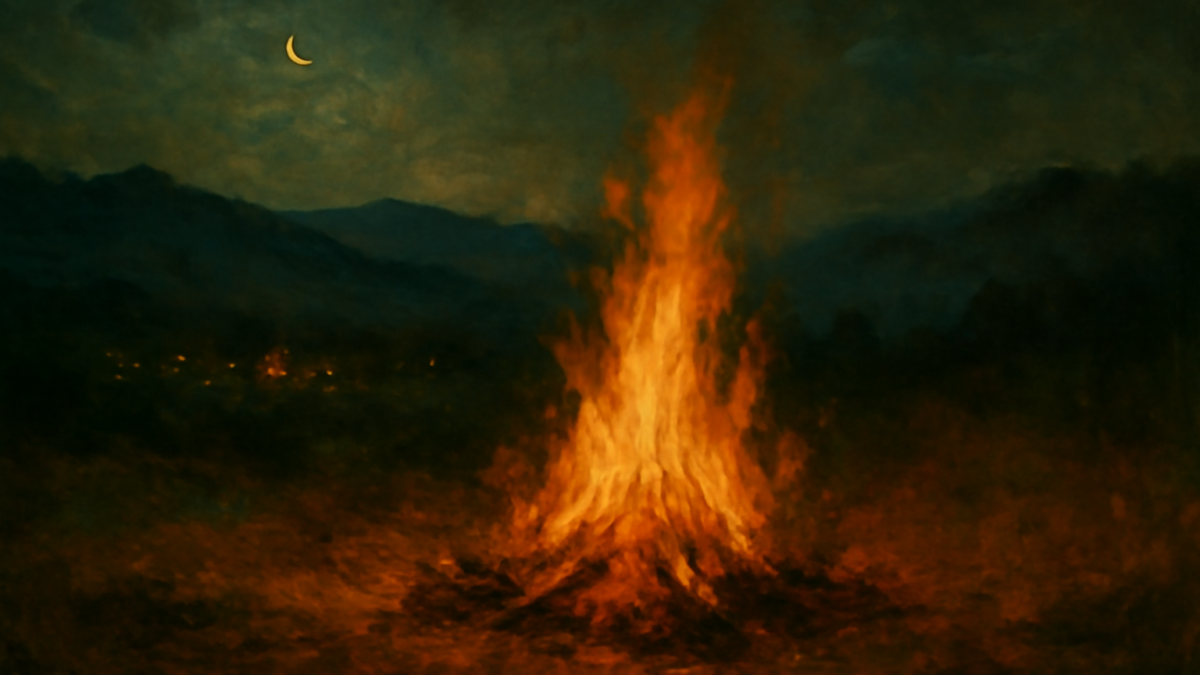
The Burning Fire Within: Understanding Rumi’s Vision of Divine Love
Jalal ad-Din Muhammad Rumi, known to the world simply as Rumi, was a thirteenth-century Persian poet, Islamic scholar, theologian, and Sufi mystic whose words continue to captivate millions nearly eight centuries after his death. Born on September 30, 1207, in Balkh (present-day Afghanistan), Rumi lived during a period of extraordinary cultural and spiritual ferment, though his life would be marked by displacement, loss, and ultimately, profound spiritual awakening. When Rumi composed the words about the burning fire of love, he was speaking from a place of deep mystical experience rather than romantic sentimentality. This quote emerges from the Sufi tradition’s core belief that love is not merely an emotion but a transformative spiritual force—a divine flame that consumes the ego and unites the soul with the infinite. The quote likely stems from Rumi’s later years in Konya, Turkey, where he had fled with his family as Mongol invasions swept across Central Asia, a journey that would itself become a metaphor for spiritual migration from the material world to the realm of divine love.
Rumi’s life was fundamentally shaped by a series of profound losses and encounters that deepened his spiritual understanding. His family settled in Konya around 1228, where Rumi eventually became a respected Islamic scholar and preacher, following in the footsteps of his father, Baha ad-Din Walad. For many years, Rumi maintained a conventional life as a religious authority, teaching and writing theological commentaries. However, in 1244, when Rumi was thirty-seven years old, his existence transformed entirely upon meeting Shams ad-Din Tabrizi, a wandering dervish who became his spiritual mentor and beloved companion. This encounter revolutionized Rumi’s understanding of spirituality, moving him away from intellectual knowledge toward experiential, ecstatic union with the divine. The relationship between Rumi and Shams was intensely intimate and transformative, though it remains mysterious to historians—what is certain is that when Shams mysteriously disappeared in 1248, Rumi experienced a spiritual crisis and overwhelming grief that paradoxically catalyzed his greatest creative output. His heartbreak became the furnace in which his most profound insights were forged.
The philosophical foundation underlying Rumi’s burning fire metaphor is rooted in Sufi Islamic mysticism, a tradition that emphasizes direct personal experience of the divine through love and ecstatic union. Unlike many conventional religious approaches that emphasize duty and doctrine, Sufism posits that the ultimate spiritual goal is fana, the annihilation of the self and ego in union with God. For Rumi, love is the mechanism through which this annihilation occurs. The “burning fire” he describes is not the comfortable warmth of human affection but rather an all-consuming flame that destroys the boundaries of individual identity. This fire burns whether we acknowledge it consciously through tears and explicit emotion or not—it operates continuously in the deepest recesses of being, working relentlessly to purify the soul. The quote suggests that the intensity of spiritual love transcends human emotional control; it simply is, operating at a level beneath conscious intention. This reflects Rumi’s belief that divine love is an objective force in the universe, not dependent on human belief or effort for its existence, though humans can certainly align themselves with it or resist it.
One lesser-known aspect of Rumi’s life is his remarkable productivity despite the emotional turmoil he endured. After Shams’s disappearance, Rumi channeled his grief into creative expression with astonishing intensity, producing approximately 65,000 verses of poetry during his remaining years. His two major works, the Masnavi (often called the “Quran in Persian”) and the Divan-e Shams-e Tabrizi, represent some of the most voluminous poetry ever created by a single individual. Perhaps even more remarkable is that Rumi never wrote his poetry sitting at a desk, carefully crafting each word. Rather, according to contemporary accounts and later biographical traditions, he would compose while spinning in ecstatic dances, often dictating verses to scribes who struggled to keep pace with the flood of inspiration. This practice eventually formalized into the whirling ceremony that became central to the Mevlevi Order, the spiritual brotherhood established by his followers after his death. The whirling itself became a physical embodiment of his philosophy—the dervish spins to shed the illusions of the false self while ascending toward divine love, the body itself becoming a instrument of spiritual transformation.
The quote’s specific language about “crying or not crying” also reveals something profound about Rumi’s psychology and spiritual teaching. In Islamic and Persian poetic tradition, tears are often associated with sincere emotion and spiritual yearning. However, Rumi suggests that the intensity of inner love cannot be measured by external expression. This represented a somewhat radical departure from convention because it emphasized that authentic spiritual states cannot be performed or faked—the fire burns equally regardless of outward display. Some scholars suggest this was also Rumi’s way of processing the impossibility of expressing his love for Shams adequately, a recurring theme in the Divan where he laments that no words or tears could fully convey the magnitude of what he felt. This universalization of his personal pain is characteristic of Rumi’s genius: he takes his individual suffering and