Love Without Boundaries: Mother Teresa’s Philosophy of Universal Compassion
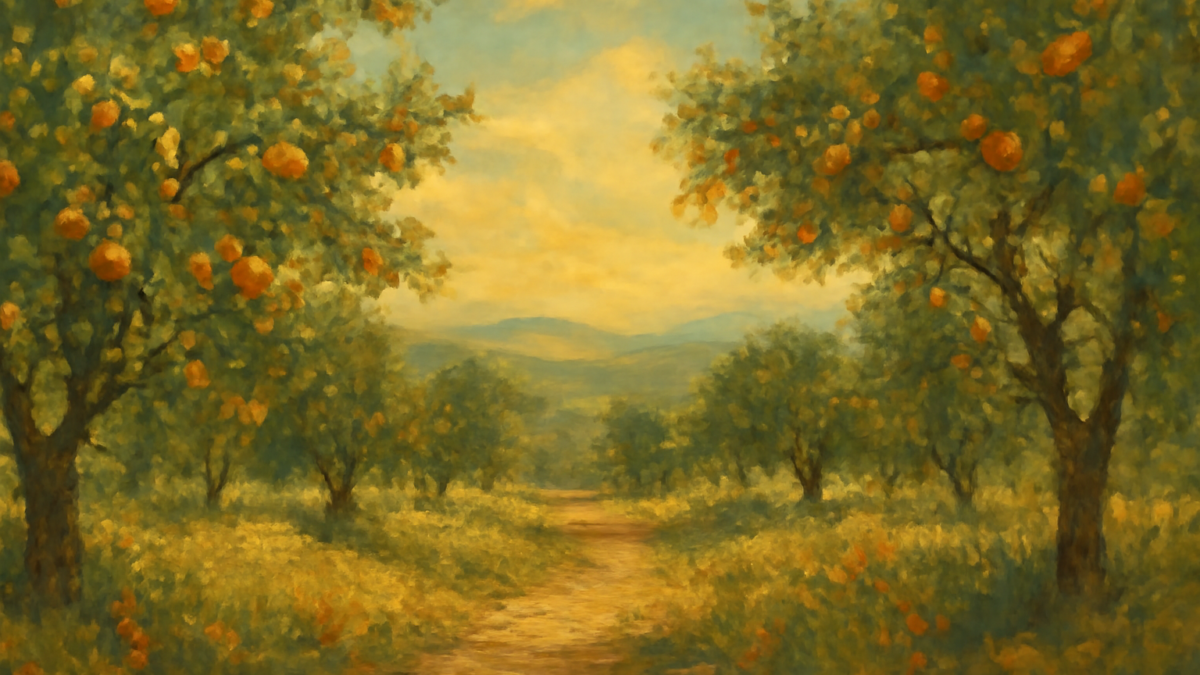
Mother Teresa’s assertion that “Love is a fruit in season at all times, and within reach of every hand” encapsulates the spiritual essence of her life’s work and remains one of her most frequently cited teachings. This deceptively simple statement emerged from decades of intimate encounters with human suffering, spoken during an era when the world seemed increasingly fractured by poverty, disease, and indifference. The quote suggests that unlike seasonal fruits that arrive and depart, love possesses a permanent availability that transcends circumstance, economics, or geography. It democratizes compassion in a way that challenges the common excuse that one lacks the means or opportunity to make a difference. Mother Teresa offered this wisdom not as abstract philosophy from an ivory tower, but as hard-won insight earned through years of serving the destitute and dying in the slums of Calcutta.
Anjezë Gonxhe Bojaxhiu, who would become known to the world as Mother Teresa, was born on August 26, 1910, in Üsküp (now Skopje, North Macedonia), the daughter of a successful Albanian merchant and his wife. Her father’s involvement in political activism and her mother’s deep Catholic faith profoundly shaped young Anjezë’s moral consciousness. When her father died unexpectedly when she was eight years old, the family’s circumstances changed dramatically, yet this loss seemed to crystallize her spiritual inclination rather than diminish it. By her teenage years, she felt called to religious life, though her family initially resisted this path. At the age of eighteen, she left her home in the Balkans to join the Sisters of Loreto in Dublin, an Irish congregation with missionary work in India. This decision represented both an act of faith and a dramatic severing of familial ties—she would never see her mother or sister again, adding a poignant undercurrent of personal sacrifice to her later teachings about love and loss.
Her arrival in Calcutta in 1929 marked the beginning of a profound transformation. For nearly twenty years, Mother Teresa taught at Saint Mary’s School, a relatively comfortable position serving middle-class Bengali girls, where she was respected and secure. Yet something gnawed at her consciousness during these years. In 1946, during a train journey to a retreat, she experienced what she described as a direct call from Christ to serve the poorest of the poor. This “call within a call,” as she termed it, redirected her entire life. After receiving permission from the Vatican, she left the Sisters of Loreto in 1948 and established the Missionaries of Charity, an organization dedicated to serving those society had abandoned: the dying, the destitute, the diseased, and the socially ostracized. Beginning with a single room and no funds, this organization would eventually establish homes for the dying, orphanages, and medical clinics throughout the world.
What many people do not realize about Mother Teresa is that she struggled with profound spiritual doubt for much of her life. Her private letters and journals, published posthumously in “Mother Teresa: Come Be My Light,” reveal that she experienced a devastating loss of faith during her decades of service. From the late 1940s until her death in 1997, she felt an apparent absence of God’s presence, yet she continued her work with unwavering dedication, famously stating that she acted “in faith” rather than “from faith.” This extraordinary contradiction between public serenity and private anguish complicates the popular image of a woman radiating divine certainty. Rather, her story becomes far more heroic—that of someone who continued to serve and love humanity not because of mystical confirmation but despite crushing existential loneliness. This context gives her teachings on love’s accessibility a different dimension; she was not a naive optimist but someone who understood the darkness of the human condition intimately.
The cultural impact of this particular quote cannot be separated from Mother Teresa’s 1979 Nobel Peace Prize acceptance speech, where similar sentiments appeared. During the Cold War, when ideological divisions seemed absolute and mutual assured destruction hung over humanity, her message that love remained universally available struck a chord that transcended geopolitical boundaries. The quote has been invoked in countless contexts: by marriage counselors emphasizing that love requires no special circumstances, by activists arguing that compassion is not a luxury but a responsibility for all, and by spiritual teachers arguing against the notion that only the privileged or educated can practice genuine love. Universities have embroidered the words on banners; religious organizations have printed it on cards distributed to the homeless; motivational speakers have quoted it to struggling individuals who felt their capacity for goodness had been exhausted. In a world that often frames love as a scarce commodity requiring perfect conditions or romantic idealization, Mother Teresa’s fruit metaphor offered something radical: the idea that love is abundant, perpetually available, and demands nothing except a willingness to reach out one’s hand.
The particular genius of the fruit metaphor deserves examination. Fruit symbolizes nourishment, natural production, sweetness earned through growth rather than manufacture, and something fundamentally good coming from organic processes. By describing love as a fruit “in season at all times,” Mother Teresa rejects the scarcity mentality that often prevents people from acting. We tell ourselves we cannot love because we are too busy, too wounded, too poor, too angry. Yet fruit grows continuously in various parts of the world; we need only learn where to find it. Similarly, love is always being produced somewhere by someone, always available to whoever reaches for it. This is not senti