The Courage of Sister Kenny: One Woman’s Defiant Legacy
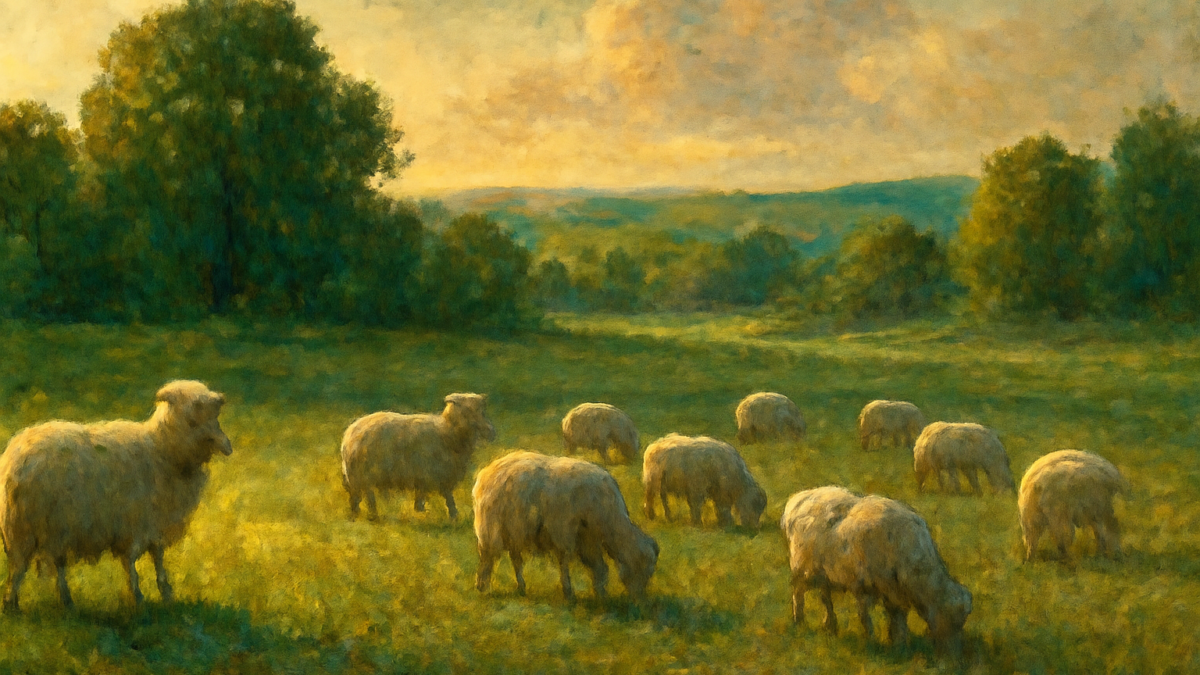
The quote “It’s better to be a lion for a day than a sheep all your life” is often attributed to Elizabeth Kenny, the Australian nurse and polio treatment pioneer whose name has become synonymous with bold defiance against medical orthodoxy. Though the exact origin of this aphorism remains somewhat murky—as is the case with many inspiring quotes that get passed around through culture—it perfectly encapsulates the philosophy that guided Kenny through a life of controversy, triumph, and relentless determination. The statement reflects her unwillingness to accept the conventional wisdom of her era, a stance that would ultimately revolutionize the treatment of poliomyelitis and earn her international recognition, though not without considerable personal cost and professional ridicule along the way.
Elizabeth Kenny was born in 1880 in Warialda, a small rural town in New South Wales, Australia, into a family of modest means. Her father was a horse breeder with Irish-Australian heritage, and her childhood was spent in the isolation of the Australian bush, where she developed an independent spirit and resourcefulness that would define her entire life. At age seventeen, without formal nursing training, Kenny joined the military as a nurse during the Boer War, an extraordinarily bold move for a young woman at the turn of the century. This early experience planted the seeds of her iconoclasm; she worked in field hospitals where she learned to improvise, to trust her observations, and to question authority when she believed it was wrong. Her lack of formal credentials would later become both a weakness her detractors weaponized against her and a strength that freed her from the rigid dogmas of institutional medicine.
In 1911, while working as a nurse in northern Queensland, Kenny encountered a severely paralyzed child with what she believed to be infantile paralysis, or polio. At this time, the standard medical treatment for polio patients was complete immobilization—limbs were splinted, braced, and kept rigid in the belief that any movement would worsen the paralysis. Kenny, relying on intuition and observation rather than textbook knowledge, tried something radically different. She applied hot cloths to the child’s affected muscles and gently moved the limbs through their range of motion, providing comfort and attempting to restore function through what she called the “Kenny method.” When the child showed remarkable improvement, Kenny had glimpsed a truth that the medical establishment was not ready to accept: that movement, not immobility, might be the key to recovery. She spent the next three decades fighting for recognition of her approach, traveling across continents, facing fierce opposition from orthopedic surgeons whose entire practice was based on the immobilization principle, and enduring public mockery from medical elites who dismissed her as a mere nurse without proper credentials.
What many people don’t realize about Elizabeth Kenny is the profound personal isolation her convictions cost her. She never married, devoting herself entirely to her mission, and spent much of her adult life in a state of semi-poverty, traveling from place to place to treat patients and gather evidence for her methods. She faced particular resistance in the United States, where she eventually moved and where the medical establishment was more rigidly hierarchical than even in her native Australia. Major orthopedic surgeons publicly attacked her work; medical journals rejected her papers; and the American Medical Association maintained official skepticism about her claims. Yet Kenny persisted with a kind of fierce single-mindedness that bordered on obsessive. She treated patients at her own clinics, documented their progress meticulously, and slowly accumulated testimonials from grateful patients who regained mobility that conventional medicine said was impossible. Her biography reveals a woman who sacrificed comfort, respectability, and personal happiness on the altar of her conviction that she was right.
The turning point came during the massive polio epidemic of the 1940s and 1950s. As thousands of children were stricken and faced a lifetime of paralysis or death, hospitals and medical professionals, desperate for any solution, began giving Kenny’s methods a chance. The results were undeniable—patients treated with her approach showed significantly better functional recovery than those treated with the standard immobilization method. Though she never received the complete vindication and universal acceptance she desperately wanted, Kenny’s fundamental insight was proven correct. Today, modern polio rehabilitation is based on the very principles she advocated: early mobilization, therapeutic exercise, and patient-centered treatment. The Kenny Institute, founded in her name, continues her work. Yet despite this eventual triumph, Kenny spent most of her life underappreciated, fighting against a tide of institutional resistance, embodying the very sentiment of her most famous quote—choosing to roar against the comfortable consensus rather than accept the safety of following the herd.
The quote “It’s better to be a lion for a day than a sheep all your life” resonates because it speaks to a universal human tension: the comfort of conformity versus the courage required to stand alone. In Kenny’s case, she literally embodied this principle—she had one day after another of being a “lion,” but never the comfort of being accepted by her peers during her lifetime. The quote has become popular in business and motivational contexts, often used to encourage entrepreneurship and risk-taking, though it’s worth noting that Kenny herself didn’t achieve financial success or widespread recognition until very late in life. It’s frequently cited by people facing difficult professional or personal choices, and it captures something essential about human dignity and self-determination. The phrase acknowledges that being right, or trying to do right, comes at a cost; it’s not a call to reckless