The Courage to Venture Beyond: Faulkner’s Philosophy of Risk and Growth
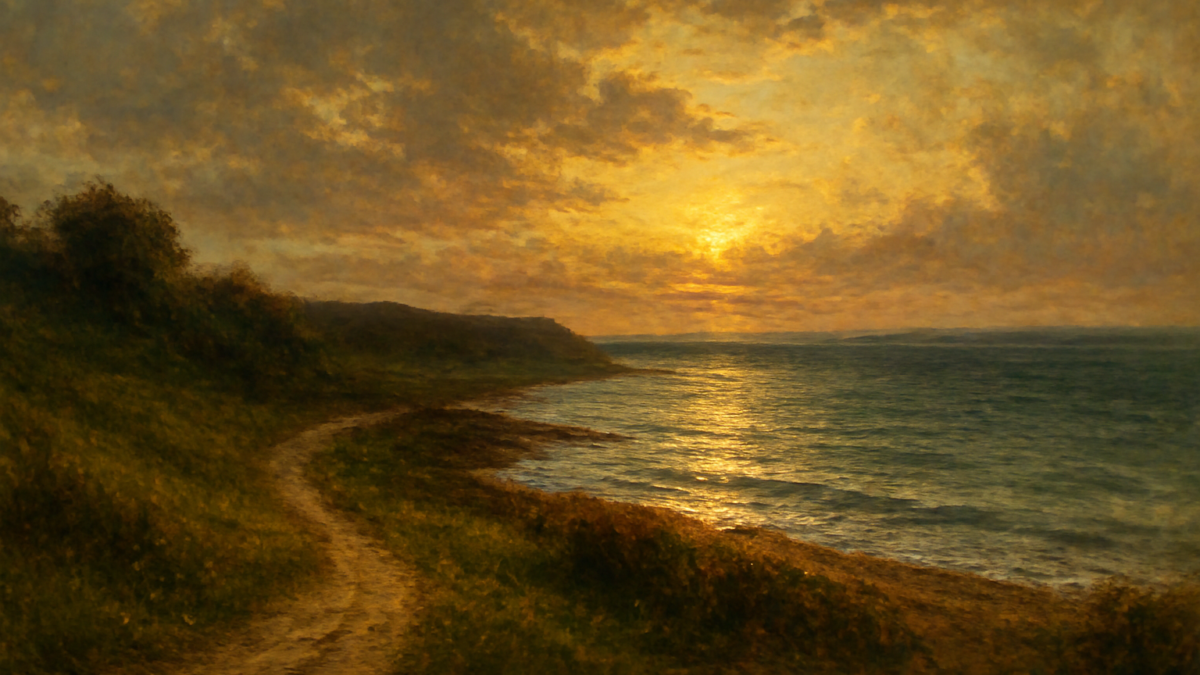
William Faulkner, the legendary American novelist born in 1897 in Mississippi, crafted one of literature’s most enduring metaphors about courage and growth with his observation that “You cannot swim for new horizons until you have courage to lose sight of the shore.” This quote encapsulates a philosophy that defined both Faulkner’s literary approach and his personal life—the necessity of abandoning safety and certainty in pursuit of meaningful achievement. While the exact origin of this quote remains somewhat murky, it emerged during Faulkner’s most productive period as a writer, when he was experimenting with revolutionary narrative techniques that fundamentally transformed American literature. The quote reflects a mindset that was central to Faulkner’s creative process and his belief that art, like life itself, requires the willingness to venture into uncharted territory.
Faulkner’s life was anything but conventional, marked by restlessness, ambition, and a constant desire to push boundaries. Born William Cuthbert Falkner in New Albany, Mississippi, he grew up in a family with complex ties to the American South’s ante-bellum past. His great-grandfather, Colonel William Clark Falkner, was a controversial figure—a Confederate officer, railroad builder, and author—whose legacy loomed large over the family identity. Young William adopted this ancestral mystique and added a “u” to his surname, partly to distinguish himself and partly to create a more aristocratic impression. He spent much of his youth in Oxford, Mississippi, a college town that would become the inspiration for his fictional creation, Jefferson, the central location of his most important novels. This deep rootedness in Southern culture paradoxically freed Faulkner to critique and reimagine it, much like one must understand the shore before having the courage to leave it.
Before becoming one of America’s greatest novelists, Faulkner worked a series of unconventional jobs that revealed his restless nature and determination to forge his own path. He served briefly in World War I, fabricating his war record to enhance his mystique—claiming to have been a pilot when he had actually served as a cadet in the Royal Air Force with minimal combat experience. After the war, he worked as a carpenter, a stevedore, a mailman (from which he was fired for negligence), and briefly as a feature writer for The New Orleans Times-Picayune. During this period, he also experimented with poetry and shorter fiction, publishing a collection of verse that received little attention. These early struggles taught Faulkner that artistic success required abandoning conventional notions of success and stability. His willingness to fail, to work menial jobs while pursuing his art, and to reinvent himself repeatedly demonstrated the very principle embedded in his famous quote about losing sight of the shore.
The literary innovations Faulkner developed during the late 1920s and 1930s exemplified his philosophy of courageous experimentation. When he published “The Sound and the Fury” in 1929, followed by “As I Lay Dying” in 1930, he employed stream-of-consciousness narrative techniques, fragmented chronology, and multiple unreliable narrators that were radical for their time. These novels essentially left behind the safe harbor of conventional narrative structure and ventured into stylistic experimentation that confused many readers and critics initially. Faulkner refused to provide explanatory footnotes or guideposts, instead demanding that readers navigate the text as one might navigate unknown waters. This artistic courage was not mere technical display; it emerged from his conviction that only by abandoning familiar literary conventions could he capture the interior complexity of human consciousness and the moral ambiguities of Southern society.
What many people don’t realize about Faulkner is that his personal life embodied the same risk-taking philosophy he advocated in his writing. He struggled with alcoholism throughout much of his adult life, an addiction that both fueled and nearly destroyed his career. Despite this battle, he continued working with ferocious intensity, often completing major works while simultaneously battling his demons. He also maintained a deep commitment to his native Mississippi even as he could have easily relocated to more prestigious literary centers like New York or Paris. Instead, he chose to write about the South from within it, risking obscurity and misunderstanding rather than chasing easier commercial success. Furthermore, Faulkner was a dedicated aviator who piloted his own aircraft—another manifestation of his willingness to embrace risk and lose sight of the shore in pursuit of freedom and new perspectives. This personal investment in risk-taking gave his philosophical statements about courage a weight of authenticity that merely theoretical pronouncements could never achieve.
The quote gained significant cultural resonance following Faulkner’s receipt of the Nobel Prize for Literature in 1950, an honor that validated his artistic risks and brought him international recognition. In his Nobel Prize acceptance speech, Faulkner articulated a vision of literature’s purpose that complemented the message embedded in the shore and horizon quote. He argued that writers must write about the human soul and its conflicts, not merely chronicle surface events, and that literature’s ultimate goal is to help humans endure and prevail. This broader philosophy established Faulkner as not just a technical innovator but as a moral thinker concerned with how artistic courage serves deeper human purposes. The quote subsequently appeared in motivational contexts, commencement addresses, and self-help literature, though sometimes detached from the complex artistic and philosophical vision that gave it