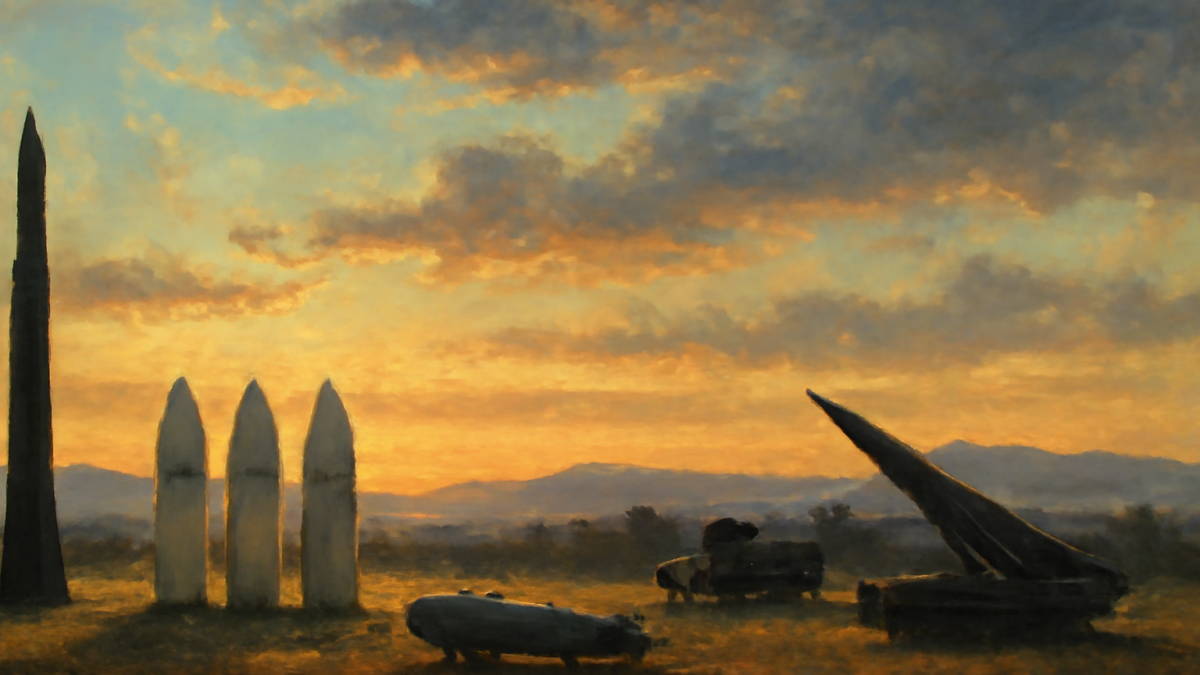
Ronald Reagan’s Arsenal of the Spirit: Power, Conviction, and Cold War Conviction
Ronald Wilson Reagan delivered this stirring declaration on January 20, 1981, during his inaugural address as the 40th President of the United States. Speaking before nearly two million people gathered on the National Mall on a frigid winter day, Reagan was addressing a nation deeply wounded by a decade of trauma and self-doubt. America had recently endured the Vietnam War, the Watergate scandal, the Iranian hostage crisis, and a grinding recession that had left citizens questioning their country’s future. The Soviet Union loomed large as an apparently ascendant superpower, having recently invaded Afghanistan and demonstrated military capabilities that alarmed American strategists. Into this atmosphere of national malaise stepped Reagan, a 69-year-old former Hollywood actor and California governor, determined to restore American confidence and confront communism directly. His inaugural address would set the tone for his entire presidency, and this particular passage about moral will as humanity’s greatest weapon would become one of his most memorable and frequently quoted statements.
To understand Reagan’s conviction when making this statement, one must examine his unconventional journey to the White House. Born in 1911 in Dixon, Illinois, to a struggling Irish-Catholic family, Reagan grew up in poverty and relative obscurity. His father, Jack Reagan, was an alcoholic traveling salesman whose addiction would deeply mark young Ronald’s worldview and contribute to his lifelong championing of personal responsibility and self-improvement. His mother, Nelle, was a devout Christian Scientist whose faith emphasized the power of positive thinking and the triumph of spirit over matter—a philosophy that would profoundly shape her son’s outlook. After working his way through Eureka College, Reagan became a radio sports announcer, eventually moving to Hollywood in 1937 where he appeared in over fifty films. Though never achieving superstardom, Reagan worked steadily in B-movies and was known among his peers as intelligent, optimistic, and increasingly politically engaged.
What makes Reagan’s journey particularly fascinating is his complete ideological transformation. During the 1930s and 1940s, Reagan was a liberal Democrat who supported New Deal programs, admired Franklin Delano Roosevelt, and counted himself among Hollywood’s more progressive voices. He even briefly flirted with communist organizations during the late 1930s, though he never officially joined the Communist Party. What changed him was his gradual realization, particularly during the late 1940s and early 1950s, that communist sympathizers in Hollywood were actively working to infiltrate and subvert the film industry. Reagan’s experiences with union organizing, communist Front groups, and ideological manipulation transformed him from a New Deal liberal into a passionate anti-communist conservative. By the time he appeared before the House Un-American Activities Committee in 1947, Reagan was already making his pivot, though he did so with remarkable restraint compared to some of his peers, defending civil liberties even while opposing communism. This personal journey from the political left to the right gave his anti-communist rhetoric an authenticity that critics could not simply dismiss as Cold War propaganda from someone who had always held conservative views.
The specific context of Reagan’s inaugural address reveals why the quote about moral will was so powerfully timed. Coming just weeks after the Iranian hostage crisis had been resolved and with American hostages returning home, Reagan sought to rebuild national morale by reframing America’s competition with the Soviet Union in moral and ideological rather than purely military terms. While the United States and USSR possessed vast nuclear arsenals that could destroy civilization multiple times over, Reagan recognized that nuclear weapons had become almost strategically meaningless—both nations had already achieved mutually assured destruction, creating a paradoxical stalemate. The real competition, Reagan believed, would be determined by which system could maintain the allegiance, hope, and moral conviction of its people. The Soviet system, built on atheism, totalitarianism, and the suppression of individual conscience, was inherently vulnerable to populations yearning to breathe free. The American system, rooted in individual liberty, religious faith, and democratic self-governance, possessed a renewable moral resource that no amount of military hardware could match or replicate. This insight would guide Reagan’s entire foreign policy strategy throughout the 1980s.
A lesser-known aspect of Reagan’s thinking on this subject was his deep religious faith and his reading of conservative religious philosophers. Reagan was not a regular churchgoer in his adult years, but he was profoundly influenced by Christian conservative thinkers who emphasized the power of faith and conviction. He was particularly drawn to the writings of C.S. Lewis, the British Christian apologist, whose works explored the conflict between material and spiritual power. Reagan understood that communism, despite its claims to scientific rationalism, was itself a quasi-religious ideology demanding absolute loyalty and faith from its adherents. Yet it offered no transcendent purpose beyond the material state and collective power. By contrast, Western democracy, particularly when infused with religious conviction, offered individuals the opportunity to live according to deeply held personal convictions about human dignity, freedom, and purpose. This philosophical framework made Reagan’s statement about moral courage more than mere patriotic rhetoric—it was a coherent geopolitical theory based on understanding human psychology and spiritual motivation.
Reagan’s assertion about the unique moral advantage of free peoples proved prophetic in ways that vindicated his strategic thinking. Throughout the 1980s, his administration maintained consistent moral and rhetorical pressure against the Soviet Union, famously labeling it the “evil empire” in 1983. While critics at the time condemned this rhetoric as reckless and destabilizing, Reagan understood that the Soviet