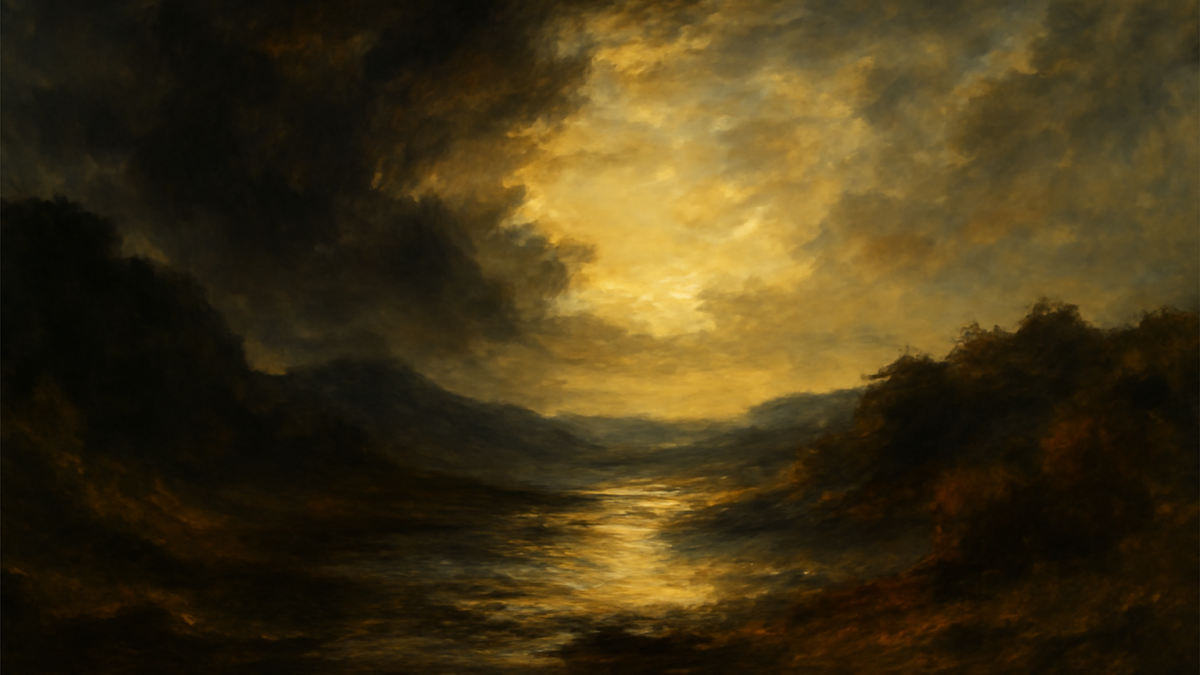
Fear and Creation: The Life and Legacy of J. M. W. Turner’s Revolutionary Vision
The quote “It is only when we are no longer fearful that we begin to create” is often attributed to J. M. W. Turner, the English Romantic painter whose revolutionary approach to landscape art fundamentally transformed how artists conceptualized nature and expression. Yet this attribution carries a curious mystery that speaks to both Turner’s legacy and the nature of how great artists become mythologized. While the quote encapsulates perfectly the spirit of Turner’s artistic philosophy and life’s work, there is no definitive documentary evidence that Turner ever spoke or wrote these exact words. Nevertheless, the sentiment resonates so deeply with his artistic practice and the themes he explored throughout his career that it has become inseparable from his cultural memory—a phenomenon that itself illustrates how powerful artistic vision can transcend the specificity of direct quotation.
Joseph Mallord William Turner was born in 1775 in London during a period of immense social upheaval and artistic innovation. His father, William Turner Sr., was a barber and wigmaker of modest means, while his mother, Mary Marshall, suffered from mental illness that would periodically require institutional care—a familial burden that young Turner carried throughout his life. This humble origin stood in sharp contrast to many of his artistic contemporaries, and Turner’s trajectory from humble beginnings to becoming one of Britain’s most celebrated and controversial artists embodied a kind of personal triumph that infused his work with urgency and authenticity. He showed artistic talent early, and at fourteen, he entered the Royal Academy Schools, where he rapidly distinguished himself through rigorous technical training and insatiable ambition. The young Turner was not content to follow established conventions; instead, he seemed driven by an internal compulsion to push beyond the boundaries of what landscape painting could express.
The context in which Turner’s philosophy about fear and creation likely emerged was his relentless experimentation and innovation during the late eighteenth and early nineteenth centuries. Working during the Romantic era, Turner was part of a broader artistic and literary movement that elevated emotion, individual experience, and nature to positions of supreme importance. Yet while his contemporaries like John Constable were perfecting a more naturalistic approach to landscape painting, Turner was engaged in something far more radical—he was attempting to capture not the mere appearance of nature, but its feeling, its violence, its sublime power. His paintings of storms, shipwrecks, and atmospheric phenomena pushed the very limits of what oil paint could express. Contemporary critics were often horrified by his work. One particularly scathing reviewer described his paintings as looking like “a mass of white, tinted with yellow and red,” unable to perceive that Turner was deliberately dissolving form into color and light in ways that wouldn’t become fully appreciated until the birth of Impressionism several decades later.
To understand why the quote about fearlessness and creation fits Turner so naturally requires understanding his personal and professional fearlessness in the face of relentless criticism. Turner exhibited a remarkable psychological fortitude and commitment to his vision despite working in an era where artistic authority was vested in academic institutions and conservative collectors. He traveled extensively throughout Europe, risking his reputation and finances on sketching tours to places like Switzerland, Italy, and the Rhine Valley, bringing back drawings and paintings that seemed increasingly to prioritize subjective impression over objective representation. His famous painting “Rain, Steam, and Speed – The Great Western Railway” epitomizes this approach—a work so abstract and atmospheric that it confused and troubled Victorian audiences who couldn’t discern what they were looking at. Yet Turner persisted in this direction, refusing to compromise his artistic vision for the sake of popular approval or critical acceptance. This kind of creative fearlessness, the willingness to pursue a vision that others dismissed or ridiculed, is exactly what the attributed quote suggests is necessary for genuine creation.
Lesser-known facts about Turner reveal the complex personal architecture beneath his artistic ambitions. Turner was famously reclusive and difficult, described by contemporaries as taciturn and suspicious, qualities that intensified as he aged. He fathered two children with Sarah Danby, a mistress twenty years his senior, yet never married her, and the paternity of these children was long kept secret—a detail that speaks to the Victorian hypocrisies with which even celebrated artists had to contend. In his later years, Turner became increasingly eccentric, moving to a cottage in Chelsea under an assumed name where he lived with a widow, Mrs. Sophia Caroline Boot, whom neighbors believed to be his wife. Despite his success and financial security, he lived frugally and obsessively, often pinning his canvases to the wall and staring at them for hours. His studio was described as chaotic and cluttered, filled with half-finished paintings, sketches, and accumulated materials. There was something almost manic about his dedication to his craft—he seemed unable to stop creating, unable to accept that his current vision was sufficient, always pushing toward something else, something deeper.
The cultural impact of Turner’s life and work, and by extension the philosophy embodied in the attributed quote, cannot be overstated. During his lifetime, he was controversial but respected, eventually becoming the President of the Royal Academy. However, it was only after his death in 1851 that his reputation underwent a fundamental transformation. John Ruskin, the influential Victorian art critic, championed Turner with passionate eloquence, arguing that the painter had captured the essential truths of nature in ways that conventional naturalism could never achieve. Ruskin’s advocacy essentially rescued Turner from obscurity and cemented his reputation as one of the greatest painters in British history.