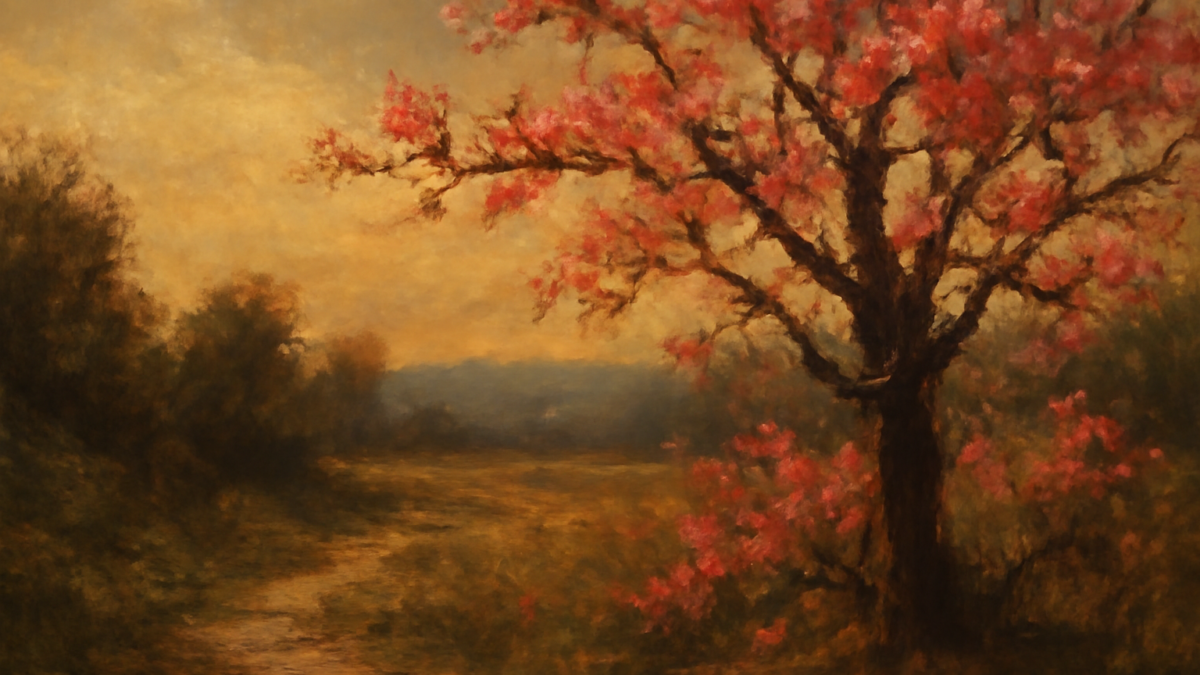
The Blossoming Philosophy of Anaïs Nin
This deceptively simple quote about blooming and risk belongs to Anaïs Nin, one of the twentieth century’s most fascinating and unconventional literary figures. Nin wrote these words during a period of her life when she was consciously breaking free from societal constraints and exploring her authentic self through both her writing and her personal relationships. The metaphor of the bud and the blossom became her signature way of describing the painful but necessary process of personal transformation—a theme that permeates nearly everything she created. Though Nin is often remembered primarily as a diarist and erotica writer, this quote captures the philosophical heart of her life’s work: the conviction that self-discovery and creative expression, however risky, are essential to human flourishing.
Born Anaïs Nin in 1903 to a Cuban-French pianist father and a Danish pianist mother, she spent much of her childhood moving between Spain, France, and the United States. Her upbringing was marked by artistic sensibility and emotional turbulence—her father abandoned the family when she was eleven, an event that would profoundly shape her psychological landscape and her artistic vision. The family eventually settled in New York, where the teenage Anaïs began writing as a form of refuge and self-expression. Her parents’ careers in music instilled in her an appreciation for beauty and performance, though ironically, it was the written word rather than music that became her primary vehicle for artistic creation. This background of transience, abandonment, and artistic immersion created the psychological soil from which her unique philosophy would grow.
What many people don’t know about Anaïs Nin is the remarkable complexity of her personal life and the extent to which she deliberately constructed multiple versions of herself. She was simultaneously married to two men for a period of time—Hugo Guiler, a wealthy banker she married in 1923, and Henry Miller, the famous writer she married secretly in 1967—without either initially knowing about the other. Rather than viewing this as mere deception, Nin understood it as an exploration of different facets of her identity: the dutiful, respectable wife to Guiler and the bohemian, artistic soul with Miller. She was also involved in a long-term relationship with Otto Rank, a renowned psychoanalyst, who became her therapist and lover. These overlapping relationships weren’t scandals to be hidden but rather experimental laboratories for understanding love, identity, and the multiple truths that can coexist within a single person. This aspect of her life directly informed her philosophy about taking risks and refusing to remain confined by conventional expectations.
The quote itself appears in various forms throughout Nin’s published and unpublished work, though its exact origins are somewhat murky—a fitting mystery for a writer who was as interested in ambiguity and multiple truths as Nin was. The image of the bud and blossom likely crystallized for her during the 1930s and 1940s, when she was actively engaged in psychoanalysis, exploring surrealism, and beginning to write the erotica that would be published posthumously. During this period, she was conscious of the gap between her inner world—rich, sensual, and artistically ambitious—and the outer world’s expectations for women, particularly women of her social class. She was reading D.H. Lawrence, engaging with Henry Miller’s raw literary experimentation, and being influenced by Rank’s ideas about psychological creativity. The blossom metaphor emerged as her way of synthesizing these influences into a philosophy of authentic becoming.
What makes this quote so culturally resonant is its accessibility combined with its radical implications. On the surface, it appears to be simply encouraging personal growth and risk-taking—the kind of inspiring message that might appear on a motivational poster. Yet beneath that surface lies a more provocative assertion: that conformity and self-suppression are not safe states but actually painful prisons. Nin inverts the usual risk calculus. Most people assume that staying within established boundaries is safe while deviation is risky; Nin argues that the reverse is true, that remaining “tight in a bud” causes a pain that exceeds any risk associated with blooming. This reframing has made the quote particularly powerful for people navigating major life transitions—coming out, pursuing unconventional careers, ending unhappy relationships, or simply refusing to live according to others’ expectations.
The quote gained significant cultural momentum during the 1970s and beyond, when Nin’s diaries were published and her philosophical ideas became more widely known. Second-wave feminists recognized in her work a precursor to their own insistence on female authenticity and self-determination, though Nin’s approach was more individualistic and psychological than the structural critique of patriarchy that characterized much feminist theory. The quote has since become ubiquitous in self-help literature, wellness movements, and LGBTQ+ communities, where it resonates particularly powerfully because it validates the experience of people whose authentic selves conflict with social expectations. It appears on book covers, motivational websites, and has been quoted countless times by people making major life changes. What’s interesting is how the quote has been both celebrated and sanitized in popular culture—often stripped of the sexual, psychological, and emotional complexity that Nin herself embodied.
The deeper philosophical meaning of the quote connects to Nin’s understanding of the relationship between pain and growth. She was influenced by Otto Rank’s concept of “will” as the driving force in human psychology—not aggressive domination but rather the creative assertion of individual consciousness against universal forces