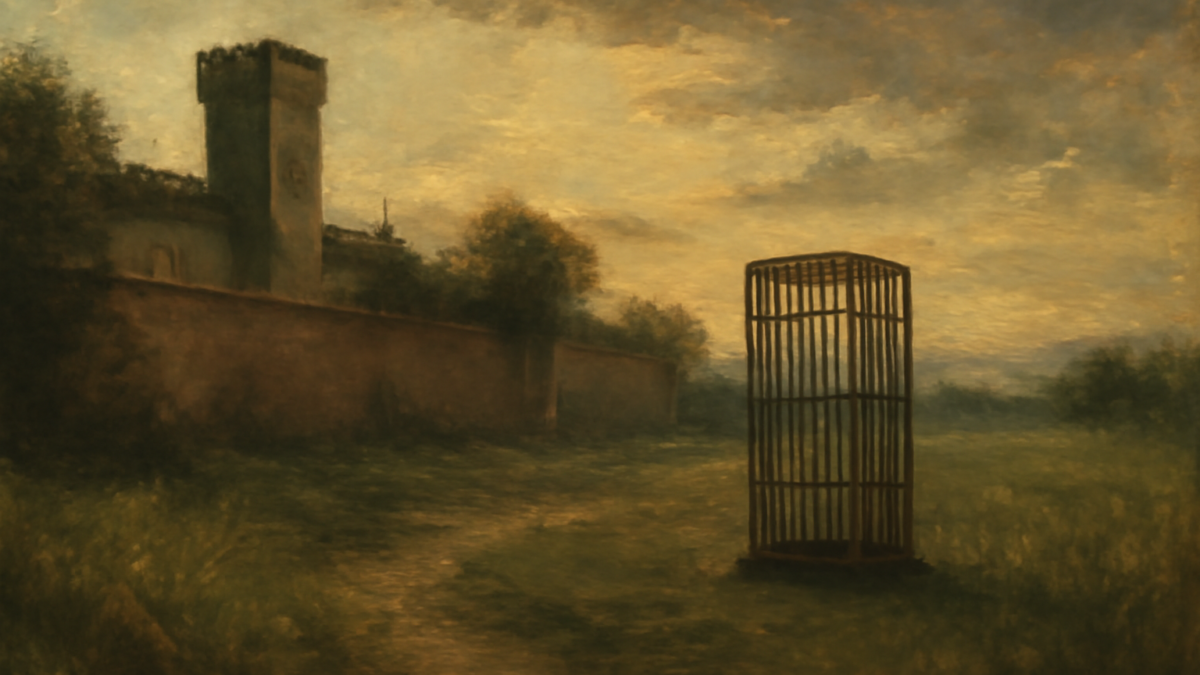
Virginia Woolf on the Prison of Others’ Eyes
Virginia Woolf, one of the twentieth century’s most revolutionary writers, penned the haunting observation that “the eyes of others are our prisons; their thoughts our cages” during a period of intense personal struggle and intellectual ferment. This quote, which captures the essence of her modernist sensibility, likely emerged from her private journals or critical essays during the 1920s and 1930s, when she was at the height of her creative powers but also grappling with profound anxieties about identity, society, and the self. The quote distills a central preoccupation of Woolf’s entire body of work: the suffocating nature of external judgment and the ways in which society’s expectations—particularly those imposed on women—constrain authentic human experience. Whether spoken aloud, scribbled in her diary, or composed in one of her essays, this observation reflects years of lived experience navigating a world that seemed determined to define and confine her according to rigid social categories.
Born Adeline Virginia Stephen in 1882 into an intellectually distinguished but emotionally turbulent London family, Woolf’s relationship with societal scrutiny began early. Her father, Leslie Stephen, was a respected literary figure and philosopher, while her mother, Julia Prinsep Jackson Stephen, came from an accomplished artistic family. However, Woolf’s childhood was marked by trauma and loss: her mother died when Virginia was thirteen, her half-sister Stella died shortly after, and her father’s demanding temperament created an emotionally unstable home environment. Unlike her brothers, who received formal education at prestigious schools, Virginia was educated at home—a limitation that frustrated her intellectually even as it freed her from some conventional constraints. These early experiences with family dynamics, loss, and the arbitrary restrictions placed on girls simply because of their sex would profoundly shape her later critique of social convention and her understanding of how external forces shape the self.
Throughout her adolescence and young adulthood, Woolf suffered periodic mental health crises that many biographers and scholars now understand within the context of trauma, bipolar disorder, or other conditions exacerbated by the oppressive social world around her. Following her father’s death in 1904, she experienced a serious nervous breakdown, and these episodes would recur throughout her life, often triggered by periods of intense creative work or public attention. What makes her observation about “prisons” and “cages” particularly poignant is that she was acutely aware of the double bind women faced: the world’s eyes were upon them, judging, constraining, and pathologizing any behavior that deviated from narrow expectations, and yet withdrawal or retreat into privacy could itself be interpreted as madness or hysteria. Woolf’s personal suffering wasn’t separate from her social critique; rather, it was inseparable from her understanding of how patriarchal society damaged women’s psyches and stifled their potential. Her brilliant mind, confined by circumstance and circumstance alone, became the living proof of her philosophy.
Woolf’s literary career, which included groundbreaking novels like “Mrs. Dalloway” (1925), “To the Lighthouse” (1927), and “Orlando” (1928), along with her legendary essay “A Room of One’s Own” (1929), was fundamentally concerned with the liberation of consciousness from social constraint. Her stream-of-consciousness narrative technique wasn’t merely an aesthetic innovation; it was a political act, an attempt to represent the actual, unfiltered workings of the human mind before it was organized and censored by social convention. In “A Room of One’s Own,” she famously argued that for women to write fiction, they needed economic independence and privacy—literal spaces where they could escape the eyes and cages she referenced in our quote. The essay’s most enduring line, “a woman must have money and a room of her own if she is to write fiction of any worth,” emerges directly from the same philosophical framework as this quote about prisons and cages. Woolf understood that external surveillance and judgment weren’t merely uncomfortable social phenomena; they were structural impediments to human flourishing and creative expression.
What many people don’t realize is how conscious Woolf was of her own complicity in and resistance to this system. She moved through elite Bloomsbury intellectual circles where she was celebrated as a brilliant writer, yet she remained acutely aware of how her status as a woman artist complicated her position. She struggled with imposter syndrome, frequently doubted her own work, and internalized critical judgment in ways that her male contemporaries seemed less inclined to do. Her diaries reveal constant anxiety about how her writing would be received, particularly by male critics whose opinions carried disproportionate weight. Additionally, Woolf harbored her own prejudices and blind spots—she could be snobbish about class, and her attitudes toward colonialism and disability were limited by her historical moment. This complexity is important because it means her critique of the “eyes of others” came not from a place of simple victimhood but from a sophisticated understanding of how the internalization of others’ judgments becomes self-perpetuating. We become our own jailers, policing our thoughts, our appearance, our ambitions according to internalized standards that we may not even consciously recognize.
The quote has resonated through the decades, particularly within feminist theory and criticism, where Woolf’s work has been repeatedly excavated for its insights into how patriarchy colonizes consciousness itself. French feminist theorists, in particular, built on Woolf’s ideas when developing concepts about the