The Enduring Wisdom of Corrie ten Boom’s Faith Through Darkness
Corrie ten Boom’s famous quote about trusting the engineer during a tunnel’s darkness emerged from a woman who had lived through some of humanity’s deepest tunnels. Born in 1892 in Haarlem, Netherlands, Corrie ten Boom came from a devoutly Christian watchmaker’s family that would later become legendary for harboring Jewish refugees during the Nazi occupation of Holland. When the Gestapo discovered their work in 1944, Corrie, her sister Betsie, and their elderly father were arrested and deported to concentration camps. Corrie was sent to Ravensbrück, a brutal women’s prison camp where thousands perished. Yet it was from this abyss of human cruelty that her most profound spiritual insights would eventually emerge. The quote about the train and tunnel was born not from abstract philosophy but from intimate knowledge of darkness—both literal and metaphorical—and the transformative power of faith when all other certainties crumble.
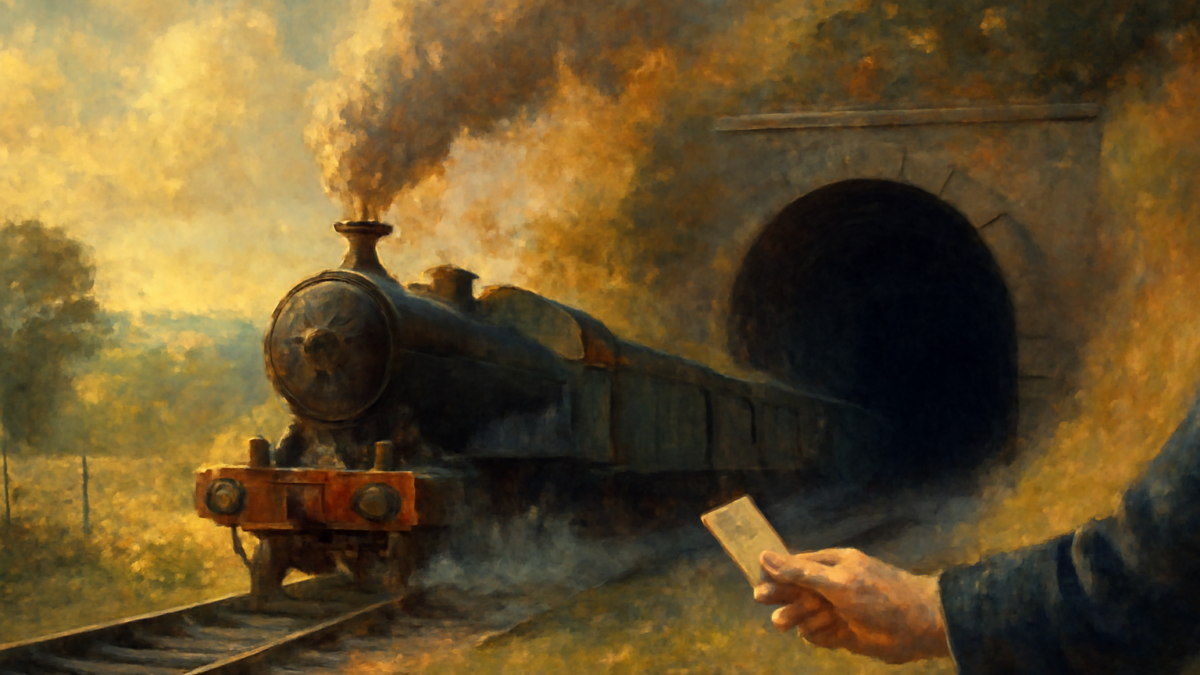
The metaphor itself is deceptively simple yet profound in its construction. When Corrie spoke of a train traveling through a tunnel, she was inviting her listeners to consider their own journeys through life’s most terrifying passages. The ticket represents faith itself, the tangible proof of passage even when the destination cannot be seen. The impulse to jump off—to abandon hope, to despair, to take control when circumstances feel unbearable—reflects the human tendency toward panic in the face of uncertainty. The engineer, whom she explicitly identifies as someone we must trust, represents God or a higher purpose beyond our comprehension. What makes this metaphor so compelling is its acknowledgment that darkness is not anomalous; it is a normal, even inevitable, part of travel. The quote suggests that faith is not about seeing the light ahead; it is about sitting still, remaining seated, and trusting that the journey continues even when visibility reaches zero.
Few people realize that Corrie ten Boom did not create this metaphor in isolation or emerge from the war with her faith immediately intact. She spent ten months in Ravensbrück under horrific conditions, watching her beloved sister Betsie die from illness and maltreatment just weeks before liberation. After the war, while other survivors understandably harbored deep bitterness, Corrie embarked on a remarkable spiritual journey that took her around the world as a missionary and speaker for over fifty years. What is particularly striking, and less commonly known, is her famous encounter with a German guard from Ravensbrück years after the war, when she had to physically force herself to extend forgiveness—a struggle she openly acknowledged rather than pretending forgiveness came easily. This personal wrestling match with grace, combined with her relentless examination of how faith functions in the darkest circumstances, gave her words unparalleled authenticity.
The context of when Corrie likely developed and refined this quote helps explain its power. During her postwar speaking tours throughout the 1950s and beyond, she frequently encountered people wrestling with various forms of darkness: grief, illness, injustice, fear during the Cold War, and existential doubt. She was not speaking theoretically about faith to an academic audience but directly to traumatized individuals seeking meaning after the Holocaust, or ordinary people facing the daily anxieties of modern life. Her book “The Hiding Place,” published in 1971, became an international bestseller and preserved many of her insights and stories for new generations. The train metaphor appears in various forms throughout her writings and recorded speeches, though attributing exact sources can be challenging because Corrie was a prolific speaker who constantly refined her illustrations. The quote resonates particularly in her recorded lectures and in the oral tradition of Christian communities that have passed her wisdom forward.
The cultural impact of this quote has been substantial, though sometimes underappreciated compared to more famous sayings about faith. It has become a staple in Christian preaching, grief counseling, and motivational literature, often cited by people facing cancer, job loss, relationship breakdown, or other traumatic transitions. What distinguishes its usage from many motivational quotes is its refusal to minimize suffering or suggest that faith eliminates pain. Instead, it validates the darkness while offering an alternative to despair. The quote has appeared in countless church sermons, on greeting cards, in social media posts, and has been adapted into various metaphors—some speakers have used airplanes instead of trains, recognizing that Corrie’s core wisdom transcends the specific vehicle. During the COVID-19 pandemic, mental health professionals and spiritual counselors frequently invoked this quote as people struggled with uncertainty and loss of control. It gained renewed attention through various quote-sharing platforms where millions of people discovered Corrie’s words who might never have read her autobiography.
What makes this quote particularly resonant for everyday life is its psychological sophistication disguised in simple language. Modern psychology, particularly research on resilience and post-traumatic growth, has validated what Corrie understood intuitively: that our response to difficult circumstances matters more than the circumstances themselves. The instruction to “sit still” contradicts our modern impulse to constantly problem-solve, optimize, and control outcomes. In an age of anxiety where people check their phones hundreds of times daily searching for certainty, the suggestion that we might simply sit with uncertainty while trusting an unseen engineer feels almost revolutionary. The quote acknowledges that the station where the train will emerge cannot yet be seen, that the duration of the tunnel is unknown, and that maintaining faith in the face of these unknowns requires