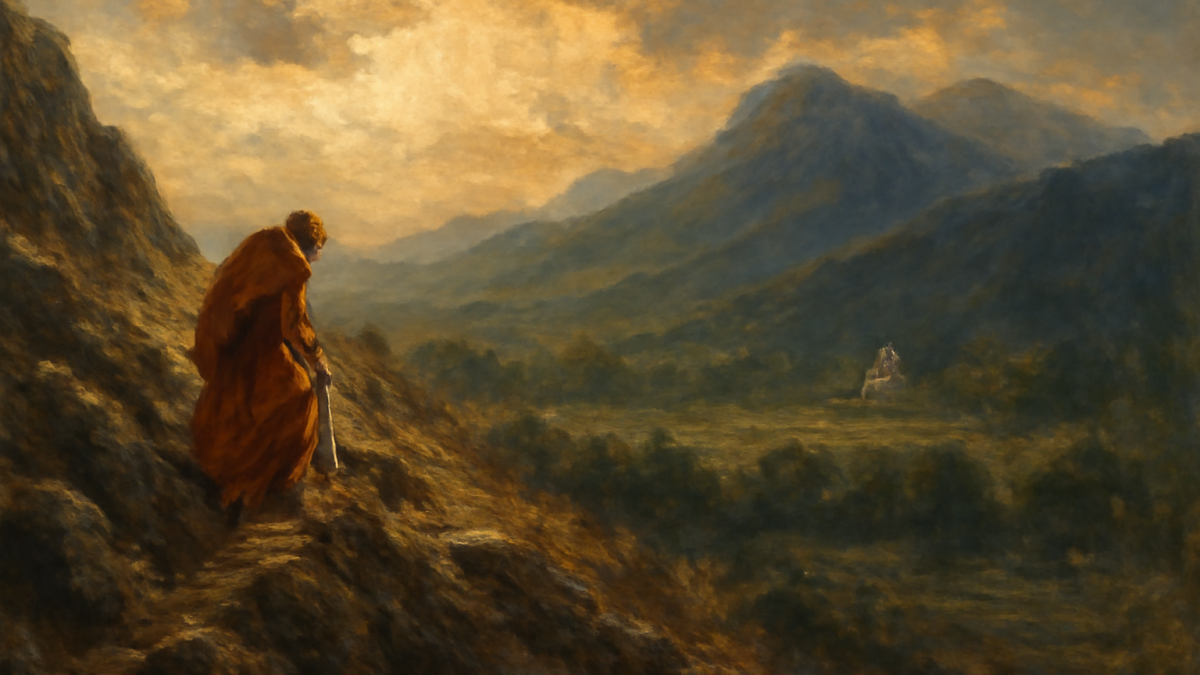
The Power of Devoted Struggle: Swami Vivekananda’s Philosophy of Success
Swami Vivekananda, born Narendranath Datta in 1863 in Calcutta, India, was one of the most influential spiritual leaders and social reformers of the nineteenth century. His famous declaration that “Take up an idea, devote yourself to it, struggle on in patience, and the sun will rise for you” encapsulates the very essence of his teaching philosophy and personal life trajectory. This quote emerged during his extensive travels and lecturing period, particularly during his time in America and Europe between 1893 and 1897, when he was introducing Hindu philosophy and Vedanta to Western audiences. During this transformative period, Vivekananda was navigating the challenges of spreading Eastern spirituality in a predominantly Christian, industrializing West, facing skepticism, financial hardship, and cultural resistance. Yet despite these obstacles, he maintained an unwavering belief in the transformative power of determined effort combined with spiritual practice, which he articulated through memorable phrases like this one. The quote reflects not merely abstract philosophy but the lived experience of a young man who had struggled against poverty, societal limitations, and personal doubt to become a voice that would eventually reshape modern Hinduism and influence spiritual thought globally.
Vivekananda’s background profoundly shaped his philosophy of devoted struggle. Born into an educated but financially unstable Bengali Brahmin family, he experienced firsthand the tension between intellectual aspiration and material limitation. His father, Viswanath Datta, was a lawyer with progressive views who encouraged independent thinking, while his mother, Bhubaneswari Devi, was deeply religious and spiritual. This combination of rationality and spirituality became central to Vivekananda’s own approach to life and teaching. As a young man, he was influenced by the Bengal Renaissance, a period of extraordinary intellectual ferment in nineteenth-century India when Western education, modern science, and traditional Indian philosophy collided and merged in fascinating ways. He initially studied Western philosophy and science at Calcutta’s prestigious institutions, absorbing the rationalism of the Enlightenment while remaining captivated by India’s spiritual heritage. This dual orientation—neither purely Western nor purely traditional—positioned him uniquely to bridge cultures and speak to the concerns of modern spiritually-seeking individuals.
The pivotal moment in Vivekananda’s life came when he met Ramakrishna Paramahamsa, a holy man whose life seemed to embody the spiritual ideals that Vivekananda had been intellectually pursuing. Ramakrishna became his guru and teacher, and their relationship transformed the young intellectual into a spiritual seeker willing to devote himself completely to higher ideals. Ramakrishna’s famous teaching that “As long as I live, so long do I read; as long as I read, so long do I grow” resonated with Vivekananda’s own belief in continuous self-improvement through disciplined effort. When Ramakrishna passed away in 1886, Vivekananda and fellow disciples formed the Ramakrishna Mission, dedicated to serving humanity and spreading spiritual knowledge. It was during the years immediately following Ramakrishna’s death, when Vivekananda was struggling with doubt, poverty, and the challenge of establishing the mission, that he truly embodied the philosophy expressed in the quote about taking up an idea and struggling with patience.
What many people don’t realize about Vivekananda is that beneath his confident public persona lay a deeply sensitive, psychologically complex individual who battled depression, self-doubt, and health problems throughout his life. His letters reveal a man prone to moments of profound despair, wrestling with questions about the meaning of spiritual practice and service. He also possessed a wry sense of humor and could be cutting in his criticism of both Western materialism and Indian spiritual pretension. Additionally, Vivekananda was an early advocate for women’s education and spiritual empowerment in Hindu society, revolutionary positions at the time. He believed that a nation could never rise without educating its women, and he challenged the rigid caste system and ritualistic Hinduism that had ossified Indian spirituality. Few know that he was also genuinely interested in modern science and technology, viewing them not as enemies of spirituality but as tools that could be harnessed for human welfare. His vision of religion was fundamentally activist: spirituality meant serving humanity and uplifting the poor and marginalized, not withdrawing into meditation caves disconnected from social reality.
The quote’s resonance derives from its synthesis of idealism with realism. Unlike purely mystical teachings that might suggest enlightenment comes through surrender and passivity, or purely materialistic doctrines that emphasize only external effort without inner transformation, Vivekananda’s philosophy demands both. One must “take up an idea”—consciously choosing a worthy goal or principle. One must “devote yourself”—offering complete commitment and focus. One must “struggle on in patience”—persisting through difficulties without becoming discouraged or rushing results. And finally, “the sun will rise”—suggesting that success, enlightenment, or the fulfillment of one’s purpose becomes inevitable through this combination of conviction, dedication, and perseverance. The metaphor of the sunrise is particularly apt: it will come, but not because you command it; rather, because you have aligned yourself with natural law and cosmic order. This balance between human agency and larger forces has made the quote appealing across centuries and cultures, particularly to those seeking meaningful achievement rather than mere