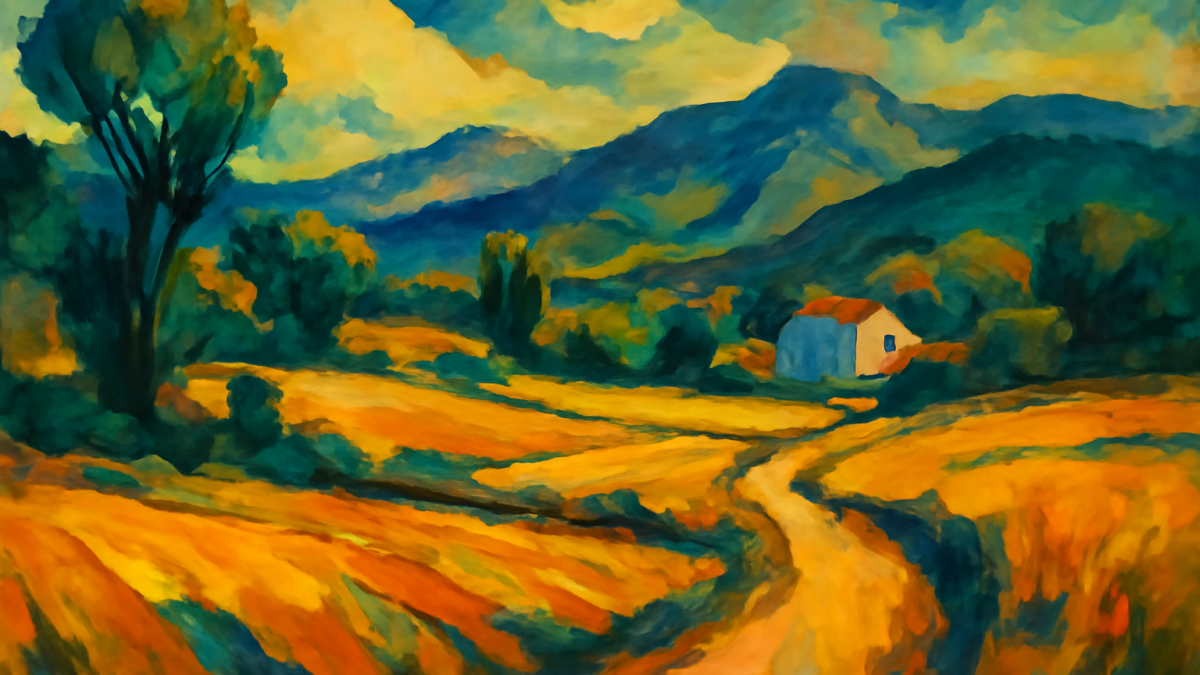
The Artist at Work: Picasso’s Philosophy of Creation
Pablo Picasso, one of the twentieth century’s most prolific and revolutionary artists, delivered this deceptively simple observation about creativity and hard work that has since become a cornerstone principle for artists, entrepreneurs, and achievers across all disciplines. “Inspiration exists, but it has to find you working” captures the essence of Picasso’s philosophy—that genius is not merely a gift bestowed upon the select few, but rather the product of relentless dedication, discipline, and daily commitment to one’s craft. The quote emerged from decades of lived experience in Picasso’s studio, where he produced an estimated 50,000 artworks during his 91-year lifespan, averaging several pieces per day even in his later years. This wasn’t romantic inspiration striking like lightning; it was methodical, disciplined creation that made inspiration possible.
Picasso was born Pablo Ruiz y Picasso in Málaga, Spain, in 1881, and from his earliest years demonstrated an almost obsessive commitment to art. His father, José Ruiz Blasco, was a painter and art teacher who recognized his son’s exceptional talent and began formally instructing him before Pablo was even a teenager. By age 15, Picasso had already completed more formal training than most artists would accomplish in a lifetime, and by 16, he gained admission to Barcelona’s prestigious School of Fine Arts. What set Picasso apart from the beginning, however, was not some innate, effortless gift but rather an almost manic drive to work constantly, to experiment relentlessly, and to never accept his own accomplishments as final. He kept numerous sketchbooks filled with thousands upon thousands of drawings, treating sketching as a form of constant practice and meditation rather than something that required inspiration to justify.
The context in which Picasso likely articulated this observation comes from his experience as the founder of Cubism, a revolutionary art movement that fundamentally altered how artists perceived and represented reality. Cubism didn’t emerge from a single moment of inspiration but from years of experimentation, study of African art, mathematical theory, and deliberate technical innovation. Picasso worked in series, returning again and again to the same subjects—portraits, guitars, still lifes, human figures—not because he was waiting for fresh inspiration, but because he understood that mastery came through repetition and variation. Each painting was a learning experience that prepared him for the next work. During the Blue Period and Rose Period of his early career, he methodically worked through emotional and technical challenges, and this disciplined approach defined his entire creative process. He once noted that he didn’t wait for inspiration because he was too busy working to notice when it arrived.
Beyond his artistic philosophy, Picasso’s life reveals a man of extraordinary contradictions and fascinating quirks that most people never learn about. He was incredibly superstitious, refusing to allow the number 13 in his house and becoming deeply distressed by certain omens. Yet simultaneously, he was a brilliant communicator and theorist of art who could articulate complex ideas about representation and meaning. Picasso was also famously promiscuous and had multiple muses throughout his life—several of whom were romantic partners—and he had a troubling habit of discarding women from his life and work once his romantic interest waned. What’s less well known is that he was meticulous about money and business matters despite his bohemian reputation, carefully tracking sales and maintaining relationships with dealers who could market his work. He also invented a photographic technique where photographers would document his creative process, and he was an early adopter of new technology, collaborating with photographers and filmmakers to expand what art could be.
The specific quote has become widely circulated and attributed to Picasso, though like many famous quotations, its exact origin is somewhat murky. It appeared in various forms in interviews and texts about the artist, and while the sentiment is absolutely consistent with documented statements Picasso made throughout his life, pinpointing the original source is difficult. The quote gained particular prominence in the late twentieth and early twenty-first centuries as digital culture emerged and people found themselves paralyzed by choice and possibility rather than driven by necessity. In an age where inspiration could theoretically come through a thousand different sources—social media, endless content, constant stimulation—Picasso’s insistence that inspiration only arrives when you’re actively working became almost countercultural. It contradicted the romantic notion of the suffering artist waiting for the muse and replaced it with something far more practical and empowering: the idea that you create the conditions for inspiration through disciplined work.
Picasso’s quote has resonated deeply across creative industries and beyond, becoming a touchstone for everyone from musicians to writers to software engineers. Musicians like Quincy Jones and Sting have cited this principle when discussing their creative process, emphasizing that they write and record constantly rather than waiting for the perfect inspiration. In the startup and entrepreneurship world, the quote has been embraced as a counterpoint to the myth of the sudden insight or breakthrough idea. Business leaders reference it when advocating for a culture of experimentation, iteration, and consistent effort rather than waiting for the next great idea. In academic research, the principle aligns with modern understanding of expertise and skill development, particularly Anders Ericsson’s concept of “deliberate practice,” which emphasizes that mastery requires sustained, focused effort over many years. The quote has become almost universally employed in motivational contexts, but its power lies not in its novelty but in its refusal to romanticize creativity.
What makes this quote so enduring is that