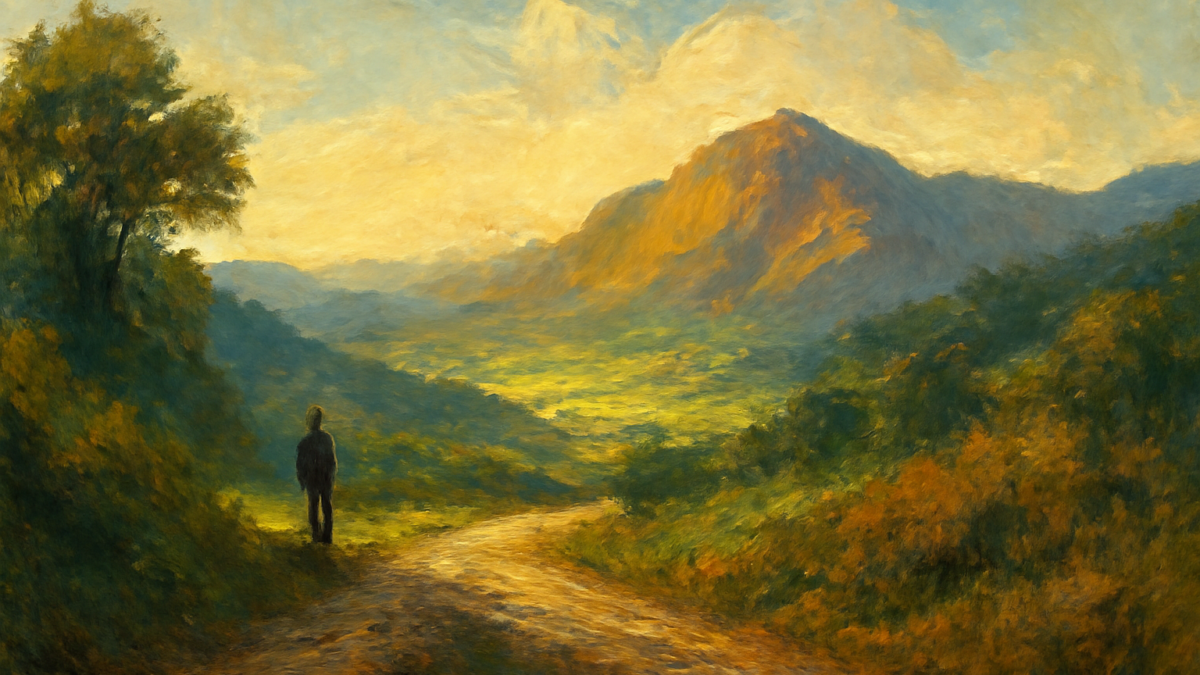
The Transformative Vision of Paulo Coelho
Paulo Coelho’s assertion that “when we strive to become better than we are, everything around us becomes better, too” encapsulates a philosophy that has inspired millions of readers worldwide. This deceptively simple statement reflects decades of personal spiritual exploration, mystical inquiry, and literary craftsmanship that culminated in one of the most widely read books of the twentieth century. The quote perfectly distills Coelho’s core belief that individual transformation operates as a cascading force, rippling outward to reshape the world around us. To understand its power, one must journey through Coelho’s own remarkable life, which reads almost like one of his novels—filled with unexpected turns, spiritual awakenings, and a search for meaning that ultimately became a beacon for others seeking similar truths.
Born in Rio de Janeiro in 1947, Paulo Coelho initially seemed destined for a conventional Brazilian middle-class existence. His mother, Maria Inês Carrasco, was a schoolteacher, and his father, Pedro Queiroz Filho, was an engineer and inventor. However, young Paulo exhibited an unusually independent spirit from childhood, rejecting his parents’ expectations and the Catholic education they provided. He attended a Jesuit school where he was often in conflict with authority figures, already demonstrating the questioning nature that would define his adult life. During his teenage years, Coelho became fascinated with alternative spirituality, existentialism, and Eastern philosophy—interests that were decidedly unconventional for a Brazilian teenager in the 1960s. Rather than pursuing a practical career, he became involved in Brazil’s counterculture movement, experimenting with theater, music, and various spiritual traditions. This youthful rebellion wasn’t mere adolescent restlessness but rather the foundation of a lifelong commitment to spiritual seeking that would eventually transform him into a global consciousness.
What most people don’t realize about Coelho is that his path to becoming a celebrated author was neither direct nor obvious, and his early career choices seem almost comically varied to modern audiences. In the 1970s, he worked as a songwriter and theatrical director, penning lyrics for popular Brazilian musicians and attempting to establish himself in the entertainment world. He was briefly jailed during Brazil’s military dictatorship (1964-1985) for suspected subversive activities, an experience that deepened his already questioning nature. Perhaps most intriguingly, Coelho became involved with the Practical School of Magic in the 1980s, studying under the guidance of J. Roberts, a mysterious spiritual teacher who became something of a guru figure in his life. During this period, Coelho undertook various mystical exercises and spiritual disciplines, including a famous pilgrimage across the Mojave Desert and a journey to the Pyrenees Mountains that challenged him both physically and spiritually. These experiences weren’t documented in newspapers or discussed in interviews; they were deeply personal quests that Coelho kept largely private until they became woven into his literary work. This hidden curriculum of spiritual experimentation proved far more valuable than any formal education could have been.
The turning point in Coelho’s life came in 1986 when, at the urging of his wife, he wrote down the spiritual principles and practices that had guided his own transformation. This manuscript became “The Pilgrimage,” a lesser-known work that preceded his masterpiece. However, it was “The Alchemist,” published in Portuguese in 1988 and in English in 1992, that catapulted Coelho to international fame and eventually into literary history. The book’s narrative of Santiago, a young shepherd boy following his personal legend across the deserts of Egypt, resonated with readers across all cultures and socioeconomic backgrounds. What makes this success remarkable is that “The Alchemist” was rejected by numerous publishers before finding acceptance; one publisher even told Coelho the book was “too simple” and “not literary enough” for mainstream audiences. This rejection proved entirely wrong. The book has sold over 65 million copies in more than 80 languages, making it one of the best-selling books ever published. The quote about striving to become better emerged from this philosophical framework that Coelho developed—the idea that each person possesses an individual destiny and that pursuing this destiny transforms not just the person but the entire universe around them.
Coelho’s philosophy, which undergirds the quote, represents a synthesis of various spiritual traditions including Sufism, Kabbalah, Taoism, and Christian mysticism. He doesn’t advocate for any single religious path but rather suggests that all authentic spiritual seeking leads toward universal truths about human potential and transformation. His concept of “Personal Legend”—the unique purpose and destiny that each individual possesses—directly connects to the quote’s claim that personal improvement benefits the collective. When Coelho writes that striving to become better improves everything around us, he’s arguing for an interconnectedness between individual consciousness and universal reality. This aligns with quantum physics interpretations and Eastern philosophy, though Coelho himself doesn’t claim scientific precision. Instead, he appeals to intuitive understanding and lived experience. The philosophy suggests that we are not isolated atoms in a mechanical universe but rather integrated parts of a living, responsive cosmos. By elevating ourselves, we raise the vibrational frequency of the world itself. This might sound metaphorical, but for Coelho, it represents a literal truth about human existence and potential.
The quote has achieved substantial cultural impact, particularly among people navigating periods of personal transformation and seeking validation for their spiritual quests. It has appeared on countless