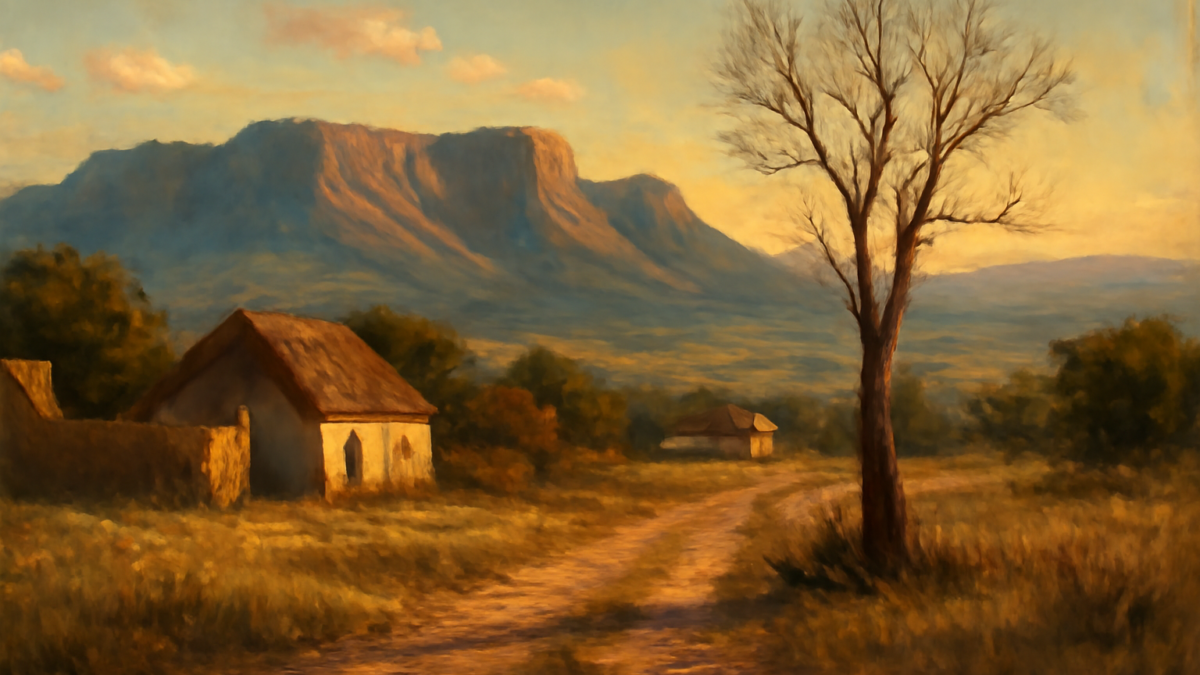
The Wanderer’s Wisdom: Nelson Mandela’s Reflection on Change and Return
Nelson Mandela’s observation that “there is nothing like returning to a place that remains unchanged to find the ways in which you yourself have altered” encapsulates a profound truth about human growth and the passage of time. This quote is often attributed to Mandela, though its exact source remains somewhat elusive in his published works and recorded speeches—a fact that underscores how his most resonant wisdom has become part of our collective consciousness, sometimes floating free from its precise origins. Yet regardless of when or where Mandela first expressed this sentiment, it bears the unmistakable fingerprints of a man who had literally and figuratively returned to places transformed by his own experiences.
The quote likely emerged from Mandela’s reflections during his post-apartheid years, when he returned to South Africa and to specific locations laden with personal and political significance. Having spent nearly three decades imprisoned on Robben Island, Mandela’s return to that desolate prison, and to his homeland more broadly, would have been disorienting in profound ways. The external landscape of South Africa had changed dramatically during his imprisonment, but more importantly, Mandela himself had undergone a metamorphosis—intellectually, spiritually, and emotionally. His return visits to Robben Island, which he occasionally undertook as president and after, became powerful moments of reflection, and it is in this context that such meditations on change and constancy likely took shape.
To understand the weight of this quote, one must first appreciate the extraordinary trajectory of Nelson Rolihlahla Mandela’s life. Born in 1918 in a small village in the Eastern Cape, Mandela grew up in privilege relative to most Black South Africans of his era, as his family held royal connections to the Thembu kingdom. He received an English education and was trained as a lawyer, establishing the first Black law practice in South Africa with his friend Oliver Tambo. During these early years, Mandela was a nationalist rather than a revolutionary, believing that the African National Congress could achieve change through constitutional means. His philosophy evolved dramatically following the Sharpeville massacre in 1960, after which he came to believe that armed struggle was necessary to combat the brutality of apartheid.
What many people don’t realize is that Mandela was not the gentle, purely pacifist figure that some have imagined. In 1961, he helped found Umkhonto we Sizwe (Spear of the Nation), the armed wing of the ANC, and authorized acts of sabotage and bombing campaigns against government targets. He was captured in 1962 and sentenced to life imprisonment in 1964, ostensibly for sabotage, though the charges masked his role in armed resistance. For eighteen of his twenty-seven years in prison, Mandela was incarcerated in a small cell on Robben Island, where he performed hard labor in the limestone quarry. His guards were often brutal, and conditions were appalling, yet Mandela used these years to develop his philosophy of reconciliation and to educate himself further in multiple languages and political theory. Few realize that Mandela studied Afrikaans while imprisoned, a gesture of respect and bridge-building that would prove crucial to his later negotiations with the white Afrikaner government.
The quote’s resonance lies in its crystalline articulation of a universal human experience—the shock of recognizing our own transformation. When we return to a childhood home, a school, or a city we once knew intimately, we often expect to encounter that place again in its original form. Instead, we confront the paradox that while the geography may remain constant, we have metamorphosed so thoroughly that our relationship to that place is entirely altered. Mandela’s experience was extraordinarily acute because the gap between his departure into prison and his return as a free man represented not just personal change but also fundamental shifts in his understanding of forgiveness, human nature, and political possibility. He emerged from prison not bitter but oriented toward reconciliation—a transformation that even his closest associates found remarkable and somewhat inexplicable.
In the decades following his release in 1990 and his presidency from 1994 to 1999, Mandela became increasingly reflective about how his imprisonment had changed him. The quote gained particular traction in the 2000s and beyond, appearing in self-help literature, graduation speeches, and social media posts as a meditation on personal growth and resilience. It has been invoked by people returning from military service, recovering from illness, or simply emerging from difficult periods in their lives. The beauty of the quote is that it doesn’t focus on external accomplishments—Mandela could have spoken about returning to South Africa as president after being imprisoned as a prisoner. Instead, he highlights the internal metamorphosis, the ways that time and experience reshape our consciousness and emotional architecture.
Interestingly, this quote resonates differently depending on one’s position in the arc of life. For young people, it suggests that the paths they walk today will inscribe themselves upon their souls in ways they cannot yet imagine. For those in middle age, it serves as a reminder that the people we were a decade ago are strangers to us now, transformed by accumulated choices and circumstances. For the elderly, it validates a lifetime of becoming and becoming again. In the context of Mandela’s own life, it also carries a political message—the South Africa to which Mandela returned was the same nation geographically but had been transformed by the anti-apartheid movement’s moral pressure and international isolation.