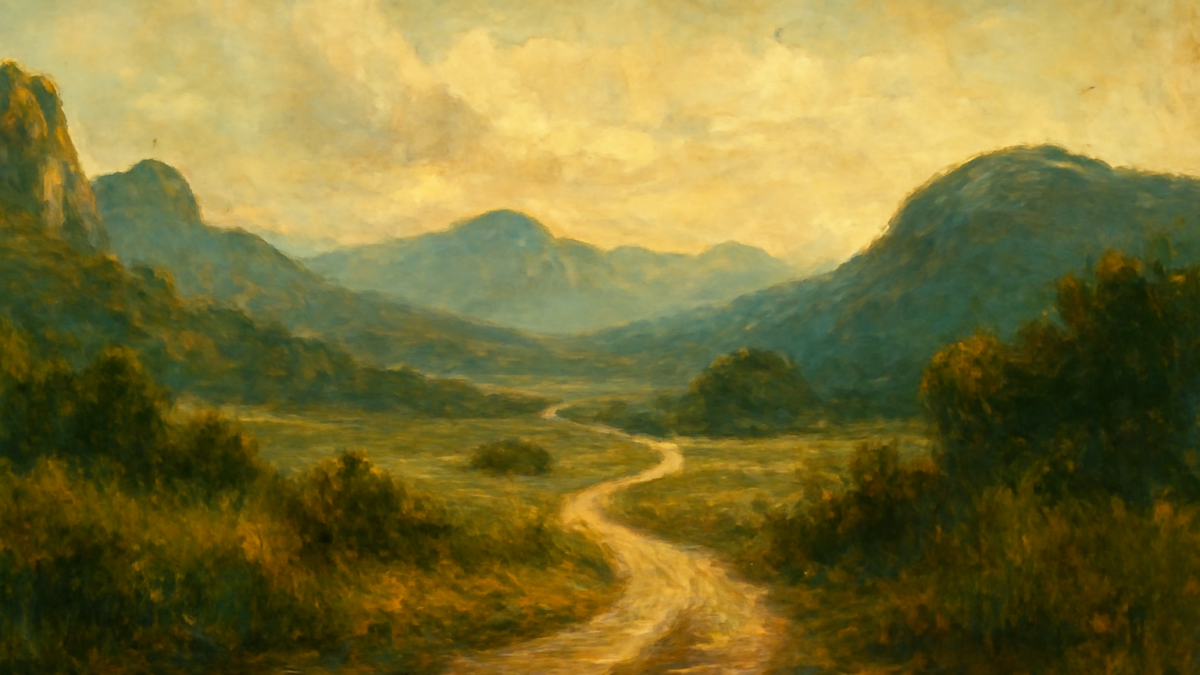
The Enduring Wisdom of Lao Tzu’s First Step
The famous quote “The journey of a thousand miles begins with a single step” is commonly attributed to Lao Tzu, the ancient Chinese philosopher and founder of Taoism, yet this attribution presents an interesting historical puzzle. The phrase actually doesn’t appear in the Tao Te Ching, the foundational text attributed to Lao Tzu written around the 4th century BCE. Instead, the quote appears to be a modern paraphrase or adaptation of a passage from Chapter 64 of the Tao Te Ching, which discusses how great things are accomplished through small beginnings. The quotation became widely popularized in the 20th century, particularly through motivational speakers and self-help literature, but its true origins remain somewhat obscured by time and translation. Regardless of its exact provenance, the quote has become so closely associated with Lao Tzu’s philosophy that understanding both the man and his actual teachings illuminates why this particular sentiment resonates so powerfully with his ideas about the nature of action and change.
Lao Tzu, whose name means “the Old Master,” remains one of history’s most enigmatic figures, shrouded in legend and historical uncertainty. Most scholars believe he lived sometime during the 6th century BCE, making him a contemporary of Confucius, though some historians place him two centuries later. Very little verified biographical information exists about Lao Tzu; what we know comes largely from the Sima Qian’s Records of the Grand Historian, which provides colorful but often fantastical accounts of his life. According to legend, Lao Tzu served as a keeper of records at the royal court and spent much of his life studying ancient wisdom and observing the natural world. Some accounts claim he lived to be over 160 years old and that he eventually rode off into the western mountains on a water buffalo, never to be seen again, which has led some scholars to question whether Lao Tzu was even a historical person or rather a composite figure representing ancient Chinese wisdom traditions.
The philosophical framework that emerged from Lao Tzu’s teachings, whether he penned the Tao Te Ching himself or whether it represents a compilation of earlier wisdom, fundamentally shaped Chinese thought for millennia. Taoism emphasizes living in harmony with the Tao, often translated as “the Way,” which is understood as the underlying principle governing all natural processes and reality itself. Central to Taoist philosophy is the concept of wu wei, often translated as “non-action” or more accurately as “effortless action,” which doesn’t mean passivity but rather acting in accordance with natural rhythms and intuition rather than forcing outcomes through ego-driven effort. This philosophy stands in sharp contrast to the rigid ritualism and hierarchical morality of Confucianism, which dominated Chinese intellectual life, and it offered an appealing alternative perspective on how humans should relate to power, society, and the natural world. The paradoxes that run through Taoist thought—that strength lies in flexibility, that emptiness contains fullness, that the useful emerges from the useless—deeply influenced not only philosophy but also martial arts, medicine, art, and literature across East Asia.
The actual passage from which the modern quote is derived reveals the subtle but profound difference between how the saying is typically used today and what Lao Tzu’s actual philosophy suggests. The relevant section of the Tao Te Ching addresses how even the tallest tree grows from a tiny seedling, and how mastery develops through patient, incremental progress. However, the classical text emphasizes not the willful determination to take a thousand-mile journey, but rather the acceptance that all things develop naturally and gradually when conditions are right. This distinction matters because modern interpretations of the quote tend to emphasize individual will power and goal-oriented motivation—characteristics that Taoist philosophy would view with some suspicion as forms of aggressive striving against the natural flow of things. Where contemporary motivational usage celebrates the triumph of determination and the conquest of ambitious goals, authentic Taoist philosophy would counsel alignment with what the situation naturally calls for, taking action that arises organically from circumstances rather than imposing predetermined destinations upon the world.
The journey of this quote’s cultural ascendancy is itself fascinating, reflecting how Eastern philosophy has been absorbed and transformed by Western culture. The exact wording “The journey of a thousand miles begins with a single step” became prominent in English-speaking countries during the mid-twentieth century, appearing in countless motivational books, speeches, and self-help seminars. The phrase was particularly seized upon by the personal development movement and became a staple of corporate training programs, athletic motivation, and social transformation initiatives. By the 1960s and 1970s, as Western interest in Asian philosophy surged alongside the counterculture movement, the quote gained additional currency among seekers exploring Eastern wisdom. What’s particularly interesting is how the quote has been deployed in contexts ranging from anti-racism activism to environmental movements to entrepreneurial ventures—it became a kind of universal permission slip for taking on any ambitious project. This widespread usage has made it arguably one of the most recognized quotes attributed to an ancient Chinese philosopher, even among people who know nothing else about Taoism or Lao Tzu.
Lesser-known aspects of Lao Tzu’s philosophy and life add unexpected dimensions to understanding how his ideas about beginning journeys actually function. For instance, the Tao Te Ching contains substantial discussion of leadership and statecraft, presenting an alternative model