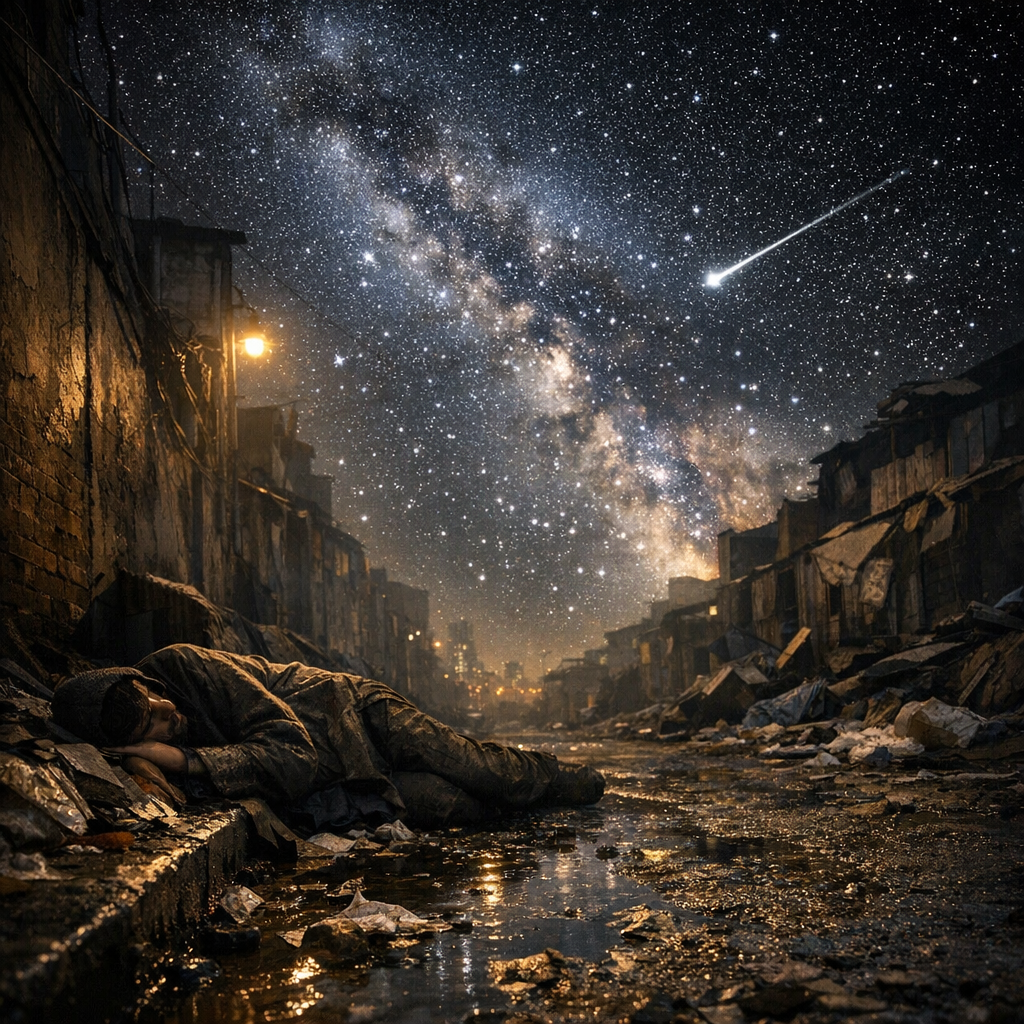
Oscar Wilde’s famous line, “We are all in the gutter, but some of us are looking at the stars,” resonates deeply. It captures a powerful human truth in a few elegant words. This aphorism, from his 1892 play Lady Windermere’s Fan, is more than just a clever remark. Indeed, it serves as a perfect summary of Wilde’s own tumultuous life and his core philosophies. The quote brilliantly reflects the constant tension between his public disgrace and his unwavering devotion to beauty.
This topic has been extensively researched and documented by historians and scholars.
The Quote in Context: A Cynic’s Hope
To fully understand the quote, we must first look at its source. In the play, the charming and cynical Lord Darlington speaks these words. He is a character who questions societal norms and exposes the hypocrisy of Victorian England. His statement is a reply to someone calling him a cynic. Darlington suggests that even a cynic, someone aware of life’s ugliness (the gutter), can still hold onto ideals and aspirations (the stars). This context is crucial. It shows the line is not a naive platitude but a defiant statement of hope from a place of worldly disillusionment. This duality mirrors Wilde’s own perspective perfectly.
Explore More About Oscar Wilde
If you’re interested in learning more about Oscar Wilde and their impact on history, here are some recommended resources:
As an Amazon Associate, we earn from qualifying purchases.
Wilde’s Life: A Story of Gutters and Stars
Oscar Wilde’s biography is a dramatic tale of soaring heights and devastating lows. His life provides the most powerful illustration of his famous words. He experienced both the glittering stardom of London’s elite and the crushing despair of a prison cell. This personal journey gives the quote its profound weight and authenticity.
The Darkness of the Gutter
Wilde’s fall from grace was swift and brutal. In 1895, at the height of his fame, he was arrested and charged with “gross indecency” for his relationship with Lord Alfred Douglas. The trial exposed him to public humiliation and condemnation. Victorian society, which had once celebrated his wit and charm, turned against him with ferocious cruelty. He was sentenced to two years of hard labor in Reading Gaol, a punishment that broke both his body and spirit.
During his imprisonment, Wilde experienced the deepest depths of human suffering. The physical conditions were appalling—hard labor, inadequate food, and harsh discipline. But more devastating was the psychological torment. He was stripped of his identity, his creativity, and his connection to the world of beauty and art that had defined him. In his famous letter “De Profundis,” written during this period, he reflected on his fall: “I have been a spendthrift of my genius… I forgot that every little action of the common day makes or unmakes character.”
The Light of the Stars
Yet even in his darkest moments, Wilde never completely lost sight of the stars. Despite the crushing weight of his circumstances, he continued to find meaning and beauty. In prison, he wrote some of his most profound work, including “The Ballad of Reading Gaol,” a poem that transforms his suffering into art. This ability to create beauty from pain exemplifies the very essence of his famous quote.
After his release in 1897, Wilde went into exile in France. Though broken in health and spirit, he continued to write and maintain his wit. His final years were marked by poverty and isolation, yet he never abandoned his commitment to aestheticism and beauty. He died in Paris in 1900, but his legacy—his words, his plays, his philosophy—continued to shine like stars long after his physical presence was gone.
The Universal Truth: Finding Stars in Our Gutters
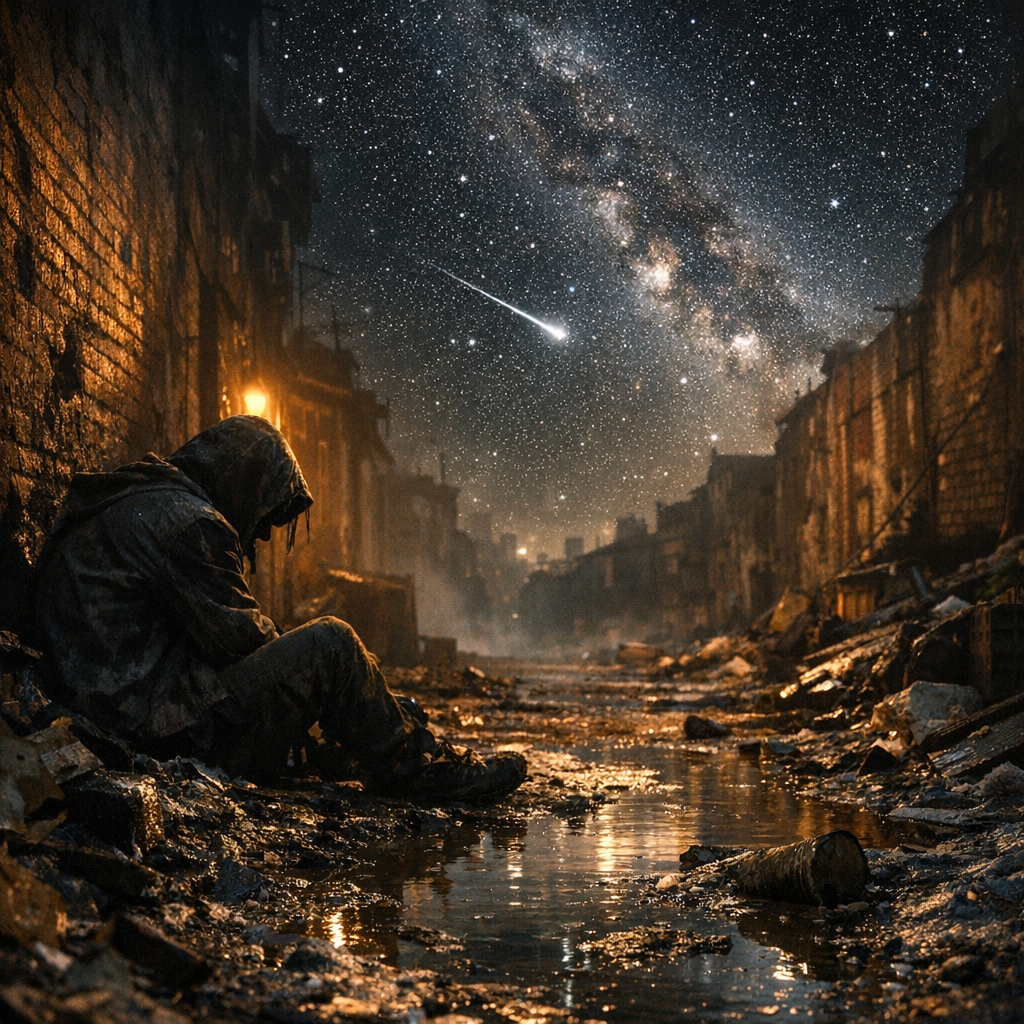
Wilde’s quote speaks to a universal human experience. We all face moments when life feels like a gutter—times of loss, failure, disappointment, or despair. These moments can be personal tragedies, professional setbacks, health crises, or the weight of systemic injustices. The gutter represents those dark places where hope seems distant and beauty feels impossible.
Yet the quote reminds us that even in these moments, we have a choice. We can focus on the mud and muck around us, or we can lift our eyes to the stars. This isn’
Practical Applications: Looking at Stars in Modern Life
In our contemporary world, this philosophy has profound practical applications. When facing financial hardship, we can focus on what we lack, or we can find gratitude for the relationships, experiences, and small joys that money cannot buy. When dealing with health challenges, we can become consumed by pain and limitation, or we can discover new sources of strength, resilience, and appreciation for life’s precious moments.
In relationships, the gutter might be conflict, misunderstanding, or loss. The stars are the moments of connection, love, and growth that emerge even from difficult times. In creative work, the gutter might be rejection, criticism, or creative blocks. The stars are the moments of inspiration, the satisfaction of expression, and the connection with others through art.
The Philosophical Depth: Cynicism and Hope
What makes Wilde’s quote particularly powerful is its acknowledgment of cynicism. Lord Darlington, the character who speaks these words, is a cynic. He sees the gutter clearly—the hypocrisy, the ugliness, the corruption of Victorian society. Yet he still looks at the stars. This isn’t naive optimism; it’s a sophisticated understanding that hope and disillusionment can coexist.
This duality is essential for navigating modern life. We can be aware of climate change, political corruption, social injustice, and personal struggles without losing our capacity for wonder, beauty, and aspiration. In fact, it’s often those who see the gutter most clearly who most appreciate the stars. The contrast makes the light more precious.
Conclusion: The Enduring Power of the Quote
Oscar Wilde’s words continue to resonate more than a century after his death because they capture something fundamental about the human condition. We are all, at times, in the gutter. Life brings challenges, disappointments, and suffering that we cannot avoid. But we are also capable of looking at the stars—of finding beauty, meaning, and hope even in the darkest moments.
Wilde’s own life serves as the ultimate testament to this truth. He experienced both the highest peaks of success and the deepest valleys of despair. Yet through it all, he maintained his commitment to beauty, art, and the power of words. His quote isn’t just a clever turn of phrase; it’s a philosophy for living—a reminder that our circumstances don’t have to define our perspective, and that even in the gutter, the stars are always there, waiting for us to look up.