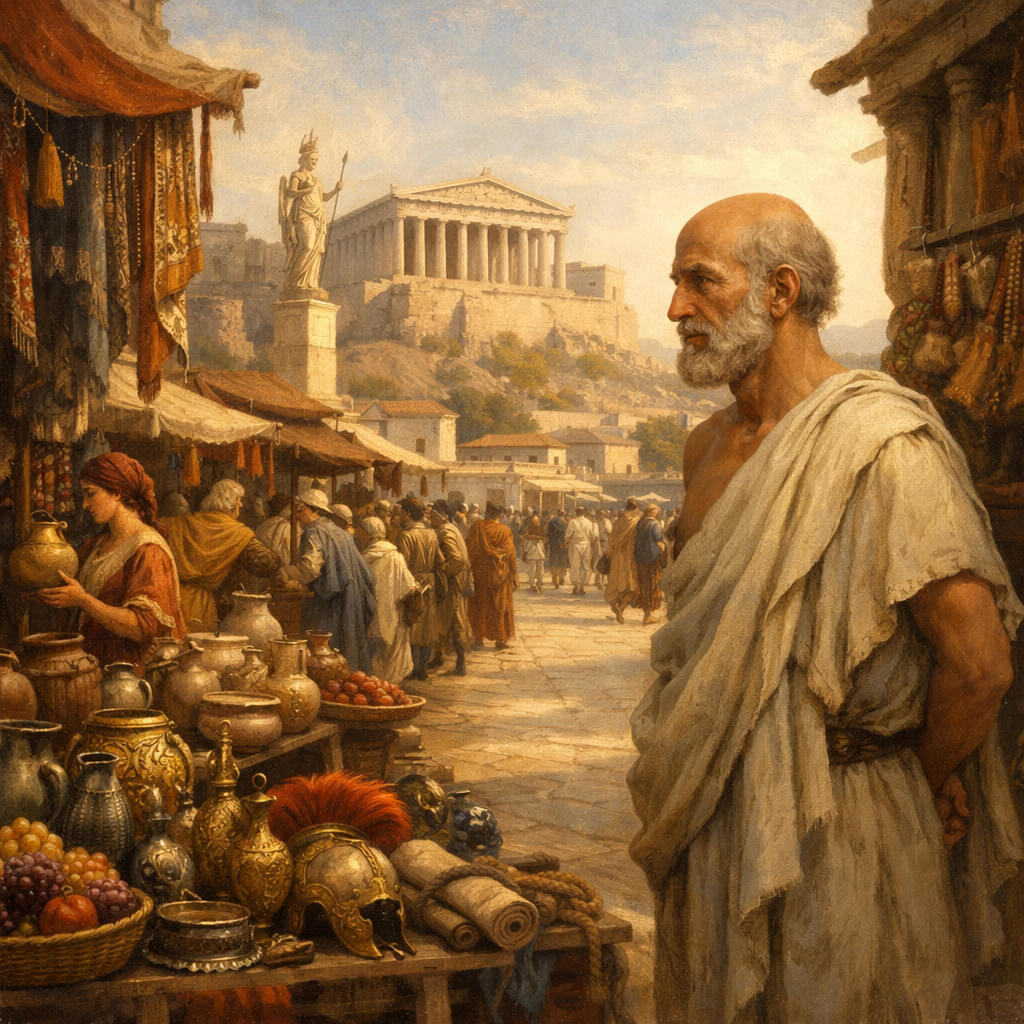
In the bustling marketplaces of ancient Athens, a curious philosopher often wandered, not to buy, but to observe. Surrounded by endless goods and merchants hawking their wares, he found a unique sense of wealth. This man was Socrates, and his simple observation has echoed through centuries: “How many things I can do without!” This profound statement is more than just an ancient musing. It serves as a cornerstone for modern movements like minimalism and stoicism. It challenges our deep-seated beliefs about happiness and success.
This “how many things i can do without quote origin” invites us to question the link between possessions and contentment. It offers a path to freedom not through acquiring more, but by desiring less. Let’s explore the history of this powerful idea and see how its wisdom can enrich our lives today.
The Philosopher in the Marketplace
To understand the quote, we must first understand the man. Socrates was a classical Greek philosopher who lived in Athens from approximately 470 to 399 BCE. He wrote no books himself. His students, most notably Plato and Xenophon, documented his teachings. Socrates became famous for his method of questioning, a form of dialogue designed to stimulate critical thinking and expose contradictions in beliefs.
How Many Things I Can Do Without Quote Origin
He lived a simple life, often walking barefoot and wearing the same modest cloak year-round. This lifestyle was a conscious choice that reflected his belief that wisdom and virtue were far more valuable than material wealth or social status. The marketplace, a symbol of commerce and material desire, provided the perfect backdrop for his philosophy.
The Origin of the Famous Words
The story behind the quote comes to us from Diogenes Laërtius, a biographer of Greek philosophers who lived centuries after Socrates. In his work Lives of the Eminent Philosophers, he recounts Socrates’s reaction to the market. Diogenes Laërtius attributes the “how many things i can do without quote origin” to Socrates in his 3rd-century work Lives of the Eminent Philosophers. As Socrates observed the vast array of goods, he did not feel envy or desire. Instead, he felt a liberating sense of self-sufficiency. He realized his happiness did not depend on any of the items for sale. This was a radical idea in a thriving commercial hub like Athens, and it remains just as radical today.
A Timeless Lesson on Inner Freedom
Socrates’s exclamation teaches us a powerful lesson in mastering our desires. It suggests that true wealth comes not from what you have, but from what you do not need. When we constantly chase external things—the latest gadget, a bigger house, a fancier car—we become slaves to our own wants. This endless pursuit can lead to stress, debt, and a feeling of never having enough. The “how many things i can do without quote origin” reveals that Socrates discovered freedom by turning inward, and we can do the same.
Explore More About Socrates
If you’re interested in learning more about Socrates and their impact on history, here are some recommended resources:
Understanding the Deep Meaning Behind This Quote
Echoes in Modern Minimalism
Fast forward over two millennia, and Socrates’s idea thrives in the modern minimalist movement. Minimalism is a lifestyle focused on living with only the things we truly need and value. It is a direct response to the hyper-consumerism that defines much of contemporary culture. Proponents of minimalism report reduced stress, greater financial freedom, and more time for meaningful experiences.
The connection is undeniable. When a minimalist declutters their home, they are, in essence, walking through their own personal marketplace and declaring, “How many things I can do without!” Understanding the “how many things i can do without quote origin” helps modern practitioners appreciate the ancient wisdom behind their choices. This contemporary movement has seen a remarkable surge in popularity, with people actively seeking an alternative to the clutter and distraction of a possession-focused life.
Why This Philosophy Still Impacts Us Today
Applying Socratic Wisdom to Your Life
You don’t need to live like an ancient philosopher to benefit from this wisdom. Applying this principle can be simple and transformative. It starts with a shift in mindset.
Cultivate Financial Independence
Before making a purchase, ask yourself: “Is this truly necessary for my well-being?” Pausing to reflect helps you curb impulsive spending. This habit enables you to save money, reduce debt, and work towards financial independence. You begin to value your financial peace more than the temporary thrill of a new item. This conscious consumption also has a positive environmental impact, as it reduces waste and the demand for resources.
Enhance Mental Well-being
Physical clutter often contributes to mental clutter. A crowded living space can lead to feelings of stress and anxiety. By simplifying your environment, you create a more peaceful and focused mind. This extends beyond physical objects. You can also declutter your digital life, your schedule, and even your commitments. Saying “no” to things that don’t add value is another way of recognizing the “how many things i can do without quote origin” wisdom in your daily life.
Ultimately, Socrates’s observation is not about deprivation. It is about liberation. It’s a joyful discovery of the abundance that already exists within us. By learning to want less, we open ourselves up to a richer, more meaningful life, free from the weight of unnecessary things.

About This Article

Written by Margaret Voss. Margaret Voss is an obsessive quote hunter who has spent over 15 years chasing down primary sources and original attributions purely because she can't stand a misattributed quote. She's built an extensive personal archive of manuscripts, letters, speeches, and historical documents along the way, and has gotten pretty good at spotting quotes that have been misattributed for decades. No formal training — just fifteen years of stubborn fact-checking and a refusal to let "probably said by Einstein" slide. More about this site.
Verify this against a primary source
Specifics change, and your situation may differ from the one described here. These are the authorities worth checking directly:
- Quote Investigator — traced attributions and earliest known citations
- Wikiquote — sourced and disputed-attribution listings
- Internet Archive — scans of the original printed sources