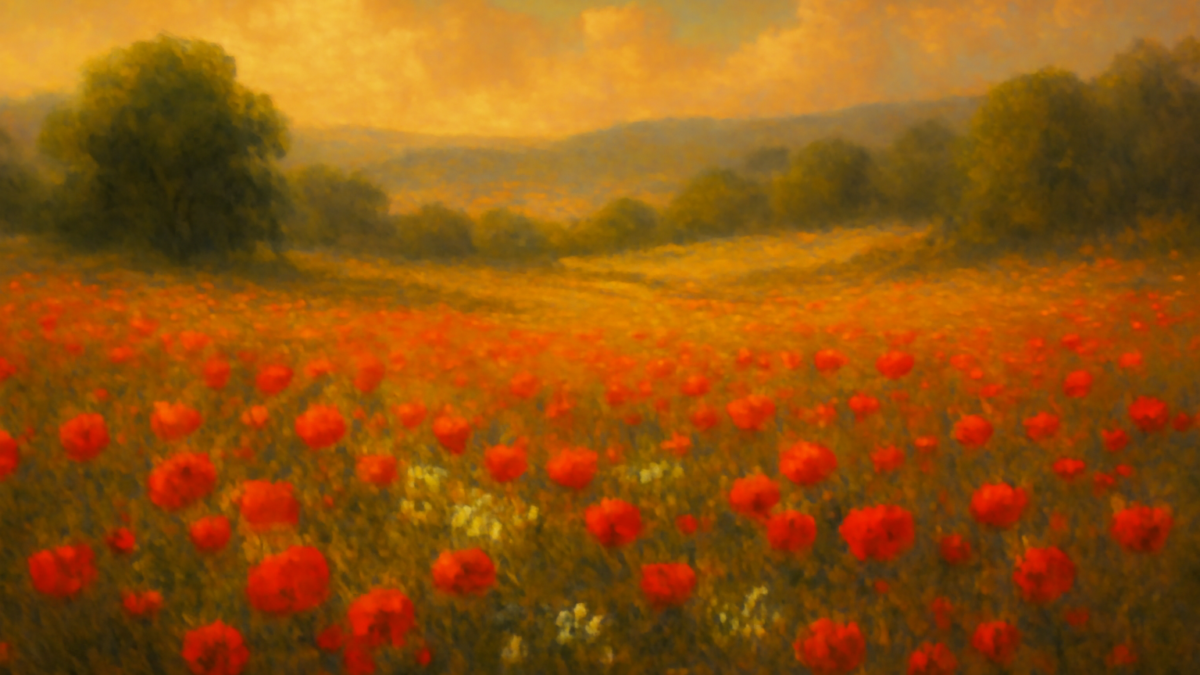
Osho and the Philosophy of Possessionless Love
This deceptively simple yet profoundly philosophical statement about flowers and love is attributed to Osho, the controversial Indian mystic and spiritual leader whose unconventional teachings challenged fundamental assumptions about religion, morality, and human consciousness throughout the latter half of the twentieth century. The quote encapsulates one of Osho’s central philosophical principles: that true love transcends possession and control, requiring instead a kind of enlightened appreciation that allows the beloved—whether person, animal, or flower—to exist in its full authenticity. The statement emerges from his broader spiritual framework, which drew heavily from Eastern philosophy while simultaneously incorporating Western psychology, existentialism, and provocative social commentary. Understanding this quote requires not just an appreciation for its poetic simplicity but an exploration of the man behind it and the turbulent times in which he developed his ideas.
Osho, born Rajesh Chandra Mohan Jain on December 11, 1931, in a small village in central India, showed signs of spiritual precocity from childhood. His family was Gujarati and Jain, religions that emphasize non-violence and ascetic practices, though Osho would spend much of his adult life challenging institutional religion even as he drew on its philosophical depths. He was an exceptional student, excelling in languages and philosophy, and eventually became a university professor of philosophy before abandoning academia to pursue full-time spiritual work. Unlike many spiritual teachers who positioned themselves as inheritors of ancient traditions, Osho presented himself as a radical innovator willing to question everything, including the sanctity of traditional spiritual practices themselves. This intellectual rigor combined with his charismatic personality made him increasingly popular throughout India in the 1960s and early 1970s, as the country underwent modernization and younger generations began questioning their inherited worldviews.
The context in which Osho developed his teachings about love and possession was the revolutionary ferment of the 1960s and 1970s, when questions about individual freedom, sexual liberation, and the nature of intimate relationships were being fundamentally reconsidered across the globe. While Western youth were experimenting with counter-cultural lifestyles in places like San Francisco and London, Osho was developing a uniquely Indian response to these same questions, one that combined ancient yogic and Tantric practices with contemporary insights into human psychology. His early books and lectures began attracting not just Indian spiritual seekers but increasingly Western visitors to his ashram in Pune, India, who were drawn to his seemingly paradoxical message: that spirituality could embrace rather than reject the body, sexuality, and material pleasure while simultaneously transcending attachment and ego. The flower metaphor appears across multiple sources in his teachings but is particularly resonant given Osho’s larger project of revolutionizing how humans understand and practice love in the modern age.
One of the most fascinating and lesser-known aspects of Osho’s life is his complex relationship with Western culture and consumer capitalism. After his ashram in Pune became wildly successful in the late 1970s, attracting thousands of international visitors and accumulating considerable wealth, Osho and his followers relocated to Oregon in 1981, where they attempted to establish a utopian community called Rajneeshpuram. This experiment, which lasted only four years before collapsing amid legal battles and internal strife, remains one of the most infamous communal projects in American history, marked by attempts at bioterrorism, vote-rigging, and elaborate financial schemes. During this period, Osho—who had taken a vow of silence and ceased giving public lectures—accumulated a fleet of nearly 100 Rolls-Royces, a detail that both his critics and defenders point to as either evidence of his hypocrisy regarding material attachment or his deliberate attempt to demonstrate that enlightenment was compatible with material abundance. This contradiction between his teachings on non-attachment and his luxurious lifestyle would shadow his reputation for decades, yet it also reveals something provocative about his philosophy: that spirituality need not require poverty or renunciation.
The specific teaching about the flower crystallizes Osho’s radical critique of how love has been corrupted by possessiveness and control in modern relationships. In traditional romantic discourse, love is often expressed through ownership—declarations of exclusive devotion, demands for fidelity, the ritualized exchange of rings as symbols of permanent possession. Osho’s teaching inverts this entirely, suggesting that to truly love another being is to free it rather than bind it, to appreciate its autonomous existence rather than to reduce it to an extension of one’s own ego or emotional needs. The flower image is particularly brilliant because it draws on a near-universal human experience: we see something beautiful, our natural impulse is to claim it, and in the very act of claiming it, we destroy what made it beautiful in the first place. A picked flower wilts and dies in the vase; a wild flower in its garden lives in dynamic relation with its environment. The teaching thus becomes not abstract philosophy but something instantly graspable through sensory experience. This accessibility helps explain why the quote has enjoyed considerable circulation on social media and in popular spiritual discourse, often accompanied by aesthetic photographs of wildflowers or lovers gazing at each other with appropriate distance between them.
The cultural impact of this particular teaching has grown substantially in the age of internet platforms where Osho’s words circulate in meme form, decontextualized from his broader philosophy but often striking readers with unexpected force. For many people navigating the complexities of contemporary relationships, especially in an era of dating apps, social media surveillance,