Few phrases in American political history resonate with such clarity and power. John F. Kennedy’s famous line, “Let us never negotiate out of fear. But let us never fear to negotiate,” captures a timeless diplomatic ideal. Kennedy rooted this vision in a specific, perilous moment in time that demanded a new approach to global conflict. The “let us never negotiate out of fear. but let us never fear quote origin” reveals a profound strategy for leadership, one that balances strength with an unwavering commitment to peace. Understanding where this quote comes from illuminates how leaders can navigate impossible choices.
The Cold War Context: A World Divided
John F. Kennedy delivered his inaugural address on January 20, 1961, to a world gripped by the Cold War. Two nuclear-armed superpowers—the United States and the Soviet Union—stood as ideological adversaries casting a long shadow across the globe. Tensions ran incredibly high, and citizens lived with constant, underlying anxiety about potential nuclear annihilation. Previous foreign policy doctrines, like brinkmanship, often seemed to push the world closer to disaster rather than away from it.
Kennedy’s predecessor, Dwight D. Eisenhower, had warned of the growing military-industrial complex in his farewell address just days earlier, leaving the world searching for a new path forward. People wondered whether the young new president would be a hawkish cold warrior or a naive peacemaker. His speech needed to send a clear message to both allies and adversaries while projecting resolve without sounding needlessly aggressive. This complex global stage set the scene for his iconic words about the “let us never negotiate out of fear. but let us never fear quote origin” that would define his presidency.
Let us never negotiate out of fear quote origin
Learn More About This Historical Period
To deepen your understanding of this historical period, consider these resources:
- An Unfinished Life: John F. Kennedy, 1917 – 1963
- JFK: Public, Private, Secret
- JFK: Coming of Age in the American Century, 1917-1956
- JFK and the Unspeakable: Why He Died and Why It Matters
- Profiles in Courage: JFK’s Pultizer Prize-Winning Classic
- John F. Kennedy: A Biography
- The House of Kennedy
- Five Days in November: In Commemoration of the 60th Anniversary of JFK’s Assassination
- JFK: Volume 1: John F Kennedy: 1917-1956
- Jacqueline Kennedy: Historic Conversations on Life with John F. Kennedy
- JFK Jr.: An Intimate Oral Biography
- JFK: The CIA, Vietnam, and the Plot to Assassinate John F. Kennedy
Dissecting a Masterclass in Rhetoric
The quote’s power lies in its brilliant structure and use of antithesis—a rhetorical device that presents two contrasting ideas in a balanced way to create memorable impact. Kennedy divided his message into two carefully crafted parts that work together to reinforce his vision.
Understanding the deeper meaning and context
“Let us never negotiate out of fear” addresses the perception of weakness directly. This clause makes it clear that American diplomacy will not be driven by panic or intimidation. The United States would stand firm in its principles, and negotiating from a position of fear would mean conceding ground before talks even begin. Kennedy reassures allies and warns rivals that America will not be bullied into submission.
The second part, “But let us never fear to negotiate,” serves as the crucial counterbalance to this stance. It signals an open door to dialogue and reason, suggesting that while America would not be pushed around, it would also not be too proud or too rigid to seek peaceful solutions. This phrase communicates profound confidence in American strength—confidence strong enough to withstand the rigors of the negotiating table. When exploring the “let us never negotiate out of fear. but let us never fear quote origin,” one discovers that Kennedy implied true strength includes the courage to engage with one’s adversaries.
The History of This Quote in Kennedy’s Philosophy
This single sentence perfectly encapsulated Kennedy’s broader foreign policy approach, seeking a middle ground between the hardline anti-communism of the past and outright appeasement. His administration championed a strategy called “flexible response,” which aimed to provide a range of options to counter aggression rather than relying solely on the threat of massive nuclear retaliation. Policymakers built this approach to have diplomatic, conventional, and nuclear tools available for managing crises effectively.
How this wisdom shaped modern diplomacy
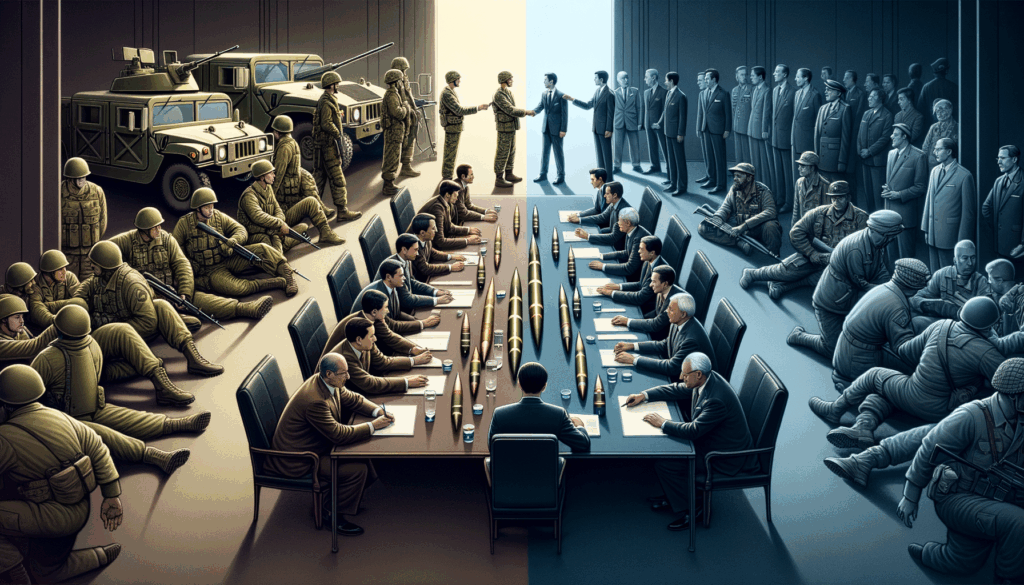
Flexible response represented the philosophical heart of Kennedy’s diplomatic vision, maintaining military strength so that diplomacy could be pursued without coercion. Understanding the “let us never negotiate out of fear. but let us never fear quote origin” helps us see how Kennedy tested this principle during his presidency. The Cuban Missile Crisis in 1962 stands as a prime example of this dual approach in action. During the standoff, the Kennedy administration maintained a firm naval quarantine as a show of strength while simultaneously keeping lines of communication open with the Soviets. This balancing act, refusing to fear negotiation while never negotiating out of fear, ultimately pulled the world back from the brink of nuclear war.
A Lasting Legacy in Politics and Diplomacy
The influence of this quote did not end with Kennedy’s administration, as its history demonstrates continuous relevance across decades. Politicians, diplomats, and leaders around the world have quoted it repeatedly to frame their own approaches to international conflict and negotiation. The phrase has become shorthand for wise and balanced statesmanship, providing a powerful model for engaging in high-stakes discussions from trade deals to peace treaties. Those seeking insight into the “let us never negotiate out of fear. but let us never fear quote origin” discover a timeless principle applicable to countless diplomatic scenarios.
Its enduring appeal stems from universal logic that transcends specific historical moments. True strength is not just about military might—it is also about the confidence to sit down and talk with adversaries. In a world that remains full of complex challenges, Kennedy’s words continue to offer a clear and compelling guide. They serve as a timeless reminder that courage and communication are not opposing forces but rather the essential twin pillars of successful diplomacy.
About This Article

Written by Margaret Voss. Margaret Voss is an obsessive quote hunter who has spent over 15 years chasing down primary sources and original attributions purely because she can't stand a misattributed quote. She's built an extensive personal archive of manuscripts, letters, speeches, and historical documents along the way, and has gotten pretty good at spotting quotes that have been misattributed for decades. No formal training — just fifteen years of stubborn fact-checking and a refusal to let "probably said by Einstein" slide. More about this site.
Verify this against a primary source
Specifics change, and your situation may differ from the one described here. These are the authorities worth checking directly:
- Quote Investigator — traced attributions and earliest known citations
- Wikiquote — sourced and disputed-attribution listings
- Internet Archive — scans of the original printed sources