“All parents are environmentalists until they have their second child.”
— Marvin Zuckerman, Behavioral and Brain Sciences, 1987 My sister called me on a Tuesday night, completely undone. Her second daughter had just turned two, and nothing — absolutely nothing — was working the way it had with her first. She had used the same bedtime routine, the same gentle discipline, the same carefully chosen books and music. Her first daughter had been calm, bookish, and easy to redirect. Her second was a tiny hurricane who laughed at consequences and treated every boundary like a personal challenge. “I did everything the same,” my sister kept saying, voice cracking. “I did everything the same.”
A few days later, she texted me a single line she had stumbled across online: “All parents are environmentalists until they have their second child.” No explanation. No commentary. Just the quote — and somehow, it said everything. That moment sent me down a rabbit hole into the surprisingly rich history behind this deceptively simple observation, and what I found reveals a deep, ongoing debate about human nature itself.

The Quote and Its Earliest Known Source The trail leads back to 1987. That year, University of Delaware psychologist Marvin Zuckerman published a short response article in the prestigious journal Behavioral and Brain Sciences. He titled that piece with the exact phrasing we are exploring today. Zuckerman wrote it as a response to a paper by Robert Plomin and Denise Daniels. Their paper asked why children raised in the same family turn out so differently from one another. Zuckerman’s opening was sharp and immediately quotable. He asked what happens to parents after a second child arrives. What shakes their belief in the tabula rasa? This is the philosophical idea that children are born as blank slates.
His argument was pointed: with only one child, parents can comfortably credit their own parenting for every positive outcome. They quietly attribute negative traits to genetics from some other branch of the family tree. Then the second child arrives — raised with the same methods, the same love, the same intentional parenting — and turns out startlingly different. At that point, parents must question their entire framework. This intellectual core explains why the quote origin all parents environmentalists until they have their second child resonates so deeply. It is not merely a joke about parenting. It is a compressed argument about the nature-versus-nurture debate. Zuckerman delivered it with the precision of a scientist and the timing of a comedian.
The Nature vs. Nurture Debate That Gives the Quote Its Teeth To fully appreciate this observation, you must understand the debate it enters. The nature-versus-nurture question has occupied philosophers, scientists, and parents for centuries. On one side stand the environmentalists — those who believe that upbringing, education, and experience shape who we become. On the other side stand the hereditarians. They argue that genes set the trajectory. For much of the twentieth century, environmentalism dominated academic psychology. The idea that a skilled, attentive parent could mold a child’s character felt both democratic and hopeful. It placed power — and responsibility — squarely in the hands of caregivers. However, behavioral genetics research began chipping away at that consensus steadily through the latter half of the century.
Quote Origin All Parents Environmentalists Until
Zuckerman himself was a prominent personality researcher. He spent decades studying sensation-seeking behavior and its biological underpinnings. His work consistently pointed toward genetic and neurobiological factors. These factors emerged as powerful drivers of behavior. So when he titled that 1987 article this way, he was not being whimsical. He was making a pointed scientific argument. He dressed it in the clothes of a parenting observation. Understanding the quote origin all parents environmentalists until they had children helps us see Zuckerman’s real purpose. He was advancing a scientific position through wit.
Variations That Circulated Before and After 1987 Interestingly, the idea behind the quote did not originate in 1987. The exact phrasing did, but the concept appeared earlier. A thematically related observation appeared decades before. In 1946, a pamphlet titled Parent Education Through Home and School was produced for a National Catholic conference on family life. Reverend James A. Magner contributed a passage. He quoted a remark attributed to Lord Rochester:
“Before I got married, I had six theories about bringing up children. Now I have six children — and no theories.”
This captures the same spirit — the humbling of parental certainty by the reality of individual children. However, it stops short of the nature-versus-nurture framing. It is a joke about the collapse of theory under lived experience. Zuckerman’s version goes further. It specifically names the ideological position (environmentalism). It identifies the precise moment it breaks down (the second child). By 1997, the saying had migrated into academic textbooks. It appeared without a named author. The textbook Lifespan Development by Kelvin L. Seifert and colleagues presented it as something a psychologist had once said. The attribution remained vague. This development is telling. When quotes lose their author in academic contexts, it usually signals something important. People treat the idea as common wisdom rather than someone’s original observation. This happened even as scholars were still researching the quote origin all parents environmentalists until they could properly document it.
What This Parenting Quote Really Means
The following year, 1998, psychologist David T. Lykken offered his own variation. Lykken was a key figure in the University of Minnesota twin studies. This research produced some of the most compelling evidence for genetic influences on personality. In a 1998 interview published on the Edge.org website, he expressed a similar idea. Even highly educated people abandon radical environmentalism once they have a second child. Lykken’s framing added a layer of irony. He pointed out a paradox: clinging to radical environmentalism despite evidence to the contrary is most accessible to people with advanced degrees. The more educated you are, the more elaborate intellectual scaffolding you can build. You construct this to avoid uncomfortable truths — until a second child dismantles it entirely.
The Quote Spreads Into Popular Culture By the mid-2000s, the saying had fully escaped academic circles. In 2006, a commenter on the classical music community website Violinist.com used a version of the phrase. She explained differences among her four daughters. All four shared the same biological parents and the same home environment. Two were solid, capable musicians. Two were exceptionally gifted — and even between those two, the outcomes differed. One had the drive and physical attributes to truly excel. The other did not.
Her anecdote perfectly illustrated Zuckerman’s original point. She likely had no idea she was echoing a 1987 journal article. This pattern is common for quotes that capture something universally recognizable. The quote origin all parents environmentalists until became so familiar that people stopped attributing it. The quote works because it describes an experience millions of parents have lived. Therefore, it does not need a famous name attached to travel. It carries its own credibility in the lived experience of its audience.
Why Marvin Zuckerman Deserves the Credit Given the anonymous versions and thematic precursors, clarity is important. Marvin Zuckerman holds the strongest claim to this specific formulation. His 1987 article used the exact phrase as its title. He placed it in a peer-reviewed scientific context. He was making a specific argument about behavioral genetics. Additionally, the phrasing is precise and rhetorically distinctive. It is not the kind of formulation that independently emerges from multiple sources simultaneously. However, intellectual honesty requires acknowledging uncertainty. Earlier instances may yet surface. The 1997 textbook attributed it anonymously to “a psychologist.” This could suggest the quote origin all parents environmentalists until they had more children circulated verbally in academic psychology before Zuckerman published it. Future researchers may find an earlier written source. For now, though, Zuckerman is the name that belongs on this quote.
What the Quote Actually Teaches Us Strip away the wit, and this quote delivers a genuine epistemological lesson. It describes how a single data point — one child — creates an illusion of certainty. With one child, every outcome confirms your theory. Parents of first children often become extraordinarily confident in their parenting philosophy. They write the books, start the blogs, and offer the advice. Then the second child arrives.
Why This Quote Resonates With Parents
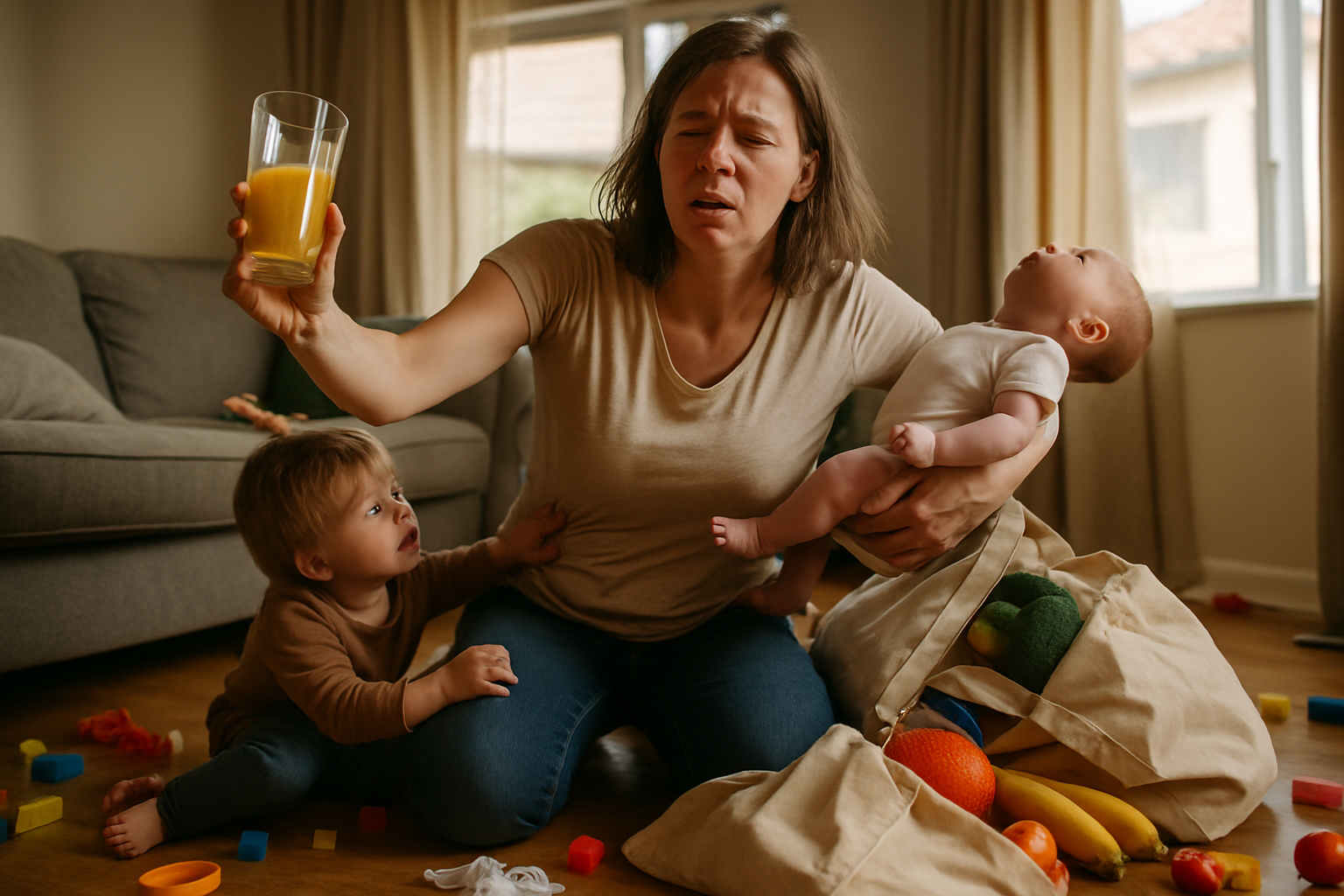
Suddenly, the same techniques produce different results. The same patience, the same boundaries, the same warmth — and yet a completely different person emerges. This is not a failure of parenting. It is a demonstration of genetic individuality. Each child arrives with unique neurological architecture. They have unique sensitivities and unique temperamental tendencies. The environment shapes them, but it shapes different raw material each time. The quote origin all parents environmentalists until they witness this phenomenon captures this with elegant economy. Moreover, it does so without dismissing the importance of parenting altogether. It simply repositions parenting — from sole cause to one factor among many. That is a more accurate, and ultimately more compassionate, framework for understanding both children and parents.
The Quote’s Lasting Relevance Decades after Zuckerman first published it, this quote continues to circulate widely. It appears in parenting forums, psychology lectures, social media threads, and casual dinner conversations. Its longevity reflects the fact that it touches something real and recurring in human experience. Additionally, the underlying science has only grown stronger. Twin studies, adoption studies, and more recently genome-wide association studies have all reinforced the findings. Genetic factors play a substantial role in shaping personality, cognitive ability, and behavioral tendencies. This does not mean environment is irrelevant — it clearly matters enormously. However, it does mean that Zuckerman’s 1987 observation was scientifically well-grounded. It was not just clever.
The quote also endures because it is kind. It does not blame parents. Instead, it gently points out that their certainty was always based on insufficient evidence. One child is not a sample size. Two children begin to reveal the truth — that each person arrives in the world as a unique individual. They are not a blank slate waiting to be written upon.
Conclusion The saying “All parents are environmentalists until they have their second child” belongs, by the best available evidence, to Marvin Zuckerman. He is a University of Delaware psychologist who used it as the title of a 1987 journal article in Behavioral and Brain Sciences. From there, it migrated through academic textbooks, research interviews, and online communities. It gradually shed its attribution while gaining universality. Understanding the quote origin all parents environmentalists until they have more children helps us appreciate Zuckerman’s insight fully. The quote’s power comes from its precision. It names a specific ideology (environmentalism). It identifies the moment it collapses (the second child). It does so in a single, memorable sentence. Furthermore, it sits at the intersection of science and lived experience — which is exactly where the most durable ideas tend to live.
My sister, for her part, has made her peace with it. Her second daughter is now four, still a hurricane, still laughing at consequences — and completely, irreducibly herself. My sister stopped trying to replicate what worked before. Instead, she started paying attention to who her daughter actually is. That, perhaps, is the real lesson hiding inside Zuckerman’s elegant little observation: the second child does not just challenge your theory. She teaches you to see more clearly.
About This Article

Written by Margaret Voss. Margaret Voss is an obsessive quote hunter who has spent over 15 years chasing down primary sources and original attributions purely because she can't stand a misattributed quote. She's built an extensive personal archive of manuscripts, letters, speeches, and historical documents along the way, and has gotten pretty good at spotting quotes that have been misattributed for decades. No formal training — just fifteen years of stubborn fact-checking and a refusal to let "probably said by Einstein" slide. More about this site.
Verify this against a primary source
Specifics change, and your situation may differ from the one described here. These are the authorities worth checking directly:
- Quote Investigator — traced attributions and earliest known citations
- Wikiquote — sourced and disputed-attribution listings
- Internet Archive — scans of the original printed sources