“It is the greatest of all mistakes, to do nothing because you can only do little: but there are men who are always clamouring for immediate and stupendous effects, and think that virtue and knowledge are to be increased as a tower or a temple are to be increased, where the growth of its magnitude can be measured from day to day, and you cannot approach it without perceiving a fresh pillar, or admiring an added pinnacle.”
— Sydney Smith, *Elementary Sketches of Moral
Philosophy*, 1850
A close friend quit her volunteer project during the kind of week that makes everything feel pointless. She’d poured herself into it for three years, but told me over coffee that she’d stopped because “nothing I do actually changes anything.” I didn’t have a good answer for her. Later that night, while digging through an old box of books, I found a slim paperback anthology of philosophical sayings — the kind sold at charity shops for fifty pence.
Someone had underlined a single sentence in faded pencil: It is the greatest of all mistakes to do nothing because you can only do a little. I sat with it for a long time. The sentence felt less like inspiration and more like a quiet correction — the kind a wise friend offers without raising their voice. Understanding the quote origin greatest all mistakes nothing became my focus as I tumbled down a research rabbit hole that night, and what I found surprised me considerably.

The Quote You Probably Know — And Who Actually Said It
Most people who encounter this saying assume Edmund Burke said it. That attribution appears on motivational posters, in self-help books, and across social media feeds worldwide. However, the historical record tells a different story — and a more interesting one.
A witty, warm, and remarkably practical English clergyman named Sydney Smith delivered the original version. Between 1804 and 1806, Smith delivered a series of lectures at the Royal Institution of London on moral philosophy in an accessible, conversational style that set him apart from his more austere contemporaries. After his death, his family compiled those lectures into a book. That 1850 publication contains the earliest verified version of this now-famous saying. Investigating the quote origin greatest all mistakes nothing reveals Smith as the true source, not Burke.
The passage reads with real texture and specificity. Smith wasn’t simply offering a motivational slogan. He made a pointed critique of a particular personality type — the person who demands dramatic, visible, measurable results before committing to any effort. His tower-and-temple metaphor is vivid and precise, revealing someone who understood human psychology in a deeply practical way. Additionally, the full context demonstrates that Smith was targeting impatience specifically, not laziness.
Sydney Smith: The Man Behind the Words
Understanding the quote fully means understanding the man who wrote it. Sydney Smith was born in 1771 in Woodford, Essex. An Anglican clergyman by profession, Smith built his reputation equally on brilliance as a writer, wit, and social commentator. Between 1802 and later, he co-founded the Edinburgh Review, one of the most influential literary and political journals of the nineteenth century.
London society knew him best for his humor. His dinner table was reportedly one of the most sought-after invitations in the city. However, beneath the wit ran a serious moral current. Smith campaigned loudly for Catholic emancipation at a time when that position carried real professional risk. He wrote pamphlets against the injustice of game laws that punished rural poverty. Consistently, he used his platform on behalf of people with less power than himself.
This context matters enormously when considering the quote origin greatest all mistakes nothing. When Smith said it was a mistake to do nothing because you could only do a little, he wasn’t speaking abstractly. He was a man who had spent decades doing exactly the opposite — writing, speaking, and agitating on issues where his individual contribution was, objectively, small. Therefore, the quote carries the weight of lived conviction rather than armchair philosophy.
The Quote Origin and Greatest All Mistakes
The Earliest Printed Appearance
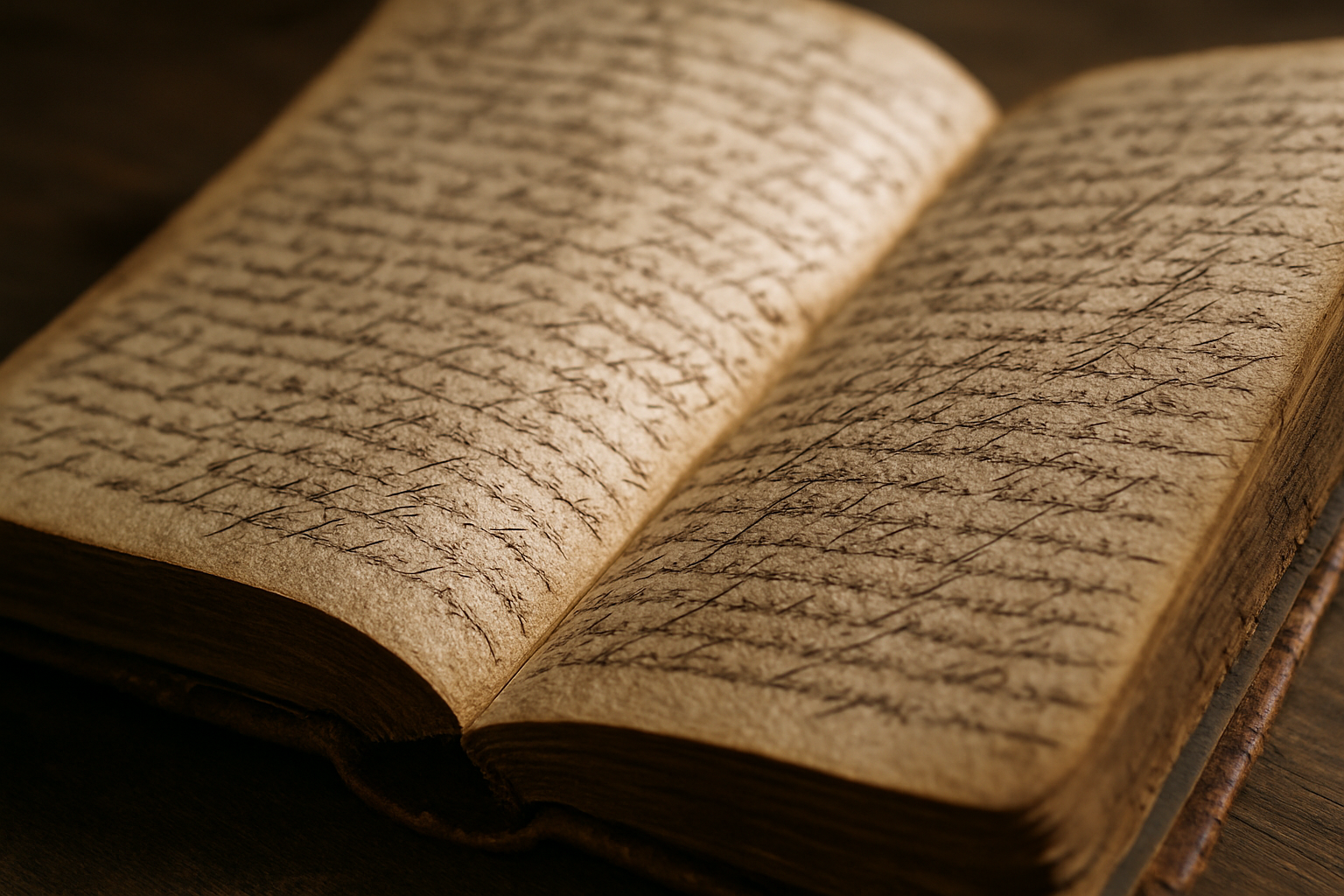
The 1850 publication of Elementary Sketches of Moral Philosophy gives us our earliest confirmed source. Lecture XIX, titled “On the Conduct of the Understanding — Part II,” contains this passage and focuses on practical wisdom and the management of one’s intellectual and moral energies.
Smith’s original phrasing rewards reading in full, because the surrounding sentences dramatically enrich the meaning. He wasn’t just encouraging action. Smith was specifically criticizing impatience — the demand for grand, measurable, immediate results. His critique targeted people who measure moral progress the way a construction foreman measures a rising tower: by visible daily increments. That framing is sophisticated. It anticipates modern psychological research on motivation, perfectionism, and the “all-or-nothing” thinking that prevents sustained effort.
Additionally, Smith’s metaphor of the tower and temple rewards close reading. Towers and temples rise visibly, dramatically, stone by stone. Virtue and knowledge, he argues, don’t work that way. Their growth is quieter, slower, and less measurable. Demanding otherwise sets an impossible standard — and then uses that impossible standard as an excuse for inaction. Learning about the quote origin greatest all mistakes nothing requires engaging with Smith’s full argument, not just the shortened version.
How the Quote Spread — and Lost Its Author
After its 1850 publication, the saying traveled quickly. In 1861, the Melbourne newspaper The Age reprinted Smith’s passage under the heading “Do What You Can.” Crucially, the reprint dropped Smith’s name entirely. The following year, 1862, the Bristol Times in England reprinted the same passage — again without attribution.
This pattern — a quote circulating without its author’s name — is one of the most reliable engines of misattribution in literary history. Once a saying detaches from its source, it floats freely. Eventually, it attaches to whoever seems most plausible or most famous. In 1903, The Irish Monthly published a collection of sayings and correctly credited Smith. However, that correction didn’t stick universally, and researchers later tracing the quote origin greatest all mistakes nothing would find this correction buried in obscure archives.
By 1912, a Brooklyn newspaper called The Chat was printing the saying with the vague attribution “a great writer once said.” The quote had fully separated from its origin. It was now a free-floating piece of collective wisdom, ready to be claimed by anyone.
The Edmund Burke Misattribution
The Burke attribution appears to have entered circulation in 1981, when a book about nuclear disarmament — As Lambs to the Slaughter by Paul Rogers, Malcolm Dando, and Peter van den Dungen — placed a version of the quote in a highlighted box and credited it to Edmund Burke. The placement was deliberate and prominent. Readers naturally trusted it, and few questioned whether the quote origin greatest all mistakes nothing actually belonged to Burke.
From there, the Burke attribution gained momentum rapidly. In 1986, Irish rock musician Bob Geldof — then at the height of his fame following the Band Aid and Live Aid campaigns — publicly quoted it as Burke’s in a Calgary newspaper interview. Geldof’s reach was enormous. His endorsement of the Burke attribution effectively locked it into popular consciousness for decades.
Why does Burke feel plausible? Partly because he was genuinely eloquent and quotable. Partly because he was Irish, like Geldof. Partly because his political philosophy — emphasizing gradual, incremental reform over revolutionary transformation — resonates thematically with the quote’s message. However, resonance is not evidence. Despite extensive searching, no researcher has found this saying in any of Burke’s verified writings or speeches.
Understanding What Nothing Because You Can Only Do Little Means
Meanwhile, Sydney Smith’s authorship rests on a documented, dated, published source from 1850 — a full generation before the Burke attribution appeared anywhere.
Variations Across Time
One fascinating dimension of this quote’s history is how its wording shifted as it traveled. Smith’s original used “you can only do little.” Later versions swapped in “a little.” Some versions replaced “he” with “he who” or restructured the sentence entirely. By 1999, a Detroit News profile quoted a local automobile executive using the phrasing: “No one makes a greater mistake than he who does nothing because he thinks he can only do a little.” The executive attributed it to Burke and called it his favorite quote, unaware of the true quote origin greatest all mistakes nothing.
These variations reveal something important about how quotes live in the world. They adapt to the speaker’s memory, rhythm, and purpose. The core idea — that paralysis in the face of limited capacity is itself a moral failure — survives every rephrasing. That durability signals a genuinely powerful insight rather than a catchy turn of phrase.
Additionally, the shortening of the quote matters culturally. Smith’s full passage is rich and nuanced. The stripped-down version — “do nothing because you can only do a little” — is punchy and portable. However, something is lost in the compression. The critique of impatience, the tower metaphor, the specific psychological portrait Smith was painting — all of that disappears. What remains is motivational rather than analytical, which is why understanding the quote origin greatest all mistakes nothing in its full form provides so much more value.

Why This Quote Resonates So Deeply
The saying endures because it names something real. Human beings consistently underestimate the value of small actions. Psychologists call related patterns “the drop-in-the-bucket effect” — the tendency to feel that a contribution is meaningless unless it makes a visibly significant dent in a large problem. This bias actively discourages charitable giving, volunteering, and civic participation.
Smith’s quote pushes back against exactly that bias. Furthermore, it reframes inaction not as neutral or cautious but as a mistake — the greatest mistake, in fact. That reframing is psychologically powerful. It shifts the moral weight. Suddenly, doing nothing carries a cost. The comfortable paralysis of “I can’t fix everything” becomes less comfortable.
This is why the quote found such a natural home in activist and humanitarian contexts. Bob Geldof used it to sustain the emotional energy of anti-poverty campaigning. The nuclear disarmament movement used it to encourage individual engagement with overwhelming systemic problems. In both cases, the quote served the same function: it made small action feel morally significant rather than futile, even though most users were unaware of the true quote origin greatest all mistakes nothing.
Sydney Smith’s Legacy and the Irony of Misattribution
There is a certain irony in the fact that Sydney Smith’s most famous contribution to public discourse circulates under someone else’s name. Smith was, in many ways, the perfect author for this particular idea. He spent his career doing what he could — writing, preaching, campaigning, entertaining — without ever holding great political power or commanding vast resources. He understood from personal experience that incremental effort, sustained over time, produces real change.
His co-founding of the Edinburgh Review is a perfect example. A literary journal seems modest compared to legislation or revolution. However, that journal shaped political opinion across Britain for decades. Smith’s individual contribution — writing, editing, promoting — was exactly the kind of “little” he described. And it mattered enormously.
How This Quote Impacts Modern Action and Progress
Burke, by contrast, was a parliamentarian and orator. His natural register was the grand gesture — the parliamentary speech, the published polemic, the sweeping philosophical argument. The quiet, persistent, incremental ethic of Smith’s quote fits Smith’s own life far better than Burke’s, which makes the quote origin greatest all mistakes nothing all the more significant when properly attributed.
Modern Usage and Continued Misattribution
Today, a quick search online surfaces thousands of versions of this quote. The vast majority attribute it to Burke. Some attribute it to no one. A small minority correctly name Sydney Smith. The misattribution has, at this point, become self-reinforcing — each new source copies from existing sources, and the error compounds.
This pattern is unfortunately common in the world of popular quotations. Famous names attract famous sayings. Burke, Churchill, Einstein, Twain, and Lincoln collectively “receive credit” for an enormous number of things they never actually said or wrote. The mechanism is consistent: a compelling idea floats free of its source, and then gravitational pull toward celebrity takes over.
For Smith, the misattribution is particularly unfortunate because his body of work deserves far more attention than it currently receives. His essays, letters, and lectures are consistently funny, warm, and wise. He wrote with the rare combination of moral seriousness and genuine humor that makes philosophy actually readable. Anyone who enjoys the quote should follow it back to its source and keep reading — discovering that understanding the quote origin greatest all mistakes nothing opens doors to Smith’s entire intellectual world.
What the Quote Actually Teaches
Stripped of attribution debates, the core lesson remains luminous. Smith identified a specific, named failure mode: using the inadequacy of your available contribution as a reason to make no contribution at all. He called it the greatest mistake — not merely a mistake, but the greatest one.
That superlative is deliberate. Smith was arguing that the paralysis of perfectionism causes more harm than imperfect action. Therefore, the person who volunteers for two hours a week, donates what they can afford, writes the letter they’re not sure will be read, or speaks up in a meeting where they’re not sure they’ll be heard — that person is, in Smith’s framework, doing exactly the right thing.
Additionally, Smith’s framing reminds us that moral progress is not architectural. You cannot measure it in pillars and pinnacles. Consequently, demanding visible, dramatic, measurable results before committing to effort is a form of bad faith — a way of guaranteeing your own inaction while maintaining the appearance of high standards.
My friend eventually came back to her volunteer project. I sent her the full Smith passage — not just the famous line, but the tower-and-temple metaphor, the critique of people who demand stupendous effects. She read it and said: “That’s exactly what I was doing to myself.” That’s what a genuinely good idea does. It names the thing you couldn’t quite name, and in naming it, it loosens its grip. Understanding the quote origin greatest all mistakes nothing helped her understand herself.
Conclusion: Credit Where It’s Due
The historical record is clear. Sydney Smith — clergyman, wit, reformer, and co-founder of the Edinburgh Review — wrote this saying in a lecture delivered between 1804 and 1806, later published in 1850. No verified evidence connects it to Edmund Burke. The Burke attribution emerged in 1981 and spread rapidly through popular culture, amplified by high-profile figures like Bob Geldof.
However, the misattribution doesn’t diminish the quote’s power. It simply misplaces the credit. Sydney Smith deserves to be remembered not just as a witty dinner companion but as a serious moral thinker whose practical wisdom still cuts through the noise two centuries later. The next time you feel paralyzed by the smallness of what you can offer — remember who actually said it, research the quote origin greatest all mistakes nothing properly, and discover why he was so qualified to say it. Then do the little thing. Do it anyway.
About This Article

Written by Margaret Voss. Margaret Voss is an obsessive quote hunter who has spent over 15 years chasing down primary sources and original attributions purely because she can't stand a misattributed quote. She's built an extensive personal archive of manuscripts, letters, speeches, and historical documents along the way, and has gotten pretty good at spotting quotes that have been misattributed for decades. No formal training — just fifteen years of stubborn fact-checking and a refusal to let "probably said by Einstein" slide. More about this site.
Verify this against a primary source
Specifics change, and your situation may differ from the one described here. These are the authorities worth checking directly:
- Quote Investigator — traced attributions and earliest known citations
- Wikiquote — sourced and disputed-attribution listings
- Internet Archive — scans of the original printed sources