The sergeant took a bit of regulation bread from his pocket, and handed it to the mother. She broke the bread into two fragments, and gave them to the children, who ate with avidity.
“She has kept none for herself,” grumbled the sergeant.
“Because she is not hungry,” said a soldier.
“Because she is a mother,” said the sergeant.
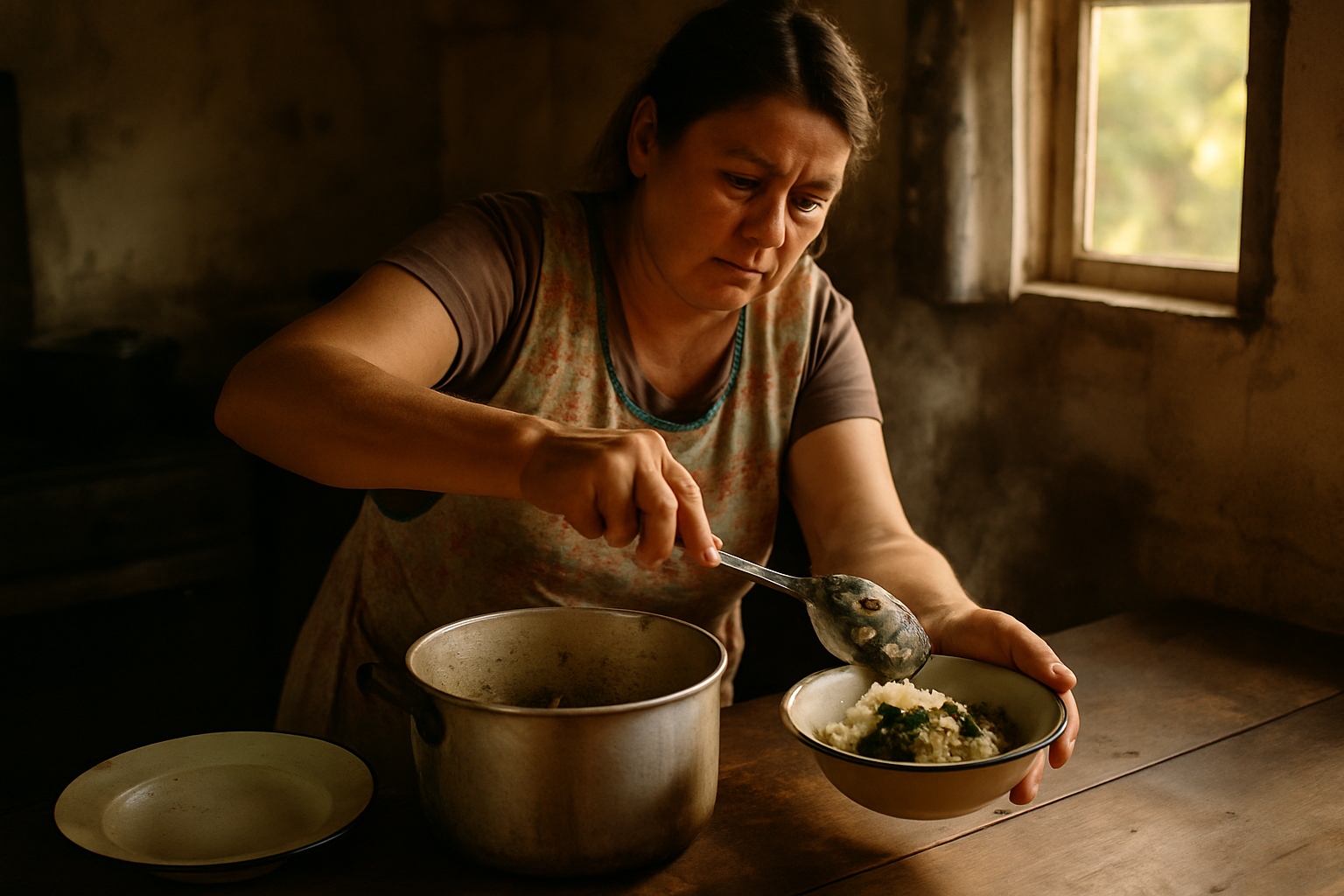
— Victor Hugo, Ninety-Three (1874) My grandmother never quoted literature. She quoted life. I was maybe twelve years old, sitting at her kitchen table after a particularly rough week at school — the kind of week where everything feels catastrophic and nothing feels fixable. She slid a plate of food toward me without a word. When I noticed her own plate was empty, I asked why she wasn’t eating. She waved her hand dismissively and said, “I’m not hungry, mija. You eat.”
Years later, I came across this passage from Victor Hugo, and something cracked open in my chest. She had no idea she was echoing one of the most quietly devastating lines in nineteenth-century French literature. That moment — her empty plate, her unbothered shrug — suddenly had a name, a history, and a weight I hadn’t known how to carry before. That’s the power of a quote that earns its place in the world. It doesn’t announce itself. It waits.

The Original Source: Victor Hugo’s Quatrevingt-Treize This passage comes from one of Victor Hugo’s lesser-celebrated but deeply moving novels. The book centers on the French Revolutionary Wars of the 1790s — specifically the brutal conflict in the Vendée region of western France. Hugo wrote it as a meditation on war, conscience, and what it means to be human when civilization tears itself apart. A French sergeant encounters an emaciated mother and her two starving children in the forest of La Saudraie. He reaches into his pocket and pulls out a piece of military bread — his own ration. He hands it to the mother.
Without hesitation, she breaks it into two pieces and gives both fragments to her children. She keeps nothing. The children eat greedily. The sergeant watches. Then comes the exchange that stopped readers cold in 1874 and continues to do so today. In the original French, Hugo wrote:
Le sergent tira de sa poche un morceau de pain de munition et le tendit à la mère. La mère rompit le pain en deux morceaux et les donna aux enfants. Les petits mordirent avidement.
— Elle n’en a pas gardé pour elle, grommela le sergent.
— C’est qu’elle n’a pas faim, dit un soldat.
— C’est qu’elle est la mère, dit le sergent.
Three lines. Three speakers. One devastating correction. The soldier offers the easy explanation — she simply isn’t hungry. But the sergeant refuses it. He knows better. Having seen enough of the world, he understands that hunger doesn’t disappear just because you love someone. Instead, it transforms. It redirects. It becomes something else entirely.
The First English Translation and Its Immediate Impact Hugo’s publisher moved quickly to bring the work to English readers. That initial translation rendered the key exchange as:
“She has kept none for herself,” grumbled the sergeant.
“Because she is not hungry,” said a soldier.
“Because she is a mother,” said the sergeant.
This version became the most widely circulated in the English-speaking world, and the word “grumbled” carries something important — the sergeant isn’t sentimental about what he observes. He states it plainly, almost irritably, as if the fact itself is inconvenient. That gruffness makes the final line land harder. A soft, weeping soldier would have been predictable. Instead, a grumbling, weathered sergeant who still sees — that’s Hugo at his best. The quote origin she kept none herself appears throughout the novel’s translation with this specific emotional weight.
The Historical Context of This Quote
Additionally, the 1874 translation preserved the rhythm of Hugo’s original three-beat structure. Each line builds on the last. The soldier sees the surface. The sergeant sees the soul. Each speaker offers a different level of understanding, making this exchange one of literature’s most perfectly balanced moral corrections.

A Second Translation Arrives in 1888 Fourteen years later, a different translator took on the same novel. Her version rendered the exchange slightly differently:
“She has not saved any for herself,” growled the sergeant.
“Because she is not hungry,” remarked a soldier.
“Because she is a mother,” said the sergeant.
The differences feel small but matter enormously. “Growled” instead of “grumbled” sharpens the sergeant’s edge. “Remarked” instead of “said” makes the soldier sound almost casual — as if he’s barely paying attention. That casualness, in contrast, makes the sergeant’s correction feel more urgent, more necessary. Furthermore, “She has not saved any for herself” subtly shifts the framing — it implies she had the opportunity to save some and chose not to, rather than simply keeping none.
Translation, as any linguist will tell you, is interpretation. The quote origin she kept none herself evolves with each translator’s choices, revealing what they found most important in Hugo’s original work. Even small word changes shift the emotional resonance and how readers understand the mother’s deliberate sacrifice.
How the Quote Spread Through Popular Culture By the early twentieth century, this passage had begun traveling far beyond Hugo’s novel. When readers encountered the quote without its context — without the Revolutionary War setting, without the starving children in the forest — they received only the emotional core. And that core, it turned out, needed no context to hit hard.
The quote began appearing in Mother’s Day sermons, women’s magazines, and anthology collections. One notable version introduced “She hath kept” to replace “She has kept,” giving the line an archaic, almost biblical resonance. That shift wasn’t accidental. Motherhood, in the early twentieth century, carried a quasi-sacred cultural weight. The archaic phrasing elevated the quote to match that reverence.
Meanwhile, religious publications continued circulating variations that changed the sergeant into a captain and the soldier into a corporal — small errors, but ones that illustrate how oral and printed transmission reshapes stories over time. The emotional truth remained intact even as the factual details drifted. Understanding the quote origin she kept none herself as it appeared in various publications helps us track how stories transform across generations.
Quote Origin She Kept None Herself Explained
The Misattribution Problem Here’s where things get complicated — and where Hugo deserves a correction on his behalf. Many people who encounter the quote online today see it credited to Les Misérables, presumably because that novel enjoys far greater name recognition. However, the passage does not appear in Les Misérables. The confusion is understandable — both novels deal with poverty, suffering, and human dignity. But attributing the quote to the wrong book strips it of its specific context: a war, a forest, a sergeant who has seen enough death to recognize life when it sacrifices itself quietly.
Additionally, some versions of the quote float online entirely without attribution, presented as anonymous folk wisdom or inspirational content. That anonymity, however well-meaning, erases Hugo’s craft. The quote origin she kept none herself deserves its true home, because the power of the exchange doesn’t come from nowhere. It comes from a writer who spent decades thinking about what war does to people — and what love refuses to let war do.

Victor Hugo’s Life and His Understanding of Sacrifice To understand why Hugo wrote this scene, you need to understand the man behind it. He spent nineteen years in political exile after Napoleon III’s coup in 1851. During those years, he watched his homeland from a distance, writing furiously, witnessing suffering he couldn’t prevent.
Hugo also experienced profound personal loss. He understood grief not as an abstraction but as a physical weight. When he wrote about a mother giving away her last piece of bread, he wasn’t theorizing about maternal love. Rather, he was writing from a place that knew what it meant to give everything and still feel it wasn’t enough.
Furthermore, Quatrevingt-Treize was Hugo’s final novel. He wrote it in his seventies, with the full weight of a long life behind him. The book grapples with impossible moral questions: Can violence serve justice? What survives when civilization collapses? The bread scene answers those questions not with philosophy but with a gesture — a woman breaking bread and giving it away. Understanding the quote origin she kept none herself requires knowing this context of an aging writer confronting mortality and meaning.
The Evolving Versions: A Timeline of Changes Tracking this quote across 150 years reveals a fascinating pattern. The core exchange — she kept none, she’s not hungry, she’s a mother — remains stable. However, surrounding details shift with each retelling. The 1874 Benedict/Friswell translation used “grumbled” and “said.” The 1888 Delano translation used “growled” and “remarked.” The 1916 Ayer anthology introduced “hath” for archaic elevation. A 1959 religious journal changed military ranks entirely.
A 2010 Ohio newspaper column presented yet another variation, adding “No” before the sergeant’s final line — “No, said the sergeant, because she is a mother” — giving the correction even more deliberate emphasis. Each variation tells us something about the era that produced it. The archaic “hath” reflects early twentieth-century reverence for motherhood as sacred. The added “No” of the 2010 version reflects a culture that values directness and correction. What remains consistent across all these versions is the quote origin she kept none herself as the emotional and moral center—the fact that sacrifice came before explanation.
Why This Quote Endures Some quotes survive because they’re clever. This one survives because it’s true. Not metaphorically true — literally, observably, universally true in a way that anyone who has watched a mother with her children immediately recognizes.
How This Message Impacts Modern Mothers
The structure of the exchange does something brilliant. It offers the wrong answer first. “Because she is not hungry” is the answer most of us would give — the polite answer, the deflecting answer, the answer that protects everyone from having to acknowledge what’s really happening. Then the sergeant corrects it. Not harshly. Not with a lecture. Just with four words that reframe everything. That correction is the heart of the quote’s power. It refuses the comfortable explanation. It insists on the harder, truer one.
Additionally, it locates the explanation not in the mother’s physical state but in her identity — not what she feels, but what she is. Therefore, the quote transcends the specific scene and becomes something universal. Every culture, every era, every language has a version of this truth. Unlike quotes that require extensive context to land, this one requires only recognition. You either know this moment — you’ve lived it, witnessed it, or been the child on the receiving end of it — or you haven’t yet. When you understand the quote origin she kept none herself, you’re really understanding a universal human experience.
Modern Usage and What We Owe the Source Today, this quote appears on Mother’s Day cards, in sermon notes, in parenting books, and across social media platforms. Most of the time, it floats without a novel title or a chapter reference. Sometimes it appears without Hugo’s name at all. That’s a loss — not because attribution is a technicality, but because knowing where something comes from deepens what it means.
When you know that Hugo wrote this in his final novel, after nineteen years of exile, after losing his daughter, after watching revolutions rise and collapse — the sergeant’s grumble carries more weight. When you know that the scene takes place in a war-torn forest, that the mother is emaciated, that the bread is military ration bread and not a loaf from a warm kitchen — the gesture becomes even more extraordinary. She had nothing. She gave it anyway. The sergeant saw it clearly. Understanding the quote origin she kept none herself means understanding that Hugo didn’t invent this moment; he witnessed it in the human heart.
Hugo gave us the language for something most of us already knew but couldn’t say. That’s what great writers do. They don’t invent the truth — they find the words that were always waiting for it.
Conclusion The quote “She has kept none for herself” — “Because she is not hungry” — “Because she is a mother” belongs, without question, to Victor Hugo. It comes from Ninety-Three, not Les Misérables. It comes from a specific scene in a specific forest during a specific war. Yet it has traveled across 150 years and dozens of languages because it describes something that exists outside of time and place. My grandmother never read Victor Hugo. However, she knew exactly what the sergeant knew. She just expressed it differently — with an empty plate and a wave of her hand.
That’s the thing about great literature. It doesn’t create truth. It finds the truth that was already living in kitchens and forests and everywhere else people love each other past the point of reason. The quote origin she kept none herself reminds us that Hugo’s gift wasn’t inventing maternal sacrifice — it was naming it with such precision that the words became inseparable from the reality they describe.
Next time you share this quote, give it its full home: Ninety-Three, 1874, Victor Hugo. The sergeant earned his name. So did the novel.
About This Article

Written by Margaret Voss. Margaret Voss is an obsessive quote hunter who has spent over 15 years chasing down primary sources and original attributions purely because she can't stand a misattributed quote. She's built an extensive personal archive of manuscripts, letters, speeches, and historical documents along the way, and has gotten pretty good at spotting quotes that have been misattributed for decades. No formal training — just fifteen years of stubborn fact-checking and a refusal to let "probably said by Einstein" slide. More about this site.
Verify this against a primary source
Specifics change, and your situation may differ from the one described here. These are the authorities worth checking directly:
- Quote Investigator — traced attributions and earliest known citations
- Wikiquote — sourced and disputed-attribution listings
- Internet Archive — scans of the original printed sources