“Wagner’s music, I have been informed, is really much better than it sounds.”
I first encountered this quote during a grueling university music theory seminar. My professor had just dropped a massive, intimidating Wagner score onto my desk with a loud thud. Exhausted and overwhelmed, I randomly flipped open a secondhand textbook. Suddenly, I found this exact phrase scrawled in the margins in blue ink. As a result, the crushing weight of nineteenth-century German opera felt hilarious instead of terrifying. Someone else had struggled through this exact same dense material and found a brilliant way to laugh at the intimidating complexity. That anonymous scribbler changed my entire perspective on classical music that day.
The Earliest Known Appearance
Many people wrongly attribute this famous musical jab to Mark Twain. However, Edgar Wilson “Bill” Nye actually coined the hilarious phrase. The quote origin Wagner’s music really much better than it sounds emerged from Nye’s sharp wit during the late nineteenth century. Nye worked as a highly popular American newspaper humorist, initially targeting the entire genre of classical music. In August 1887, Nye published a column explaining classical music to a stranger, joking that its peculiar characteristic is that it remains much better than it sounds.
Two years later, Nye narrowed his sights directly onto Richard Wagner. In November 1889, an Indianapolis newspaper reported on Nye’s recent visit to Philadelphia. During this trip, a local music lover asked Nye to sign an autograph album. The humorist wrote the now-legendary sentence about Wagner’s music, cementing what would become one of America’s most enduring jokes about classical composition.

Historical Context of the Joke
Richard Wagner dominated the late nineteenth-century musical landscape. The German composer created massive, complex works like the Ring Cycle. These operas featured loud brass sections, soaring vocals, and incredibly dense orchestrations. For instance, his compositions utilized massive orchestral forces that literally shook theater walls. Many average listeners found the music completely overwhelming and struggled to understand the harsh, booming sounds. They lacked the sophisticated musical training required to appreciate the complex harmonies.
American humorists like Nye built their careers on puncturing pretension. They traveled the country on extensive, exhausting lecture circuits mocking elite European culture in front of working-class crowds. Wagner became the perfect target for a populist joke, representing everything complex and inaccessible about high art. Nye brilliantly captured the exact feeling of sitting through a confusing, deafening symphony. He articulated the pressure audiences felt to pretend they enjoyed the chaotic noise. Understanding the quote origin Wagner’s music really much better than it sounds reveals how perfectly Nye captured this universal experience. People laughed because they finally felt seen.
Quote Origin Wagner’s Music Really Much
How the Quote Evolved
Great jokes rarely stay in one single place. Soon after Nye wrote his autograph, other writers began borrowing the clever structure. For example, author Thomas W. Knox adapted the joke in 1891. He moved the humor from the auditory domain directly into the culinary world. This character suggests that Scottish haggis is actually much better than it tastes, proving the versatility of Nye’s original formula.

This adaptation proves how quickly Nye’s phrasing entered the public consciousness. Writers instantly recognized the comedic power of the central contradiction. The format became a highly reliable template for humorists, allowing them to plug almost any difficult experience into the basic structure. Yet the original Wagner version remained the most popular iteration. Understanding how the quote origin Wagner’s music really much better than it sounds spread demonstrates the infectious nature of truly great humor.
Mark Twain’s Role in Popularizing the Quip
Mark Twain loved the Wagner joke deeply. He played the largest role in cementing its place in history. Twain first included the remark in his 1897 travel book, praising people who create phrases that lack grammatical meaning but convey clear ideas. Then he explicitly credited William Nye with the brilliant observation.
Five years later, Twain delivered a commencement address at the University of Missouri. During this 1902 speech, he confessed his own ignorance regarding classical music. Twain admitted he lacked the refined ear needed to detect false notes and explained that it took him years to tolerate Wagner. The quote origin Wagner’s music really much better than it sounds seemed to describe his own journey perfectly. He told the graduating class that he felt exactly as Bill Nye did.

Twain always credited Nye when he told the famous joke. However, Twain’s massive global fame eventually overshadowed Nye’s original authorship. Consequently, modern readers often wrongly assume Twain invented the phrase himself.
Variations and Misattributions
The joke continued to spread rapidly throughout the early twentieth century. In 1906, Lippincott’s Monthly Magazine published an anecdote about Nye visiting London. A companion supposedly asked Nye for his honest opinion on Wagner. He reportedly replied that the music remained completely beyond his comprehension. However, he knew it was definitely better than it sounded.
Other famous writers began referencing the popular quip as well. Ambrose Bierce included the joke in a 1911 essay about pictures, noting that a painting looking worse than it is seems absurd. He credited the late Bill Nye for setting the country smiling.
What This Paradoxical Statement Actually Means
By 1918, the joke crossed the Atlantic Ocean to British audiences. The popular London humor magazine Punch printed a clever one-panel cartoon showing one woman declining a bridge game to go hear Wagner. When the other woman asks if she actually likes the stuff, the first woman replies that the music is better than it sounds. Notably, this cartoon completely omitted any credit to Bill Nye or any reference to the quote origin Wagner’s music really much better construct.
The Confusion of Later Scholars
As decades passed, the true origin of the quote became incredibly murky. Even elite researchers struggled to untangle the messy historical record. For instance, H. L. Mencken published a massive dictionary of quotations in 1942 with incredible research skills and a vast personal library. However, he listed the author of the Wagner joke as totally unidentified, merely noting that scholars ascribed the quote to Mark Twain and Bill Nye.
Mencken’s confusion highlights the chaotic nature of historical attribution. When a famous person repeats a clever joke, the public awards them authorship. Twain possessed a much larger cultural footprint than Nye. Therefore, the quote naturally gravitated toward Twain’s legendary, larger-than-life persona.
The Author’s Life and Views
We must remember the incredible genius of Edgar Wilson Nye. Bill Nye worked tirelessly to entertain American readers during the Gilded Age. He founded the Laramie Boomerang newspaper in the Wyoming territory, which quickly gained national attention for its sharp, frontier humor. Later, he achieved massive national syndication for his hilarious weekly columns. Nye possessed a unique talent for highlighting the absurdities of modern life, writing about politics, agriculture, and high culture with equal irreverence.
Nye maintained a very close friendship with Mark Twain as well. The two men respected each other immensely and frequently crossed paths on the grueling American lecture circuit. They shared a very similar comedic worldview and both loved deflating the pompous attitudes of the cultural elite. Understanding the true quote origin Wagner’s music really much better than it sounds reveals how this friendship shaped American humor. Twain repeating Nye’s joke served as an act of immense respect, ensuring his friend’s brilliant observation reached a massive audience.
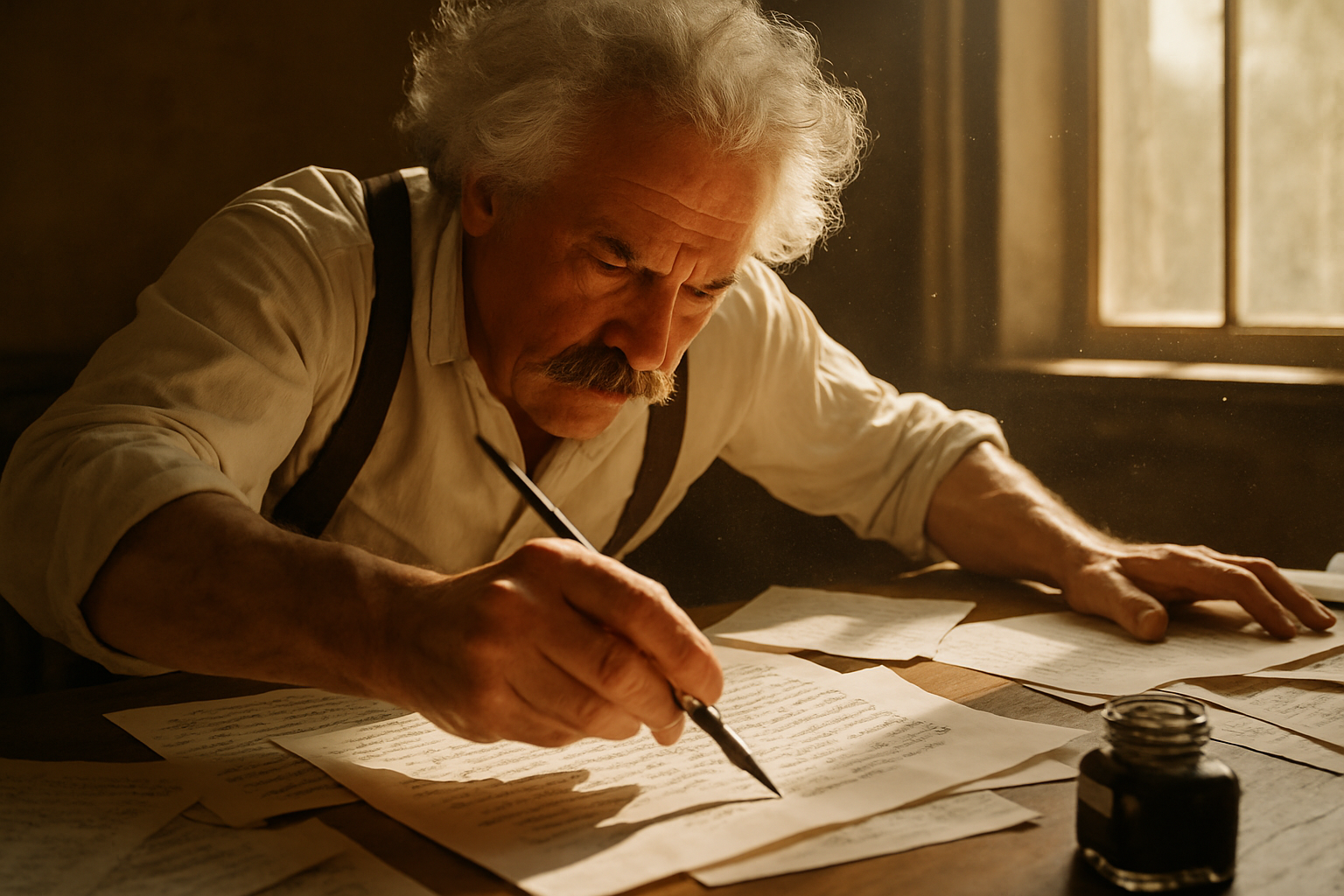
Nye died relatively young in 1896 at the age of forty-five. However, his sharp wit survived through this legendary musical observation.
Twain’s Final Use of the Joke
Mark Twain found one more perfect use for the quote before he died. In his posthumous 1924 autobiography, Twain criticized an acquaintance named General Daniel Sickles. The general frequently gave long, rambling speeches that bored his audiences. Therefore, Twain reached for his favorite Bill Nye joke to describe the situation.
How Wagner’s Legacy Shaped Music Criticism
Twain wrote that Nye’s quote perfectly described the general’s speaking manner. He noted that Sickles possessed a style that many people tried to describe unsuccessfully. The quote origin Wagner’s music really much better than it sounds principles applied perfectly to this new context. Twain concluded that Sickles’ talk was much better than it actually sounded. This brilliant repurposing shows the incredible flexibility of Nye’s original concept. Twain transformed a joke about German opera into a devastating personal insult, proving that the core logic of the joke applies to any situation involving a massive disconnect between reputation and actual reality.
Modern Usage and Cultural Impact
Today, people still use this quote constantly in everyday conversation. We apply the phrase to many different forms of difficult, challenging media. A modern film critic might use it to describe a confusing movie, while a frustrated reader might use it to describe a dense, thousand-page classic novel. The core truth of the quote remains incredibly relevant in our modern cultural landscape.
We all occasionally encounter art that society deems objectively brilliant. Critics praise the work in glowing, wildly enthusiastic terms. However, our own senses rebel against the actual experience of consuming it. Recognizing the quote origin Wagner’s music really much better than it sounds helps us navigate this awkward social situation. Nye’s joke perfectly bridges the gap between acknowledging objective quality and validating our subjective discomfort. It allows us to praise the artist while admitting our own dislike of the product.
The Philosophy of Difficult Art
This famous quote actually touches upon a deep, fascinating philosophical question. Can art possess intrinsic value if the audience hates experiencing it? Wagner composed music with incredible mathematical precision and structural genius. Musicologists study his massive scores with absolute, unwavering reverence. However, the sheer volume and dissonance often alienate casual, everyday listeners. Therefore, the music practically exists on two entirely different planes of reality.
First, the music exists on the page as a masterpiece of composition. Second, the music exists in the air as a punishing physical experience. Nye recognized this bizarre duality instantly and understood that a piece of music could be theoretically brilliant but practically unbearable. His simple joke contains a profound critique of artistic aesthetics. He summarized a complex philosophical debate in a single, hilarious sentence.
The Enduring Legacy of Bill Nye
Ultimately, Bill Nye deserves full credit for this masterpiece of American humor. He looked at the most intimidating composer in the world and simply laughed. By doing so, he gave everyday people permission to trust their own ears. Furthermore, he provided a polite, funny way to reject pretentious art.
Mark Twain recognized the absolute brilliance of the joke immediately and acted as the perfect amplifier for Nye’s wit. The two humorists worked together to give us this timeless phrase. Understanding the complete quote origin Wagner’s music really much better than it sounds story reveals how great humor can transcend its original moment. Consequently, the next time you hear a dreadful piece of acclaimed music, smile politely. You can confidently remember that it is definitely better than it sounds.