Dolly Parton’s Philosophy of Resilience
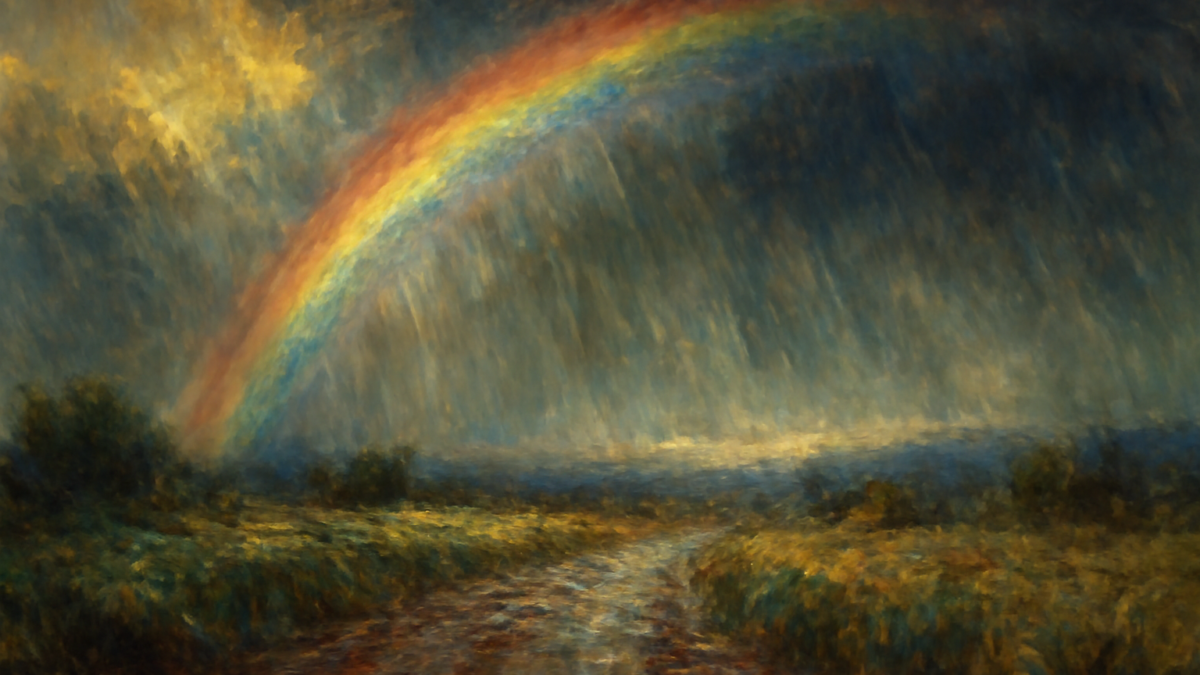
Dolly Parton, one of the most iconic figures in American music and entertainment, has built a career and public persona around the marriage of unwavering optimism and hard-won wisdom. The quote “The way I see it, if you want the rainbow, you gotta put up with the rain” exemplifies her approach to life, which has been shaped by extraordinary circumstances and personal determination. This simple yet profound observation likely emerged not from a single moment but rather from decades of lived experience navigating poverty, loss, rejection, and the relentless demands of the entertainment industry. The quote captures Parton’s essential philosophy: that suffering and joy are not opposites but rather two sides of the same coin, and that genuine accomplishment requires enduring difficulty with grace and hope.
To understand the context of this quote, one must first understand Dolly Parton’s remarkable origins. Born in 1946 in a one-room cabin on the banks of the Little Pigeon River in Pittman Center, Tennessee, Parton was the fourth of twelve children born to Robert Lee Parton and Avie Lee Owens. Her family lived in grinding poverty that would have crushed many spirits. Her father was often absent due to his struggles with alcohol, while her mother held the family together through sheer force of will and Christian faith. The cabin had no electricity, no indoor plumbing, and barely enough food for twelve mouths. Yet rather than allow circumstances to define her future, young Dolly became determined to escape poverty through music, an instrument she had received as a gift and the one commodity the family could afford to nurture. This early experience of scarcity coupled with abundance of love and music created the foundation for her later philosophy that hardship contains within it the seeds of growth.
Parton’s career trajectory is almost unparalleled in its breadth and longevity. After writing songs as a child and performing on local radio, she moved to Nashville at age eighteen with just a few dollars in her pocket. She initially worked as a songwriter for Acuff-Rose Music Publishing, penning hits for established artists before launching her own recording career. Her breakthrough came in 1974 with the album “Jolene,” which featured the achingly beautiful and now-iconic title track. However, her crossover moment—when she transcended country music to achieve mainstream international stardom—came in 1980 with her appearance in the film “9 to 5,” for which she won a Grammy Award. The song of the same name became a cultural phenomenon, and suddenly Dolly Parton was not just a country music star but a household name. Throughout the subsequent decades, she continued recording music, acting in films and television, starting business ventures, and becoming one of the few female country artists to achieve sustained success across multiple entertainment mediums.
What many people don’t realize about Dolly Parton is the scope of her philanthropic work and her quiet efforts to lift others out of poverty. In 1995, she established the Imagination Library, a charitable program that mails free books to children from birth to age five. To date, the organization has distributed over 200 million books to children in the United States, Canada, Australia, and the United Kingdom. This initiative quietly revolutionized childhood literacy without seeking the fanfare that often accompanies such ventures. Additionally, Parton has donated millions to various causes, including education and healthcare, often anonymously. She has funded scholarships at universities, contributed substantially to disaster relief efforts (including donating one million dollars to Tennessee wildfire relief in 2016), and been a consistent advocate for LGBTQ+ rights in an industry and region not always known for such progressiveness. Few people realize that Parton has never had biological children, yet she has considered herself a mother to the entertainment industry and to the countless people she has helped through her various charitable endeavors. This aspect of her life reveals that her philosophy about suffering and perseverance extends beyond personal struggle into a commitment to reducing suffering for others.
The quote itself likely emerged from multiple interviews and conversations throughout Parton’s life, as she has consistently emphasized similar themes in her public statements and even in her autobiography. However, it gained particular prominence in the late twentieth and early twenty-first centuries as Parton’s cultural stock continued to rise. In an era increasingly dominated by social media and the viral spread of inspirational quotes, this particular statement about rainbows and rain captured something essential and shareable. People recognized in these words a distillation of Parton’s personal journey and her no-nonsense approach to adversity. Unlike many motivational quotes that border on the saccharine or dismissive of real suffering, Parton’s formulation neither denies the rain nor overinflates the promise of the rainbow. Instead, it suggests an honest partnership between the two, a recognition that beauty and joy cannot exist without their counterpoint.
The cultural impact of this quote has been substantial, appearing on everything from inspirational posters to social media graphics, graduation speeches to therapeutic contexts. Mental health professionals and life coaches have embraced it as a framework for helping people understand resilience and delayed gratification. Interestingly, in an age of quick fixes and instant gratification, Parton’s message offers a necessary corrective: the idea that worthwhile things take time and that the process of earning them matters as much as the outcome. The quote has been particularly resonant during times of collective hardship, such as during the COVID-19 pandemic, when people sought frameworks for understanding isolation and loss while maintaining hope for better days.