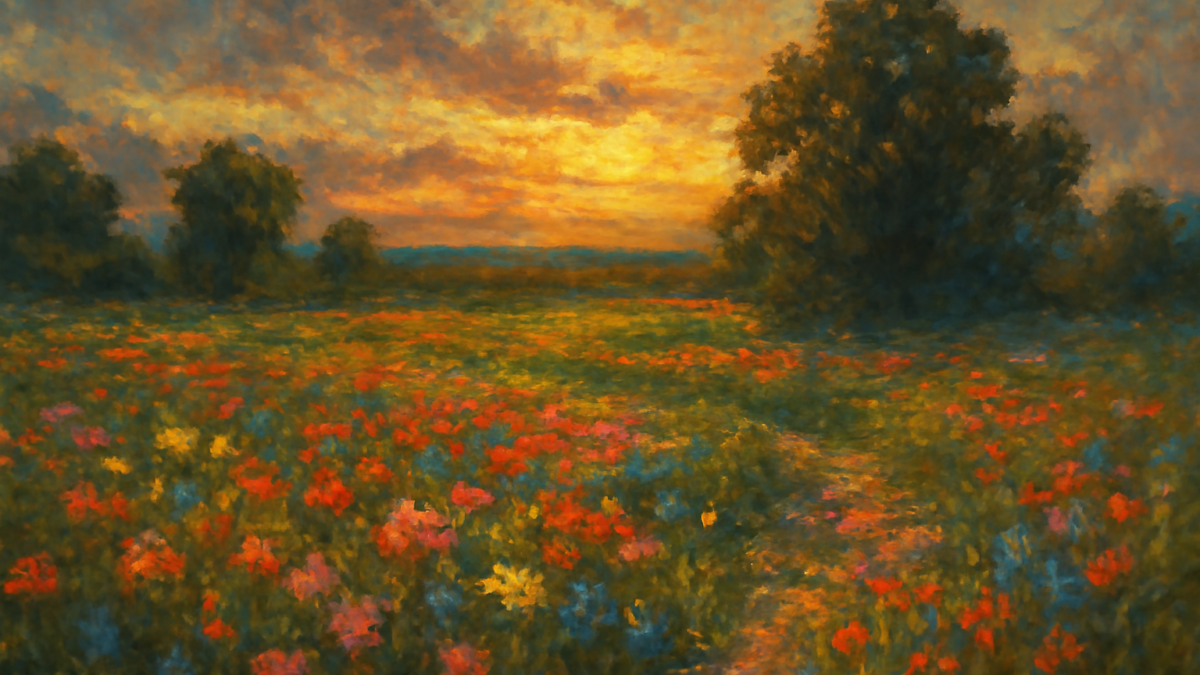
The Wisdom of Vision: Henri Matisse’s Philosophy of Beauty
Henri Matisse’s observation that “there are always flowers for those who want to see them” encapsulates a philosophy developed over a lifetime of artistic practice and reflection. The statement emerged from a man who spent decades exploring the relationship between perception, color, and meaning in art. Matisse did not create this observation in isolation but rather as a distillation of his artistic method and worldview, which emphasized the power of individual perspective to transform experience. The quote reflects his belief that beauty is not an inherent quality that some people possess access to while others do not, but rather something that emerges through active engagement with the world around us. This democratization of beauty—the idea that it is available to everyone willing to look—became increasingly important to Matisse as he aged and reflected on his artistic journey.
Matisse’s life spanned from 1869 to 1954, a period that witnessed seismic shifts in artistic practice and Western culture. Born in the industrial city of Le Cateau-Cambrésis in northern France, Matisse came from a relatively prosperous merchant family with no artistic tradition. His path to art was circuitous: he initially studied law in Paris before suffering an appendicitis attack while still a student. During his convalescence, he took up painting almost by accident, as a form of occupational therapy. This illness, which might have derailed his life, instead redirected him toward art. His mother, sensing something in her son’s newfound passion, encouraged him to pursue it seriously, and by the early 1890s, Matisse had committed himself fully to becoming a painter.
What made Matisse’s career particularly remarkable was his ability to evolve throughout his life rather than calcifying into a single style. He studied under Gustave Moreau, an academic painter known for his mythological subjects, and initially worked in a relatively conservative manner. However, exposure to the works of the Impressionists and Post-Impressionists, particularly Cézanne and Van Gogh, catalyzed a transformation in his thinking. By the early 1900s, Matisse had become a leading figure in Fauvism, a movement that prioritized bold color over realistic representation. His use of vibrant, non-naturalistic colors and loose brushwork shocked the Parisian art establishment. A critic famously referred to Matisse and his colleagues as “les Fauves” (the wild beasts) after viewing their work at the 1905 Salon d’Automne, and the name stuck. This moment of seeming ridicule became the launching point for one of the most significant artistic movements of the twentieth century.
Throughout his career, Matisse remained preoccupied with questions of how color and line could communicate directly to the viewer’s sensibility without relying on accurate representation or narrative content. He believed that art should be like a comfortable armchair—a place of rest and contemplation for the weary viewer. This philosophy stood in sharp contrast to the aggressive, political art movements that surrounded him, particularly Cubism and later Surrealism. Matisse remained steadfastly committed to creating work that was accessible and visually pleasurable, which caused some critics to dismiss him as insufficiently serious or challenging. Yet this apparent simplicity masked profound investigations into the nature of perception and color theory. His late work, particularly the cut-paper compositions created when arthritis prevented him from painting, represented a radical simplification that paradoxically became more complex in its visual and emotional resonance.
A lesser-known aspect of Matisse’s life is his deep involvement with literature and his friendships with prominent writers. He was particularly close to André Gide, and the two men exchanged ideas about art, literature, and spirituality throughout their lives. Matisse also illustrated several important literary works, including an edition of Stéphane Mallarmé’s poems that occupied him for years. Furthermore, Matisse was a devoted collector of African and Oceanic art at a time when such work was dismissed by Western critics as primitive. His collection not only influenced his own artistic development but also helped elevate non-Western art forms in the eyes of the European artistic establishment. Less commonly discussed is Matisse’s work in designing and decorating the Chapel of the Rosary in Vence, France, near the end of his life. This unexpected foray into religious art was undertaken without payment and represented his attempt to create a total environment of color and form that could serve a spiritual function.
The quote about flowers likely emerged from Matisse’s later years, when he had become something of a philosophical elder statesman of the art world. It reflects his mature understanding that artistic practice was fundamentally about training oneself to see with greater depth and intention. In interviews and writings from his later decades, Matisse frequently discussed the importance of what he called “painting with one’s eyes”—developing the capacity to perceive the infinite variations in color, form, and light that most people walk past without noticing. The flowers in his statement are not merely botanical objects; they represent all of beauty and meaning that surrounds us constantly. His insistence that these flowers are “always” present, and that their visibility depends entirely on the observer’s willingness to see, positions vision itself as an active, intentional practice rather than a passive reception of the world.
The cultural impact of Matisse’s philosophy extended far beyond the art world. Throughout the twentieth century and into the twenty-first, his ideas about perception and the democratization of beauty have resonated with people seeking an