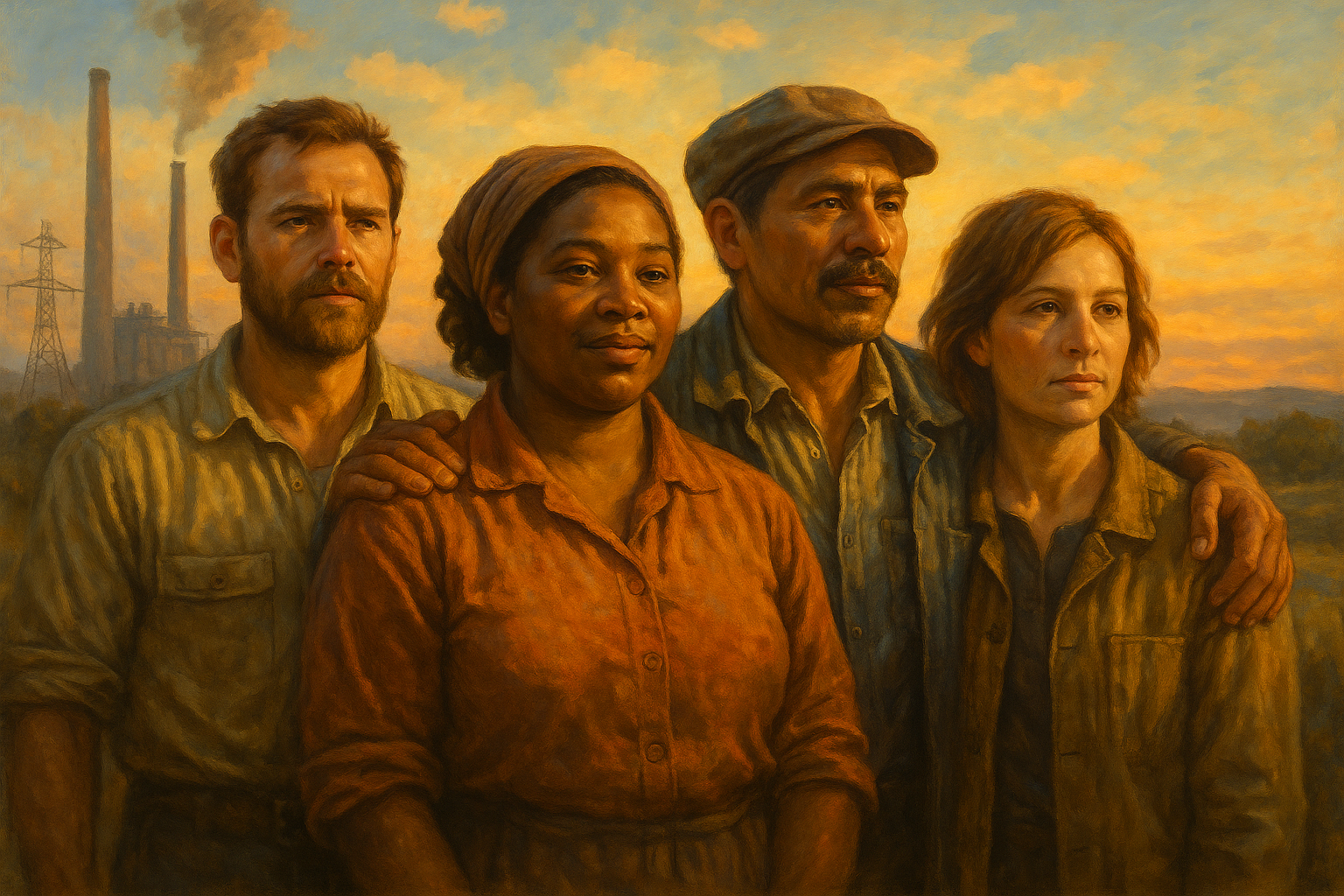
Theodore Roosevelt was a man of action and powerful words. His speeches often cut to the heart of America’s greatest challenges. One of his most enduring statements perfectly captures his political philosophy. He declared a clear hierarchy between capital and humanity. This idea challenged the core beliefs of the powerful Gilded Age elite. It remains a cornerstone of progressive thought today.
Roosevelt’s famous declaration places human welfare above all else. He said, “when it clearly appears that there is a real conflict between them, human rights must have the upper hand, for property belongs to man and not man to property.” This single sentence crystallizes a complex worldview. It was forged in an era of immense change and social turmoil. To understand the quote, we must first understand the world that created its author.
A Nation of Extremes
The late 19th and early 20th centuries were a time of explosive growth. Industrialization transformed the American landscape. Railroads crisscrossed the continent. Factories churned out goods at an unprecedented rate. This new economy created immense fortunes for a select few. Men like Carnegie, Rockefeller, and Morgan became titans of industry. They built vast corporate empires, known as trusts, that controlled everything from oil to steel.
However, this prosperity came at a steep price. Millions of workers, including women and children, toiled in dangerous conditions. They worked long hours for meager wages. Cities swelled with families crammed into unsanitary tenements. The gap between the ultra-rich and the working poor grew into a chasm. This era, often called the Gilded Age, looked shiny on the surface but was rife with corruption and inequality underneath. Roosevelt saw this conflict firsthand. He knew that a nation divided so starkly could not stand strong.
The Making of a Reformer
Roosevelt was not born a radical. He came from a wealthy New York family. Yet, his career consistently placed him in contact with the harsh realities of American life. As New York City’s Police Commissioner, he fought corruption and walked the streets at night. He saw the poverty and crime that festered in the city’s slums. This experience shaped his view that government must protect the vulnerable.
Later, as Governor of New York, he took on powerful corporations. He pushed for regulations to improve factory safety and limit working hours. His actions angered the Republican party bosses who controlled the state. They sought to neutralize him by making him Vice President. They assumed it was a powerless position. History, of course, had other plans. The assassination of President William McKinley in 1901 thrust Roosevelt into the presidency. He was now in a position to apply his philosophy to the entire nation.
The ‘New Nationalism’ Speech
The famous quote was not delivered during his presidency. It came a few years after he left office. Roosevelt delivered it during a fiery speech in Osawatomie, Kansas, on August 31, 1910. This speech outlined a bold vision for the country. He called it the “New Nationalism.”
In this speech, Roosevelt argued for a powerful federal government. He believed it should act as a steward for the public welfare. He wasn’t attacking the concept of property. He opened his statement by affirming that “property rights must be carefully safeguarded.” Roosevelt understood that protecting property was essential for a stable society. He believed that, in most cases, protecting people and protecting property were the same goal. A prosperous, safe populace leads to a secure economy.
When Rights Collide
The most critical part of his statement addresses the exceptions. What happens when a company’s right to profit conflicts wi
Explore More About Theodore Roosevelt
If you’re interested in learning more about Theodore Roosevelt and their impact on history, here are some recommended resources:
- The Big Book of Theodore Roosevelt Quotes
- To Rescue the American Spirit: Teddy Roosevelt and the Birth of a Superpower―The New York Times Bestselling Biography of the Former President from the … Political Anchor (The Presidential Series)
- Edmund Morris’s Theodore Roosevelt Trilogy Bundle: The Rise of Theodore Roosevelt, Theodore Rex, and Colonel Roosevelt
- The Rise of Theodore Roosevelt (Modern Library (Paperback))
- Mornings on Horseback: The Story of an Extraordinary Family, a Vanished Way of Life and the Unique Child Who Became Theodore Roosevelt
- Theodore Roosevelt: An Autobiography
- In the Arena: Theodore Roosevelt in War, Peace, and Revolution
- Theodore Roosevelt: A Biography
- Theodore Roosevelt: A Strenuous Life
- The River of Doubt: Theodore Roosevelt’s Darkest Journey
- The Bully Pulpit: Theodore Roosevelt and the Golden Age of Journalism
- The Autobiography of Theodore Roosevelt
As an Amazon Associate, we earn from qualifying purchases.
th a worker’s right to a safe environment? What happens when a monopoly’s power harms the public good? For Roosevelt, the answer was clear and uncompromising. Human rights must win. He stated, “human rights must have the upper hand, for property belongs to man and not man to property.” This was a direct challenge to the era’s prevailing laissez-faire ideology, which argued for minimal government interference in the economy.
This philosophy became the engine of his domestic policy, the “Square Deal.” He promised to balance the interests of business, labor, and consumers. His goal was not to destroy capitalism but to regulate it. He wanted to ensure it served the American people, not just the moneyed interests. He famously became known as the “trust buster” for taking on monopolistic corporations. His administration used the Sherman Antitrust Act to break up powerful trusts that stifled competition and hurt consumers.
Roosevelt’s administration filed lawsuits against 44 major corporations. While his successor, William Howard Taft, actually initiated more antitrust suits, Roosevelt was the first president to challenge big business so forcefully. He also pushed for landmark consumer protection laws. The Pure Food and Drug Act and the Meat Inspection Act were direct results of his belief that human welfare trumped corporate profits.
An Enduring Legacy
Theodore Roosevelt’s words from that day in Kansas continue to resonate. They provide a moral compass for debates that still rage today. We see echoes of his philosophy in discussions about minimum wage, environmental regulations, and corporate accountability. The tension between property rights and human rights remains a central theme in American politics.
Roosevelt’s message is a timeless reminder. It tells us that an economy’s health cannot be measured by profits alone. It must be judged by the well-being of its people. He argued that true national strength comes from a society that prioritizes its citizens over capital. The core idea—that property should serve humanity and not the other way around—remains a powerful and necessary ideal.