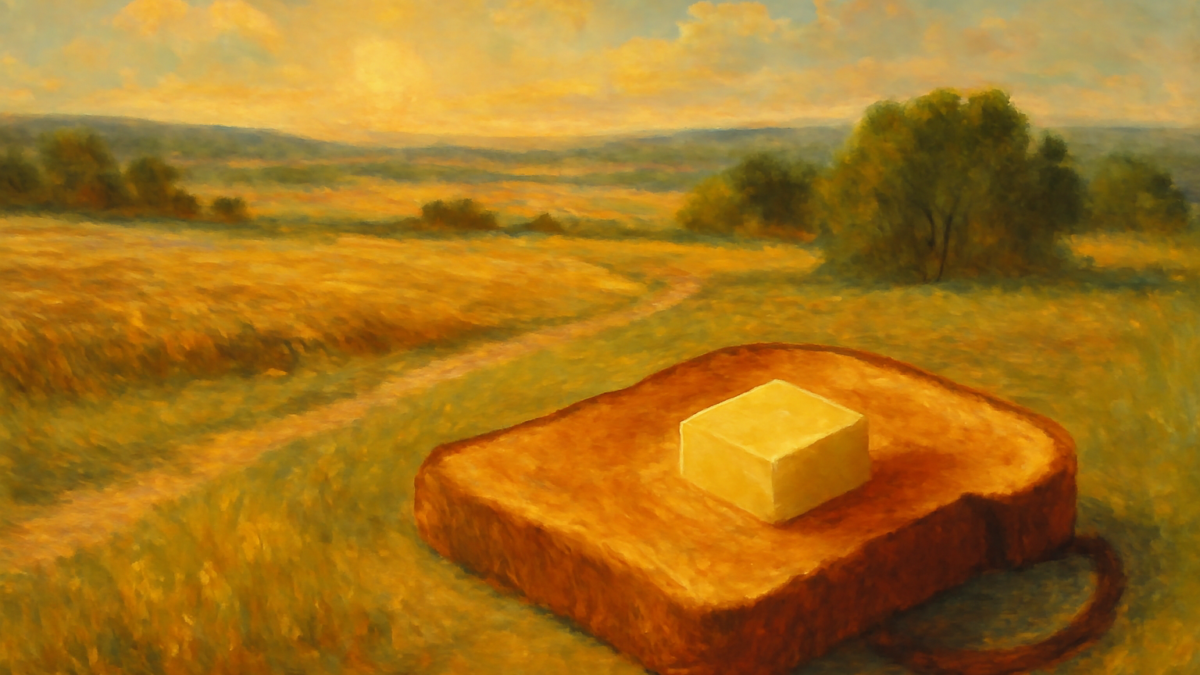
The Toast, The Cat, and The Absurdist Mind of Steven Wright
Steven Wright’s observation about the cosmic collision between buttered toast and feline physics represents something far more profound than a silly hypothetical question. This quote emerged from Wright’s distinctive comedic style during the 1980s, when he was gaining prominence as a stand-up comedian with a unique delivery that seemed to drain all energy from his voice while simultaneously maximizing the intellectual and surreal content of his material. The quote itself became emblematic of Wright’s signature approach: taking the mundane details of everyday life and physics and extrapolating them into absurdist territory that makes audiences simultaneously groan and laugh at their own recognition of the joke’s philosophical underpinnings. The question plays on two supposed universal truths—Murphy’s Law as applied to breakfast and the legendary agility of cats—and treats them with the deadpan seriousness of a theoretical physicist, creating cognitive dissonance that forces the audience to recognize the absurdity of both the premise and their own acceptance of conventional wisdom.
Steven Alexander Wright was born on December 6, 1955, in Mount Vernon, New York, to a family of Scottish descent. His childhood in New York and subsequent move to Massachusetts shaped the dry, understated sensibility that would become his comedic trademark. Wright’s approach to comedy was revolutionary because it abandoned the traditional structure of joke-telling—the setup, the punchline, the guaranteed laugh moment. Instead, Wright’s performances unfolded like he was simply thinking aloud, sharing observations that were so logically absurd yet delivered with such monotone conviction that audiences often found themselves laughing a beat or two after the statement was made, realizing they had been the ones doing the intellectual heavy lifting. His early career in the late 1970s and early 1980s was characterized by grueling performances in small comedy clubs and opening slots for established comedians, a period of struggle that actually suited his comedic sensibility—there was something inherently funny about his visible lack of concern for whether the audience was enjoying themselves.
What most people don’t realize about Steven Wright is that his seemingly effortless delivery masks an incredibly disciplined approach to comedy writing. Wright meticulously crafts his material, often spending weeks or months perfecting the exact wording and timing of a single joke. His famous deadpan expression, which has become iconic and is instantly recognizable to anyone who watched comedy specials in the 1980s and 1990s, is not a natural temperament but rather a carefully developed performance technique. In interviews, Wright has revealed that he spent years cultivating this stage persona, and that in his personal life, he is considerably more animated and engaged than his comedic alter ego suggests. Additionally, Wright is an accomplished guitarist and musician, a facet of his life that many casual fans are completely unaware of, and he has been deeply involved in film and television work beyond stand-up comedy, including acting roles and screenplay writing. His intellectual curiosity extends to technology and philosophy, and he has demonstrated a genuine interest in the implications of artificial intelligence and absurdist philosophy long before these became mainstream topics of discussion.
The toast-and-cat thought experiment became something of a cultural phenomenon, primarily because it arrived at exactly the right moment in comedy history. The mid-1980s were a golden age for stand-up comedy in America, with HBO dedicating substantial programming to comedy specials, and Wright’s material was perfectly suited to this medium. His 1985 album “I Have a Pony” won a Grammy Award, validating his approach to comedy in the industry, and his subsequent HBO specials brought his deadpan observations to millions of viewers. The toast-and-cat quote in particular has been endlessly repeated, referenced, and remixed across the decades, appearing in college dorm rooms as a philosophical poster, circulating on social media, and even becoming the basis for various online memes and thought experiments. The quote has also been attributed to various other figures over the years, which is a testament to how thoroughly it has permeated popular culture, though Wright was undoubtedly its originator. Scientists have even engaged with the concept seriously, with physics educators and mathematicians occasionally using the paradox as a jumping-off point for discussions about competing physical principles and the nature of universal laws.
The enduring power of this particular quote lies in its perfect encapsulation of how humans approach reality and truth. We tend to accept certain maxims—Murphy’s Law, the cat’s supposed nine lives and supernatural landing abilities—without truly examining them. Wright’s question forces us to confront the logical implications of systems we’ve accepted without scrutiny. On a deeper level, the quote resonates because it touches on the fundamental human experience of living in a universe where contradictions sometimes seem possible and where the rules we think we understand might collapse when put into unexpected combinations. For everyday life, this quote serves as a gentle reminder not to take conventional wisdom at face value and to maintain a sense of humor about our own certainty. It suggests that the world is fundamentally stranger and more interesting than we typically acknowledge, and that there’s value in asking silly questions and imagining unlikely scenarios.
Steven Wright’s overall philosophical approach, embodied in the toast-and-cat question, represents a form of existential comedy that was perhaps ahead of its time. His jokes rarely punch down at specific targets or people; instead, they punch at the architecture of reality itself and our peculiar acceptance of contradictions. This quality has allowed his material to age gracefully, unlike much comedy that becomes dated or offensive as cultural norms shift. The quote about the toast and cat has become a touchstone for a certain