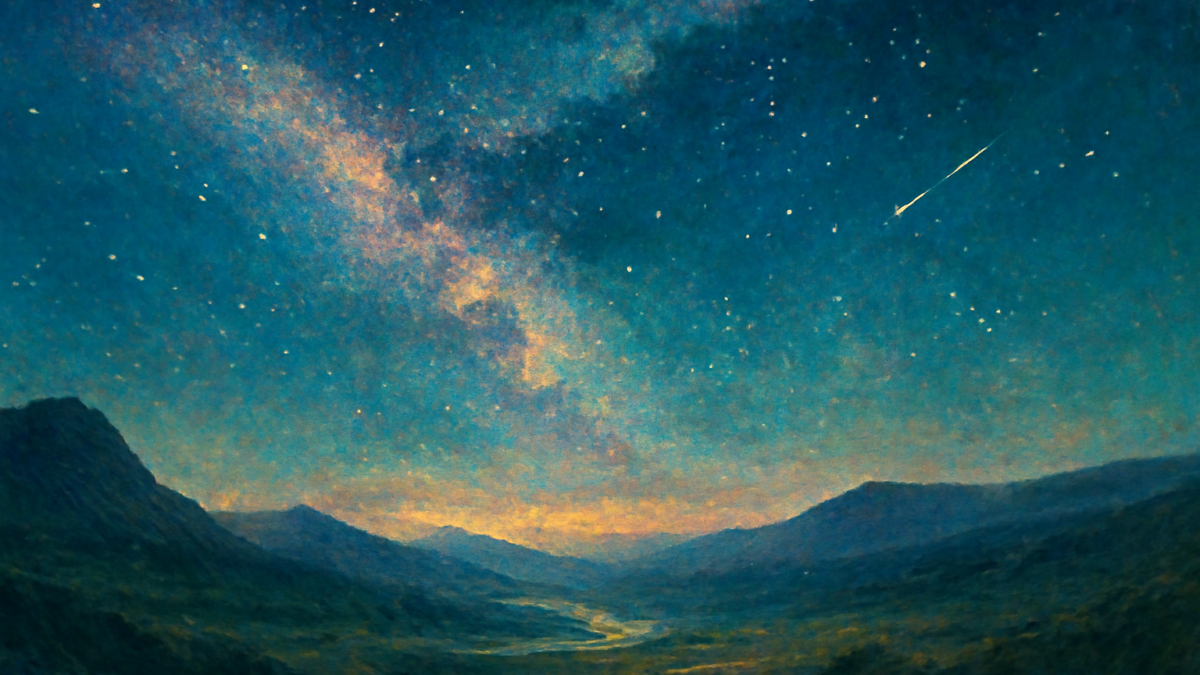
The Cosmic Wisdom of Douglas Adams
Douglas Noel Adams was born on March 11, 1952, in Cambridge, England, during an era when space exploration was capturing humanity’s imagination but was still very much the domain of governments and scientists. Adams would become one of the most influential comedic voices of the late twentieth century, though his path to literary stardom was anything but straightforward. He studied English literature and philosophy at St. John’s College, Cambridge, where he developed the intellectual underpinnings that would later allow him to deconstruct both science and human nature with surgical precision wrapped in hilarious absurdity. Before achieving fame, Adams worked as a script editor and writer for the BBC, contributing to the beloved sketch comedy show “Monty Python’s Flying Circus,” though his contributions were largely uncredited at the time. This early work taught him the rhythms of comedy and the power of the unexpected, skills he would perfect in his most famous creation.
The quote in question comes from “The Hitchhiker’s Guide to the Galaxy,” which began its life as a BBC radio comedy series in 1978 before being adapted into novels, television programs, and eventually a film. This passage appears near the beginning of the first book, functioning as a kind of cosmic orientation for readers about to embark on an absurdist journey through a universe that makes no conventional sense. The quote serves as both a joke and a profound meditation on human perspective and insignificance. When the protagonist Arthur Dent learns that Earth is about to be demolished to make way for a hyperspace bypass, he finds himself thrust into a universe where the scales are incomprehensibly vast, and his own concerns—including his desire for a cup of tea—become simultaneously trivial and absolutely essential. Adams uses this moment to gently mock humanity’s tendency to focus on the local and immediate while remaining blissfully unaware of the cosmic context within which we exist.
What makes this passage particularly brilliant is Adams’s layering of meaning beneath the comedy. The reference to “the chemist’s” is quintessentially British, evoking the mundane and familiar aspects of everyday life that most people never question. By comparing this ordinary journey to the vastness of space, Adams isn’t simply making a joke about scale; he’s making a philosophical point about perspective and awareness. He’s suggesting that our inability to grasp truly large numbers and distances is partly a failure of imagination and partly a feature of human consciousness. The repetition of intensifying adjectives—”vastly, hugely, mind-bogglingly”—mimics the inadequacy of language itself when confronted with genuine infinity. It’s a demonstration of the problem through the style of the writing, which shows rather than tells why space is difficult for the human brain to comprehend.
Adams’s broader philosophical project in “The Hitchhiker’s Guide to the Galaxy” was to challenge the pretentiousness of both religious and scientific worldviews while celebrating human resilience and curiosity in the face of cosmic indifference. He was an atheist who nonetheless found profound meaning in human connection, humor, and the search for understanding. He famously said in a later interview that “I don’t write jokes. I write funny stories. There’s a difference. Jokes are about the setup and the punchline. But if you tell a funny story, you can have a funny story that goes on for several pages without hitting you over the head with a punchline.” This philosophy is evident in the space passage, which works on multiple levels simultaneously—as humor, as science fact, as philosophy, and as poetry. Few people know that Adams was also a passionate environmentalist and technology advocate who, ironically, spent considerable energy thinking about humanity’s relationship to the natural world even as he mocked human self-importance on the cosmic stage.
An often-overlooked aspect of Adams’s life was his struggle with depression and his ongoing battle with the demands of his fame. Despite being one of the most celebrated writers of his generation, Adams was tormented by perfectionism and self-doubt, often procrastinating to the point of panic on his writing projects. He was notoriously difficult to pin down for interviews, preferred the company of a small circle of close friends, and found the expectations of his massive fanbase both gratifying and exhausting. He was also a skilled voice actor and producer, earning a Grammy nomination for his work narrating the audiobook version of “Dirk Gently’s Holistic Detective Agency,” another series that showcased his ability to combine comedy with genuine emotional depth. Later in life, he became an early adopter of technology and the internet, even creating interactive fiction and exploring digital media when many of his contemporaries resisted these new forms.
The cultural impact of this particular quote has been substantial and ongoing. In the decades since its publication, the passage has become a touchstone for anyone trying to articulate humanity’s place in the cosmos, referenced in books about cosmology, astronomy, and philosophy. Carl Sagan, the renowned astrophysicist and science communicator, praised Adams’s work for its ability to make scientific concepts accessible and memorable through humor and imagination. The quote has appeared in documentaries about space exploration, been cited in academic papers about representation and scale, and has become almost a standard reference point in popular discussions about cosmic perspective. It influenced a generation of writers and thinkers who recognized that profound truths could be delivered through comedy rather than solemnity. The quote also presaged contemporary discussions about the “Pale Blue Dot” perspective, the idea that seeing Earth from space fundamentally alters human consciousness and priorities.
What makes this quote resonate so deeply in contemporary life is its address