“I would say to the House, as I said to those who have joined this government: ‘I have nothing to offer but blood, toil, tears and sweat.’ We have before us an ordeal of the most grievous kind. We have before us many, many long months of struggle and of suffering. You ask, what is our policy? I will say: It is to wage war, by sea, land and air, with all our might and with all the strength that God can give us; to wage war against a monstrous tyranny, never surpassed in the dark, lamentable catalogue of human crime. That is our policy. You ask, what is our aim? I can answer in one word: It is victory, victory at all costs, victory in spite of all terror, victory, however long and hard the road may be; for without victory, there is no survival.”
If you’re interested in learning more about Winston Churchill and their impact on history, here are some recommended resources:
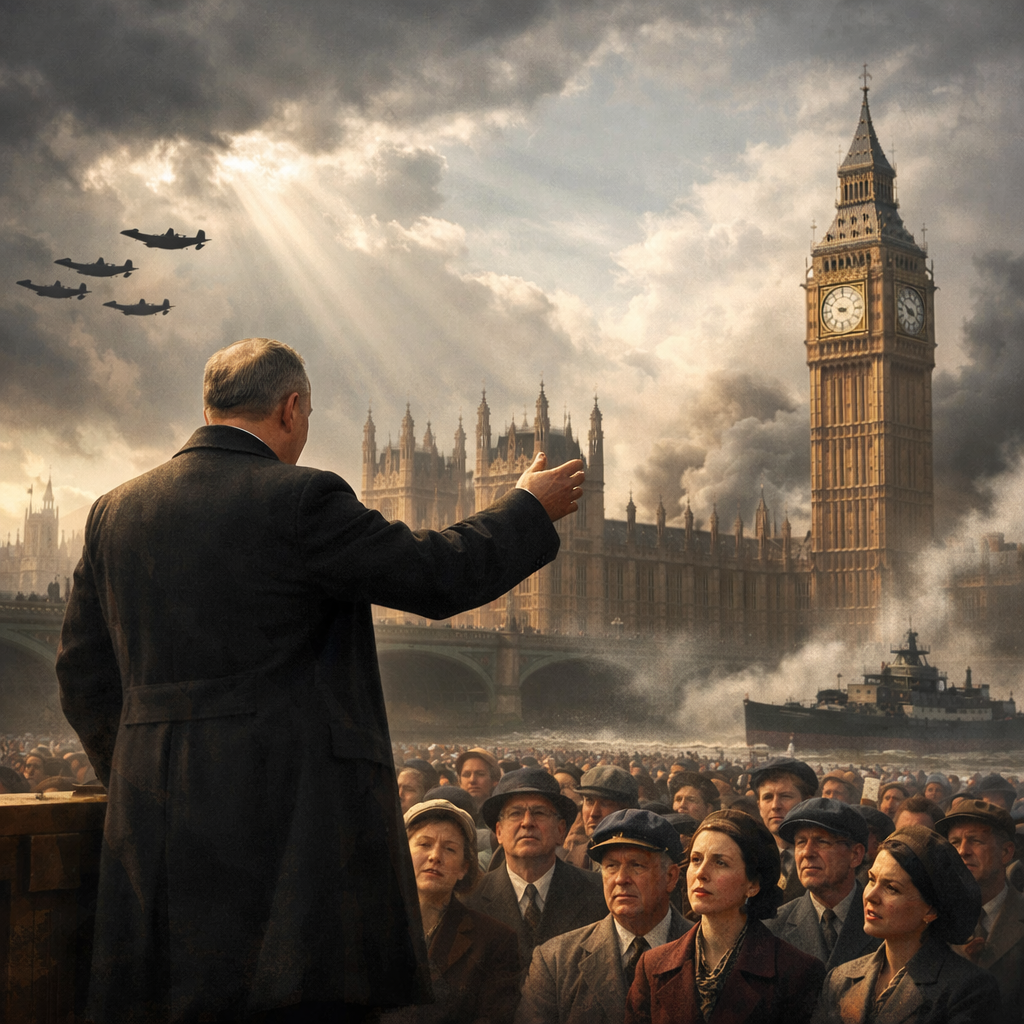
On May 13, 1940, Churchill took the stand before the House of Commons for the first time as Prime Minister. He refused to offer false hope or easy promises. Instead, he delivered a speech of brutal honesty and unwavering resolve. His famous words—a promise of “Blood, toil, tears and sweat – UK Parliament“—became a defining call to arms for a nation standing alone against tyranny. Understanding the “i have nothing to offer but blood, toil, tears and sweat quote origin” reveals much about Churchill’s character and leadership philosophy. This was not just a speech; it was the forging of a national identity in the crucible of war.
Churchill’s Wartime Speech and Its Origin
The Context: A Nation in Peril
To understand the power of Churchill’s words, we must first grasp the desperation of the moment. The situation in May 1940 was catastrophic. Germany employed a new tactic called Blitzkrieg, or “lightning war.” This strategy overwhelmed Allied defenses with shocking speed and force. French and British armies retreated in full disorder. Indeed, the entire British Expeditionary Force faced the risk of being cut off and annihilated, a fear that would soon lead to the dramatic evacuation at Dunkirk.
The political landscape in London was fragile. Many in Churchill’s own Conservative Party distrusted him. They remembered his controversial past and considered him a reckless warmonger. Lord Halifax, the Foreign Secretary, was the preferred candidate for many in the establishment. Churchill’s first speech as Prime Minister was therefore a critical test. He needed to unite a divided government, inspire a fearful public, and signal to the world that Britain would not surrender.
He formed a coalition government by bringing in members from the Labour and Liberal parties. This move was essential for national unity. His speech had to rally these disparate political factions around a single, undeniable purpose. The “i have nothing to offer but blood, toil, tears and sweat quote origin” in this speech reflected Churchill’s determination to forge that unity through honest communication. It was in this atmosphere of extreme peril and political uncertainty that he offered not comfort, but a challenge.
A New Kind of Leadership
Churchill’s leadership style was a radical departure from Chamberlain’s approach. Where Chamberlain sought peace through negotiation, Churchill prepared for conflict with grim determination. He believed that only total war could stop a totalitarian regime. This speech was the first clear articulation of that policy. He defined his government’s mission with powerful simplicity: “to wage war, by sea, land and air, with all our might.”
Understanding Blood Toil Tears and Sweat
This directness shocked many, yet it also brought relief. For years, the British public had heard that peace was achievable. Now, a leader was finally telling them the unvarnished truth. The path ahead would be filled with suffering. However, it was a path with a clear destination: victory. This honesty built a foundation of trust that would sustain the nation through its darkest hours. Exploring the “i have nothing to offer but blood, toil, tears and sweat quote origin” demonstrates how Churchill mastered crisis communication, setting the tone for his entire wartime premiership.
Dissecting the Message: Honesty, Policy, and Aim
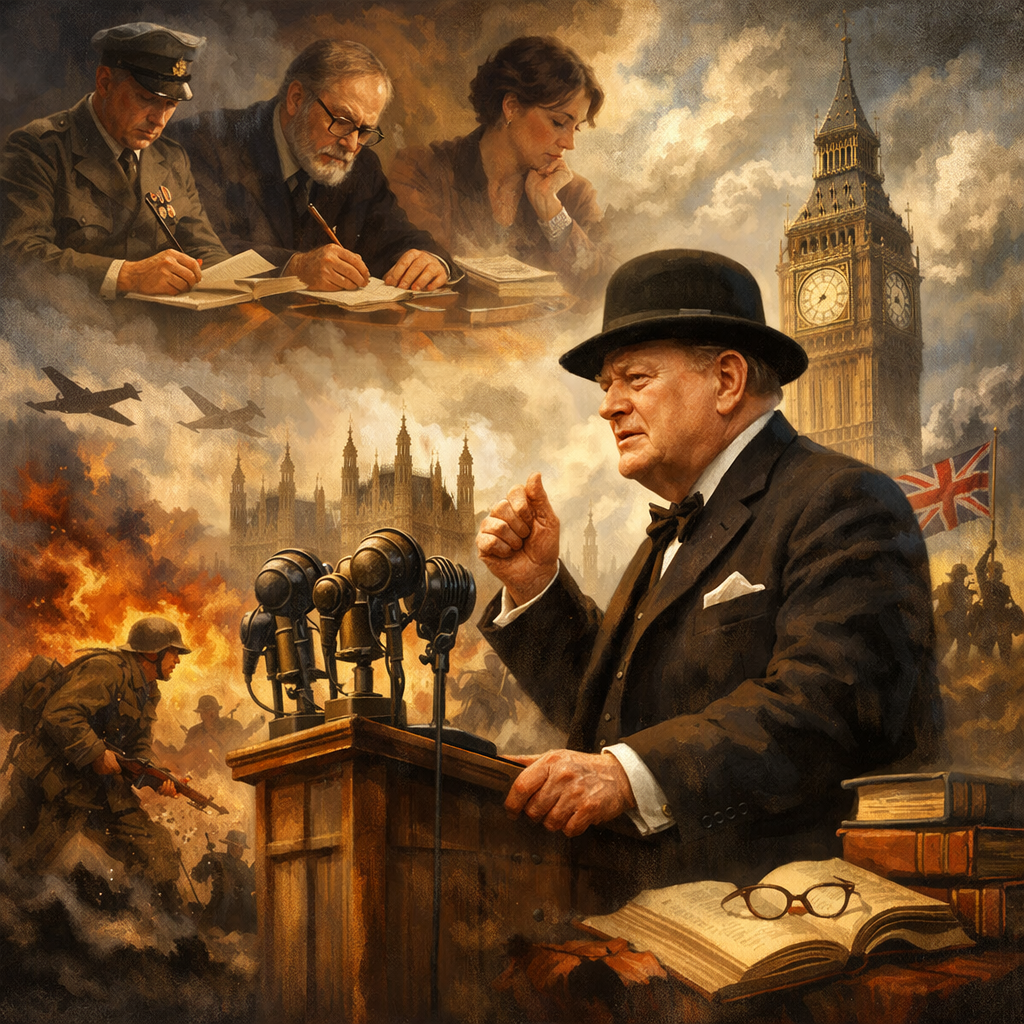
Churchill’s speech was remarkably efficient. In just a few short paragraphs, he outlined his entire wartime philosophy. He did not waste words on platitudes. Instead, every phrase served a specific purpose: to inform, to unify, and to inspire resolute action.
The iconic line, “I have nothing to offer but blood, toil, tears and sweat,” formed the emotional core of his address. This phrase was not entirely original; figures like Lord Byron and Giuseppe Garibaldi had used similar expressions. However, Churchill deployed it with perfect timing. He acknowledged the immense sacrifice that war would demand from every citizen. By understanding the “i have nothing to offer but blood, toil, tears and sweat quote origin,” we recognize how Churchill treated the British people as partners in the struggle, not as subjects needing protection from harsh realities. This act of leveling with the public was a powerful tool for mobilization.
He stated his policy without ambiguity. Waging war with “all our might” left no room for doubt about Britain’s commitment. It dismissed any lingering thoughts of a negotiated peace with Hitler. The clarity was vital because it sent an unmistakable message to allies and enemies alike. To the United States, it signaled Britain’s determination to fight on, encouraging future support. To Hitler, it declared that the British Empire would be a relentless foe.
How This Quote Shaped Modern Leadership
Finally, he defined the ultimate aim: “victory, victory at all costs.” This single word cut through all the complexity and fear. It provided a singular focus for the entire nation. By repeating the word “victory,” he turned it into an incantation—a promise of eventual triumph. He acknowledged the road would be “long and hard,” yet he made it clear that any alternative was unthinkable. The alternative, he stated, was survival itself. Without victory, everything would be lost. The “i have nothing to offer but blood, toil, tears and sweat quote origin” ultimately served to crystallize this message of unwavering determination.
The Resounding Impact and Lasting Legacy
Parliament received the speech with resounding success. Source It solidified Churchill’s leadership and united the government behind his war policy. Although it was not broadcast live to the public, newspapers and radio news reports quickly spread its message. The stark honesty and defiant tone resonated deeply with a public tired of uncertainty. It prepared them for the difficult years ahead, including the Blitz.
Churchill’s words became a rallying cry that defined the British spirit during World War II. They encapsulated the nation’s willingness to endure hardship for the sake of freedom. The speech transformed Churchill from a controversial politician into the embodiment of British defiance. His oratory became a weapon of war, boosting morale at home and shaping international opinion. Many more famous speeches would follow, but this first address set the foundation for them all.
Today, “Blood, Toil, Tears and Sweat” remains one of the most powerful political speeches ever delivered. Leaders, writers, and historians study it for its masterful use of rhetoric and its profound psychological impact. The “i have nothing to offer but blood, toil, tears and sweat quote origin” serves as a timeless reminder that in times of crisis, true leadership does not offer easy solutions. Instead, it offers a clear purpose, demands sacrifice, and inspires hope through unwavering resolve. The speech is more than a historical artifact; it is a testament to the power of words to shape history.
About This Article

Written by Margaret Voss. Margaret Voss is an obsessive quote hunter who has spent over 15 years chasing down primary sources and original attributions purely because she can't stand a misattributed quote. She's built an extensive personal archive of manuscripts, letters, speeches, and historical documents along the way, and has gotten pretty good at spotting quotes that have been misattributed for decades. No formal training — just fifteen years of stubborn fact-checking and a refusal to let "probably said by Einstein" slide. More about this site.
Verify this against a primary source
Specifics change, and your situation may differ from the one described here. These are the authorities worth checking directly:
- Quote Investigator — traced attributions and earliest known citations
- Wikiquote — sourced and disputed-attribution listings
- Internet Archive — scans of the original printed sources