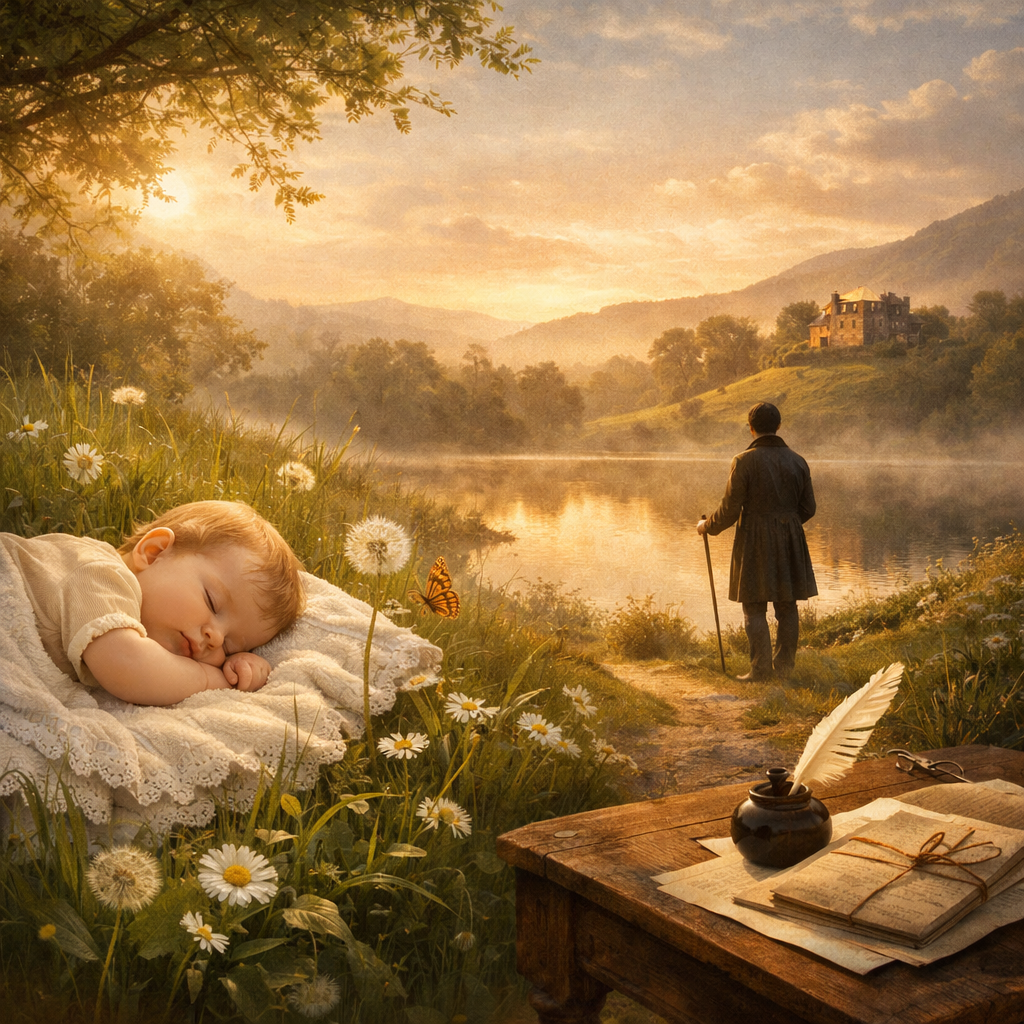
“When one subtracts from life infancy (which is vegetation), Source sleep, eating and swilling, buttoning and unbuttoning how much remains of downright existence? The summer of a dormouse.”
Explore More About Lord Byron
If you’re interested in learning more about Lord Byron and their impact on history, here are some recommended resources:
As an Amazon Associate, we earn from qualifying purchases.
This striking observation comes from the pen of Lord Byron, a man who lived more in his 36 years than most do in a lifetime. The quote is not from one of his epic poems. Instead, he shared this deeply personal and cynical thought in a letter. It captures a feeling many of us know well: the sense that life gets lost in the routine. Byron forces us to question how much of our time is truly spent living versus simply existing.
He masterfully uses a simple mathematical idea—subtraction—to make a profound philosophical point. Lord Byron – Poetry Foundation Let’s decode this powerful statement and see why it still resonates so strongly today.
Unpacking the Quote’s Core Message
Lord Byron begins by peeling away the layers of life we often take for granted. He dismisses infancy as mere “vegetation,” a time of growth without consciousness or true experience. Subsequently, he chips away at the mundane necessities that consume our days. These include sleeping, eating, and the endless small tasks like “buttoning and unbuttoning.”
Byron bundles these activities together as the cost of being alive, not life itself. They are the overhead of existence. After he removes all these automatic and repetitive actions, he poses a haunting question. What is actually left? His answer is both bleak and beautiful: “The summer of a dormouse.”
The Summer of a Dormouse
A dormouse is famous for its long hibernation. It sleeps for the majority of the year. Its active life, its “summer,” is incredibly brief. Therefore, Byron’s metaphor suggests that our moments of true, conscious, and meaningful existence are fleeting. They are short bursts of vibrant life surrounded by a long slumber of routine. This imagery is powerful because it highlights the precious and limited nature of our most valuable moments. It urges us to recognize and cherish them before we return to our figurative hibernation.
The Man Behind the Words
To fully grasp the quote’s weight, we must understand its author. Lord Byron was a leading figure in the Romantic movement. He was a man of immense passion, contradiction, and intellect. Known for his scandalous affairs and revolutionary politics, he lived life with an intensity that few could match. This quote offers a rare glimpse into his private, more melancholic thoughts.
He penned these words not for public performance but in a personal letter to his beloved half-sister, Augusta Leigh. Source This context makes the sentiment even more poignant. It reveals a man wrestling with the very nature of his existence, away from the public eye. His life was a whirlwind of travel, poetry, and passion. Yet, even he felt the heavy weight of life’s essential, yet unfulfilling, tasks.
Byron’s Cynicism in a Modern World
Does Byron’s 19th-century observation hold up today? Absolutely. In fact, it might be more relevant than ever. Our modern lives are filled with our own versions of “buttoning and unbuttoning.” We commute, answer emails, scroll through social media, and run errands. These tasks consume vast portions of our days.
Many people feel that their time is not their own. Research often explores how we allocate our hours. A significant percentage of our waking life is dedicated to work, chores, and other obligations, leaving little for genuine leisure or passion. For instance, if you consider an average day, the time spent on truly meaningful activities can feel surprisingly small. This modern predicament echoes Byron’s sentiment perfectly.
However, the quote is not just a statement of despair. It is also a powerful call to action. Byron’s words challenge us to identify and expand our own “summer.” They push us to seek out moments of “downright existence” amidst the routine. This could mean pursuing a passion, connecting deeply with loved ones, or simply being present in a moment of beauty. Ultimately, Byron reminds us that while life is fleeting, its value lies in the moments we choose to truly live.