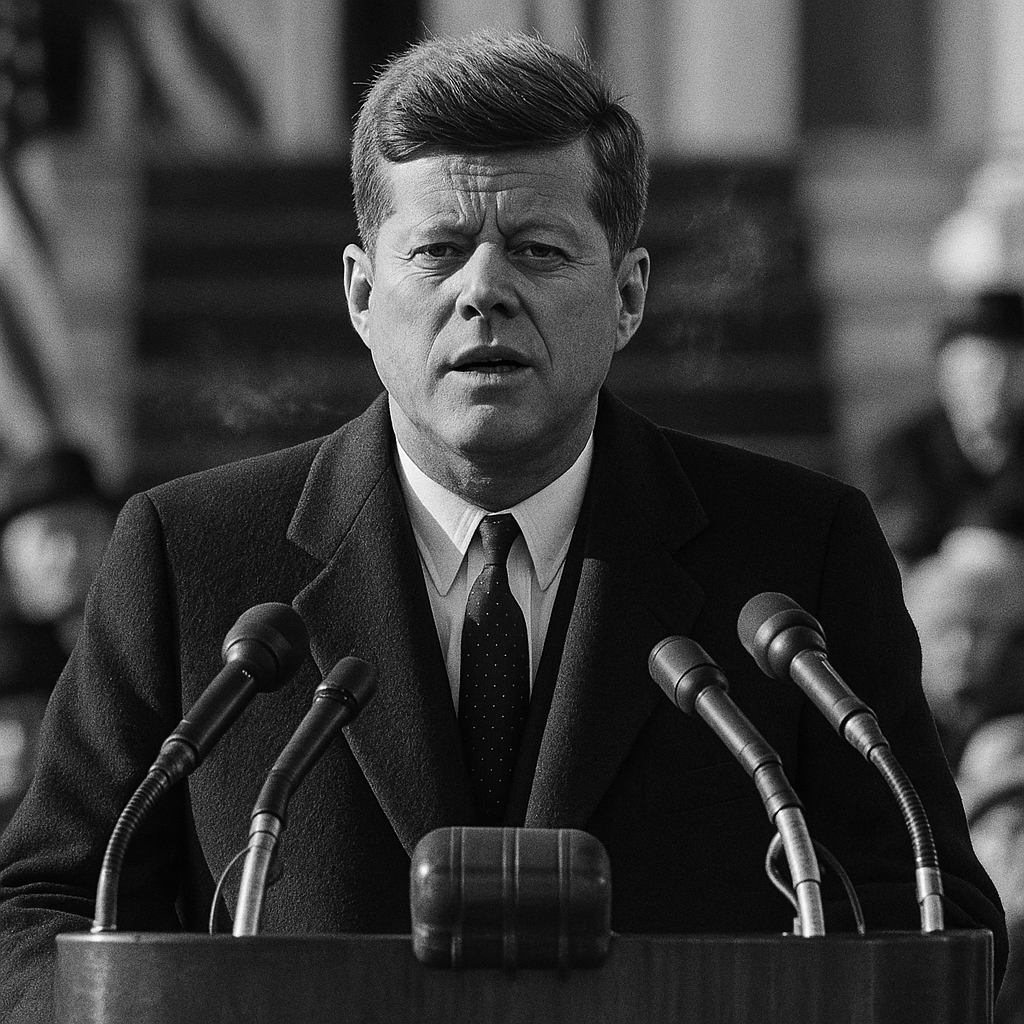
Few phrases in American history resonate as deeply as John F. Kennedy’s call to action. “And so, my fellow Americans: ask not what your country can do for you—ask what you can do for your country.” Delivered on a cold January day in 1961, these words defined a presidency and inspired a generation. The history of this quote is more than just a line in a speech; it is a story about a pivotal moment in time, a collaborative creative process, and an enduring vision for civic duty. It captures the essence of a new era, challenging citizens to look beyond their own interests toward a collective purpose.
A Nation on the Brink: The Context of the Call
To understand the quote’s power, we must first understand its setting. John F. Kennedy took the oath of office on January 20, 1961. The world was a tense and dangerous place. The United States and the Soviet Union were locked in the Cold War, a high-stakes ideological battle. The threat of nuclear annihilation felt terrifyingly real to many Americans. [citation: The Cuban Missile Crisis, which brought the world to the brink of nuclear war, would occur just one year later].
Kennedy’s address was not just for the American people. He was speaking to the entire world, including adversaries. He spoke of a new generation of Americans, “born in this century, tempered by war, disciplined by a hard and bitter peace.” His speech aimed to project strength, resolve, and a new kind of leadership. The famous line was the speech’s powerful climax. It shifted the focus from government promises to individual responsibility. This was a direct challenge to the perceived complacency of the 1950s and a call for active participation in the nation’s destiny.
The History of This Quote’s Origins
While Kennedy delivered the line with unforgettable conviction, he did not create it in a vacuum. The phrase was polished and perfected by his trusted speechwriter, Ted Sorensen. Kennedy and Sorensen worked closely on the inaugural address, with Kennedy providing the core themes and Sorensen crafting the elegant prose. Sorensen later acknowledged that the central idea was a recurring theme for Kennedy, one he had explored in various forms throughout his campaign. [citation: Ted Sorensen’s memoir “Counselor: A Life at the Edge of History” details his collaboration with JFK].
However, the sentiment itself has even deeper roots. Historians have traced similar phrases to several earlier sources. Kennedy’s headmaster at the Choate School, George St. John, often told students, “Ask not what your school can do for you; ask what you can do for your school.” [citation: Choate School historical records]. The line also echoes a sentiment from the Roman emperor Cicero and a 1916 Memorial Day address by Supreme Court Justice Oliver Wendell Holmes Jr. Furthermore, the writer Kahlil Gibran expressed a similar idea in his 1923 book The Prophet. Kennedy, a voracious reader, was likely familiar with these concepts, which he and Sorensen masterfully adapted for a national audience.
A Call for Service, Not Sacrifice
Kennedy’s message was fundamentally optimistic. He was not asking for blind sacrifice but for meaningful engagement. The quote served as the philosophical foundation for some of his administration’s most iconic programs. Just weeks after his inauguration, he established the Peace Corps by executive order. [citation: Executive Order 10924 establishing the Peace Corps was signed on March 1, 1961]. This program directly embodied the spirit of his words. It called on young Americans to serve their country by helping people in developing nations. Tens of thousands answered the call. [graph: Line chart showing the number of Peace Corps volunteers from its founding in 1961 through the end of the decade]. The Alliance for Progress, a program aimed at fostering economic cooperation in Latin America, also reflected this ideal of proactive service.
The Enduring Legacy of a Timeless Idea
The “ask not” line has since become one of the most famous quotes in modern history. It is etched into the American political consciousness. Presidents, politicians, and community leaders have referenced it for decades to inspire unity and public service. Its power lies in its simplicity and its universal appeal. The phrase transcends partisan politics. It speaks to a fundamental truth about the relationship between a citizen and their community.
In today’s world, the history of this quote continues to be relevant. It challenges every generation to consider its role in society. It encourages us to think about how we can contribute to the common good, whether through volunteering, community involvement, or public service. The message remains a powerful reminder that a strong nation is not built by what a government provides, but by what its citizens are willing to give.
A Nation on the Brink: The Context of the Call
To understand the quote’s power, we must first understand its setting. John F. Kennedy took the oath of office on January 20, 1961. The world was a tense and dangerous place. The United States and the Soviet Union were locked in the Cold War, a high-stakes ideological battle. The threat of nuclear annihilation felt terrifyingly real to many Americans. [citation: The Cuban Missile Crisis, which brought the world to the brink of nuclear war, would occur just one year later].
Kennedy’s address was not just for the American people. He was speaking to the entire world, including adversaries. He spoke of a new generation of Americans, “born in this century, tempered by war, disciplined by a hard and bitter peace.” His speech aimed to project strength, resolve, and a new kind of leadership. The famous line was the speech’s powerful climax. It shifted the focus from government promises to individual responsibility. This was a direct challenge to the perceived complacency of the 1950s and a call for active participation in the nation’s destiny.
The History of This Quote’s Origins
While Kennedy delivered the line with unforgettable conviction, he did not creat
Learn More About This Historical Period
To deepen your understanding of this historical period, consider these resources:
- An Unfinished Life: John F. Kennedy, 1917 – 1963
- JFK: Public, Private, Secret
- JFK: Coming of Age in the American Century, 1917-1956
- JFK and the Unspeakable: Why He Died and Why It Matters
- Profiles in Courage: JFK’s Pultizer Prize-Winning Classic
- John F. Kennedy: A Biography
- The House of Kennedy
- Five Days in November: In Commemoration of the 60th Anniversary of JFK’s Assassination
- JFK: Volume 1: John F Kennedy: 1917-1956
- Jacqueline Kennedy: Historic Conversations on Life with John F. Kennedy
- JFK Jr.: An Intimate Oral Biography
- JFK: The CIA, Vietnam, and the Plot to Assassinate John F. Kennedy
As an Amazon Associate, we earn from qualifying purchases.
e it in a vacuum. The phrase was polished and perfected by his trusted speechwriter, Ted Sorensen. Kennedy and Sorensen worked closely on the inaugural address, with Kennedy providing the core themes and Sorensen crafting the elegant prose. Sorensen later acknowledged that the central idea was a recurring theme for Kennedy, one he had explored in various forms throughout his campaign. [citation: Ted Sorensen’s memoir “Counselor: A Life at the Edge of History” details his collaboration with JFK].
However, the sentiment itself has even deeper roots. Historians have traced similar phrases to several earlier sources. Kennedy’s headmaster at the Choate School, George St. John, often told students, “Ask not what your school can do for you; ask what you can do for your school.” [citation: Choate School historical records]. The line also echoes a sentiment from the Roman emperor Cicero and a 1916 Memorial Day address by Supreme Court Justice Oliver Wendell Holmes Jr. Furthermore, the writer Kahlil Gibran expressed a similar idea in his 1923 book The Prophet. Kennedy, a voracious reader, was likely familiar with these concepts, which he and Sorensen masterfully adapted for a national audience.
A Call for Service, Not Sacrifice
Kennedy’s message was fundamentally optimistic. He was not asking for blind sacrifice but for meaningful engagement. The quote served as the philosophical foundation for some of his administration’s most iconic programs. Just weeks after his inauguration, he established the Peace Corps by executive order. [citation: Executive Order 10924 establishing the Peace Corps was signed on March 1, 1961]. This program directly embodied the spirit of his words. It called on young Americans to serve their country by helping people in developing nations. Tens of thousands answered the call. [graph: Line chart showing the number of Peace Corps volunteers from its founding in 1961 through the end of the decade]. The Alliance for Progress, a program aimed at fostering economic cooperation in Latin America, also reflected this ideal of proactive service.
The Enduring Legacy of a Timeless Idea
The “ask not” line has since become one of the most famous quotes in modern history. It is etched into the American political consciousness. Presidents, politicians, and community leaders have referenced it for decades to inspire unity and public service. Its power lies in its simplicity and its universal appeal. The phrase transcends partisan politics. It speaks to a fundamental truth about the relationship between a citizen and their community.
In today’s world, the history of this quote continues to be relevant. It challenges every generation to consider its role in society. It encourages us to think about how we can contribute to the common good, whether through volunteering, community involvement, or public service. The message remains a powerful reminder that a strong nation is not built by what a government provides, but by what its citizens are willing to give.