
Words possess immense power. They can capture a moment, define an era, or haunt generations. Few phrases demonstrate this more starkly than those born from the atomic age. These nuclear quotes encapsulate humanity’s greatest scientific achievement and its most terrifying existential threat. They began in the desolate sands of New Mexico and have since echoed through our politics, our art, and our deepest fears. This journey through nuclear language reveals how we have tried to comprehend the incomprehensible.
. Source
The Dawn of the Atomic Age
The story of nuclear quotes begins with one man: J. Robert Oppenheimer. As the scientific director of the Manhattan Project, he watched the first atomic bomb detonate on July 16, 1945. The moment overwhelmed him. He later recalled a line from the Hindu scripture, the Bhagavad Gita. Oppenheimer famously said, “Now I am become Death, the destroyer of worlds.” This quote captures the profound, almost spiritual, weight of his creation. It speaks to the immense responsibility and the tragic burden felt by the scientists who unlocked the atom’s power.
However, another, more visceral quote emerged from the same test. Kenneth Bainbridge, the director of the Trinity test, had a simpler reaction. He turned to Oppenheimer and said, “Now we are all sons of bitches.” Bainbridge’s blunt statement provided a stark contrast to Oppenheimer’s poetic reflection. It grounded the terrifying event in a raw, human reality. Together, these two quotes represent the dual nature of the atomic bomb. It was both a philosophical turning point and a brutal new weapon.
The Cold War and the Language of Fear
After World War II, the world entered the Cold War. The United States and the Soviet Union engaged in a tense standoff. Consequently, the language surrounding nuclear weapons shifted from scientific awe to political strategy and public anxiety. The term “mutually assured destruction,” or MAD, perfectly defined the era. This doctrine held that a full-scale use of nuclear weapons by two opposing sides would cause the complete annihilation of both. The acronym itself, MAD, became a grimly ironic summary of the world’s precarious situation.
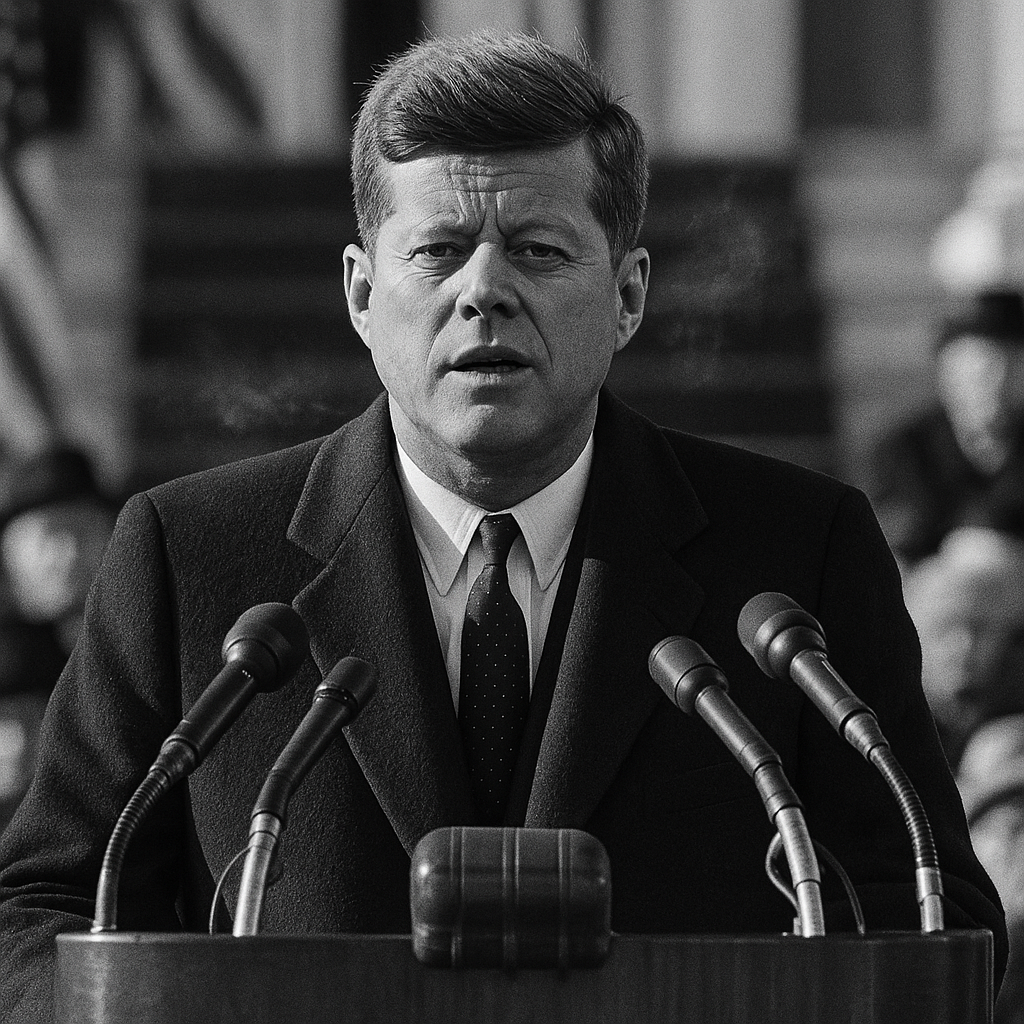
Leaders’ words carried enormous weight. President Dwight D. Eisenhower tried to pivot the narrative with his “Atoms for Peace” initiative. He hoped to promote peaceful uses of nuclear energy. In contrast, the Cuban Missile Crisis in 1962 brought the world to the brink of nuclear war. President John F. Kennedy’s televised addresses during the crisis became defining moments of the age. Meanwhile, citizens lived with constant fear. . This anxiety fueled public safety campaigns, like the infamous “Duck and Cover” films, which taught children to hide under their desks in case of an attack. Source
. Nuclear Films – Atomic Heritage Foundation
Nuclear Nightmares on the Silver Screen
Filmmakers and writers quickly began to explore the cultural fallout of the atomic age. They used fiction to process the collective anxiety that politicians struggled to contain. Stanley Kubrick’s 1964 film Explore More About Oppenheimer
- American Prometheus: The Inspiration for the Major Motion Picture OPPENHEIMER
- J. Robert Oppenheimer: The Complete Biography on the Father of the Atomic Bomb and His Enduring Legacy in Science, Ethics, and Nuclear Physics
- General and the Genius: Groves and Oppenheimer – The Unlikely Partnership that Built the Atom Bomb (World War II Collection)
- Robert Oppenheimer: A Life Inside the Center
- Oppenheimer: The Official Screenplay
- Oppenheimer: Portrait of an Enigma
- Judy Blume: A Life
- Robert Oppenheimer : Biography for kids and beginners
- Robert Oppenheimer: Letters and Recollections (Stanford Nuclear Age Series)
- Robert Oppenheimer: A Life from Beginning to End
- Oppenheimer and the Atomic Bomb: Young Readers Edition of AMERICAN PROMETHEUS: The Triumph and Tragedy of J. Robert Oppenheimer
- J. Robert Oppenheimer: A Life
As an Amazon Associate, we earn from qualifying purchases.
rrer noopener”>Dr. Strangelove or: How I Learned to Stop Worrying and Love the Bomb is perhaps the most famous example. The film satirized the logic of nuclear deterrence. Its absurd dialogue produced some of the most memorable quotes on the subject, such as, “Gentlemen, you can’t fight in here! This is the War Room!” The movie exposed the terrifying irrationality behind the era’s political and military doctrines.
From Cold War Thrillers to Sci-Fi Epics
Other films tackled the topic with more seriousness. The 1983 movie WarGames captured the growing fear of automated warfare. A young hacker accidentally triggers the U.S. nuclear defense system. The computer, after running countless simulations, delivers the film’s iconic conclusion: “A strange game. The only winning move is not to play.” This line became a simple, powerful anti-war statement. Furthermore, the Terminator franchise used a nuclear holocaust, “Judgment Day,” as the catalyst for its story. The series offered a message of human agency with the line, “There is no fate but what we make for ourselves,” suggesting that humanity could still avoid self-destruction.
. WarGames (1983) – Internet Movie Database
The Legacy in Modern Pop Culture
The Cold War may be over, but its nuclear shadow lingers in our culture. Video games, in particular, have become a new medium for exploring post-apocalyptic themes. The Fallout series is a prime example. Set in a world ravaged by nuclear war, the game’s famous opening line resonates deeply: “War. War never changes.” This quote connects the futuristic, ruined landscape of the game back to the fundamental human conflicts that led to its destruction. It suggests that technology evolves, but human nature remains a constant threat.
Even today, as new global tensions rise, these historical quotes regain their relevance. The 2023 film Oppenheimer brought the origin story of the atomic bomb to a new generation. It renewed interest in the man and his haunting words. The enduring presence of these quotes in our media proves their lasting power. They serve as cultural touchstones, reminding us of the immense stakes of our technological progress and the fine line between innovation and annihilation. Ultimately, they are a permanent part of our global vocabulary, a chilling reminder of a power we can never truly control.