
> “When I was growing up, there were no women in orchestras. Auditioners thought they could tell the difference between a woman playing and a man. Some intelligent person devised a simple solution: Drop a curtain between the auditioners and the people trying out. And, lo and behold, women began to get jobs in symphony orchestras.”
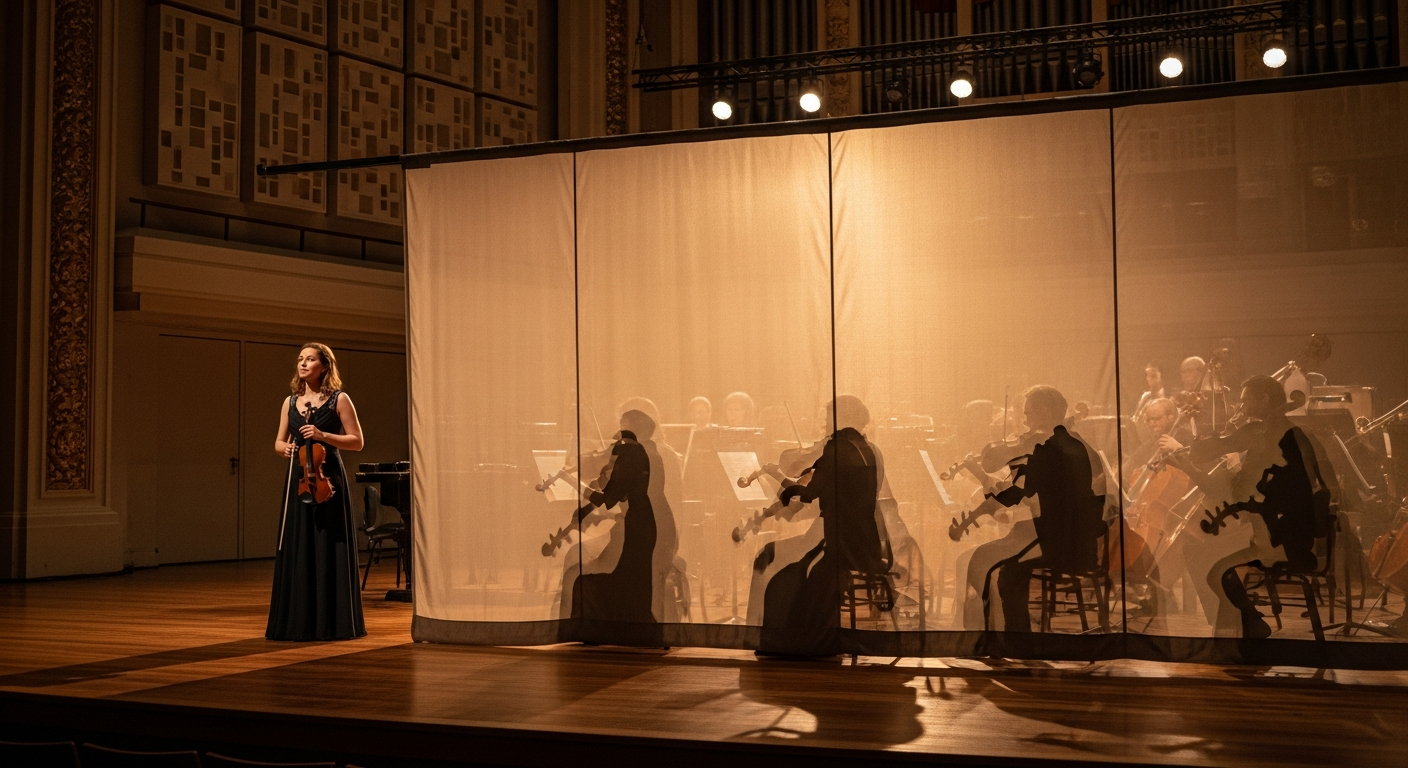
Justice Ruth Bader Ginsburg delivered these powerful words during numerous speeches throughout her career. The quote captures a pivotal moment in American music history. It also reflects her broader philosophy about gender discrimination and merit-based evaluation.
This statement references the practice of blind auditions in orchestras. The innovation transformed classical music hiring practices. Moreover, it became a cornerstone example in discussions about unconscious bias.
Ruth Bader Ginsburg grew up during the 1940s and 1950s. During this era, major orchestras rarely hired women musicians. [citation: In the 1950s, women comprised less than 5% of major symphony orchestra members in the United States] The music world operated under deeply entrenched assumptions about gender and musical ability.
Orchestra conductors and hiring committees believed they could identify superior male musicianship. They claimed men possessed greater physical strength for certain instruments. Additionally, they argued that men brought more emotional depth to performances. These beliefs persisted despite lacking any scientific foundation.
The young Ginsburg witnessed this discrimination firsthand. She attended concerts and observed the absence of women on stage. This observation shaped her understanding of systemic bias. Furthermore, it influenced her later work as a lawyer and judge.
The solution Ginsburg references emerged gradually during the 1970s and 1980s. Several orchestras began experimenting with blind auditions. They placed screens between performers and judges. Consequently, audition panels could only hear the music, not see the musician.
The results proved revolutionary. Women suddenly began winning positions at unprecedented rates. The change demonstrated that previous hiring practices reflected bias, not merit. Indeed, the screens removed the opportunity for prejudice to influence decisions.
Some orchestras went even further with their protocols. They asked musicians to remove their shoes. This prevented judges from hearing the sound of high heels. Such attention to detail shows how seriously orchestras took the blind audition process.
Ginsburg used this example throughout her judicial career. She frequently included it in speeches about gender equality. The quote appears in numerous interviews and public addresses from the 1990s onward.
One notable instance occurred during her Supreme Court confirmation hearings in 1993. She referenced orchestra auditions when discussing discrimination. The example resonated with senators and the public alike. It provided a clear, concrete illustration of unconscious bias.
Subsequently, Ginsburg repeated this story in various contexts. She used it in university commencement addresses. She also included it in conversations about workplace equality. The orchestra example became one of her signature teaching tools.
The blind audition story represents more than just music history. It demonstrates how simple procedural changes can address systemic discrimination. The curtain removed subjective judgments based on appearance. Therefore, it allowed talent to speak for itself.
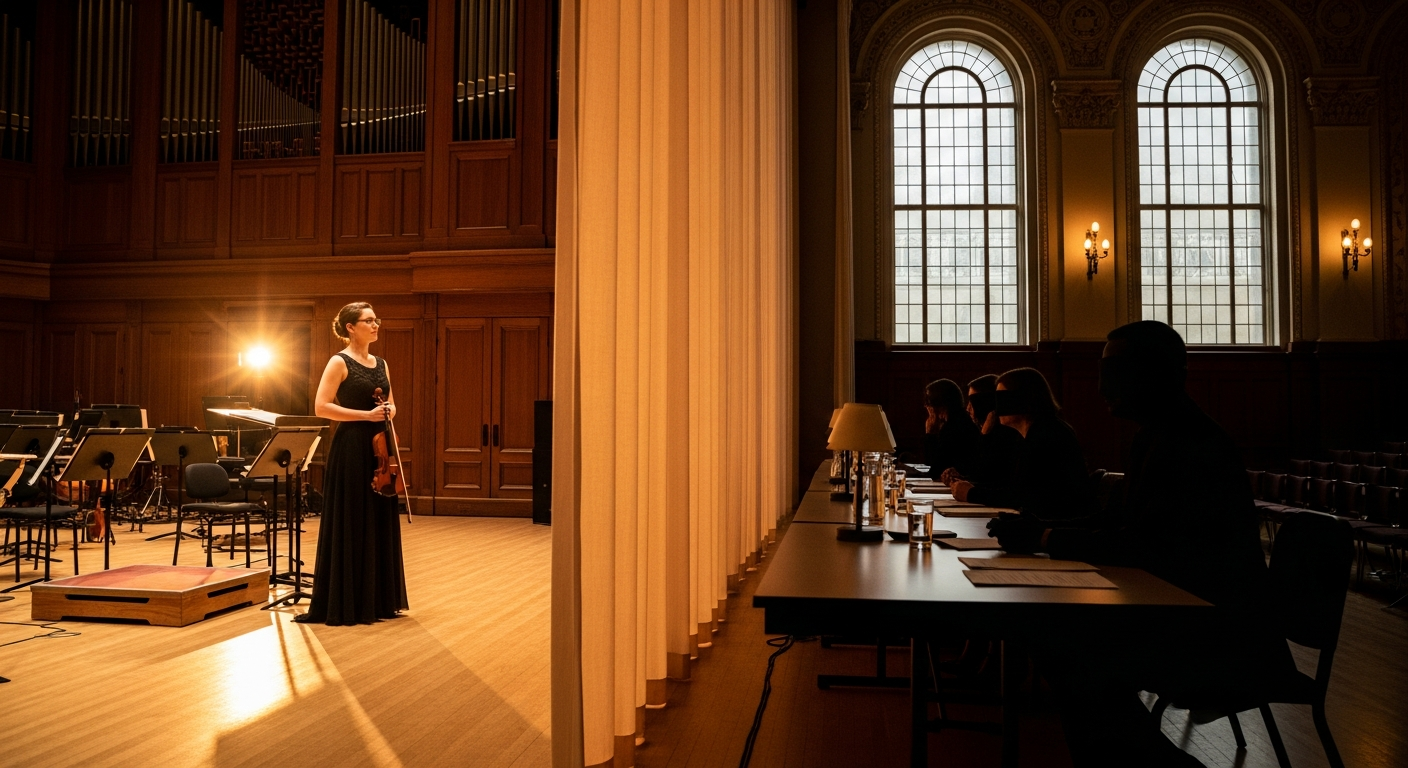
This approach influenced thinking across many fields. Corporate hiring managers began reconsidering their interview processes. Academic institutions examined their faculty selection methods. The orchestra example provided a replicable model for reducing bias.
Moreover, the story highlights the importance of evidence-based solutions. The curtain didn’t require changing people’s minds first. Instead, it changed the process and let results speak for themselves. This pragmatic approach appealed to Ginsburg’s legal sensibilities.
Scholars have extensively studied the impact of blind auditions. Research confirms that the practice significantly increased female representation. [citation: Studies show that blind auditions increased the probability of women advancing from preliminary rounds by 50%]
Economists and sociologists have analyzed orchestra hiring data. They compared periods before and after blind audition implementation. The statistics clearly show a dramatic shift in outcomes. Women’s representation in major orchestras rose from single digits to nearly 40% over several decades.
However, some researchers note that progress hasn’t been uniform. Certain instrument sections still show gender disparities. Nevertheless, the overall trend demonstrates the effectiveness of blind evaluation methods.
As a lawyer and judge, Ginsburg saw parallels between orchestras and courtrooms. She advocated for removing irrelevant factors from decision-making. Gender, race, and other characteristics should not influence judgments about capability.
The orchestra example illustrated the concept of disparate impact. Seemingly neutral practices can produce discriminatory outcomes. When orchestras changed their procedures, they eliminated hidden barriers. This aligned perfectly with Ginsburg’s legal philosophy.
Furthermore, the story demonstrated that discrimination often operates unconsciously. The audition panels didn’t necessarily intend to discriminate. Yet their decisions reflected ingrained biases. The curtain addressed this problem without requiring admission of wrongdoing.
Ginsburg told this story in slightly different ways over the years. Sometimes she emphasized the historical timeline more strongly. Other times she focused on the results. However, the core message remained consistent throughout.
Other speakers and writers have borrowed this example. It appears in books about workplace diversity and unconscious bias. Malcolm Gladwell discussed blind auditions in his book “Blink.” The example has become widely recognized beyond legal circles.
Occasionally, people misattribute the quote or misstate the details. Some versions incorrectly describe when blind auditions began. Others exaggerate the immediate impact. Nevertheless, the fundamental story remains accurate and powerful.
This statement encapsulates several of Ginsburg’s core beliefs. First, it shows her commitment to meritocracy. She believed people should succeed based on ability, not demographics. The blind audition perfectly embodied this principle.
Second, the quote reveals her strategic thinking about social change. Ginsburg often favored incremental, practical reforms over revolutionary demands. The curtain represented exactly this type of achievable intervention.
Third, the story demonstrates her optimism about progress. The phrase “lo and behold” conveys pleasant surprise at positive outcomes. Ginsburg believed that removing barriers would naturally reveal women’s capabilities. She trusted that merit would prevail given fair conditions.
Today, organizations across industries apply blind evaluation principles. Technology companies remove names from resumes during initial screening. Academic journals conduct blind peer review. These practices stem from the same logic as orchestra auditions.
However, implementation challenges persist. Complete anonymity proves difficult in many contexts. Video interviews and in-person meetings eventually reveal candidate identities. Therefore, organizations must address bias at multiple stages.
Additionally, some critics argue that blind processes ignore relevant context. They suggest that diversity goals require considering candidate backgrounds. This tension between blindness and awareness continues to generate debate. Nevertheless, Ginsburg’s orchestra example remains influential in these discussions.
Ginsburg’s orchestra story has achieved iconic status in discussions about equality. It appears in textbooks, training materials, and popular media. The example provides an accessible entry point for understanding systemic discrimination.
Young people learning about civil rights often encounter this quote. It helps them grasp abstract concepts through concrete illustration. Teachers appreciate its clarity and historical grounding. Moreover, the story avoids accusatory language while making a powerful point.
The quote also serves as a reminder of how recently these changes occurred. The widespread adoption of blind auditions happened within living memory. This recent timeline underscores how much progress remains possible. It also highlights how entrenched discrimination was just decades ago.
Ruth Bader Ginsburg’s observation about orchestra auditions captures a transformative moment in American cultural history. The simple innovation of a curtain exposed decades of gender bias. More importantly, it provided a practical solution that produced measurable results.
This quote exemplifies Ginsburg’s approach to equality and justice. She favored evidence-based interventions over mere rhetoric. She believed in creating systems that prevented discrimination rather than simply condemning it. The orchestra story perfectly illustrates these principles in action.
Today, the quote continues inspiring efforts to reduce bias across society. It reminds us that structural changes can produce dramatic improvements. Furthermore, it demonstrates that progress often requires questioning long-held assumptions. The women who finally won orchestra positions didn’t suddenly become better musicians. Instead, the evaluation process finally became fair enough to recognize their talent.
Explore More About Ruth Bader Ginsburg
If you found this quote inspiring, you might enjoy these products related to Ruth Bader Ginsburg:
- The Unemployed Philosophers Guild Ruth Bader Ginsburg Doll – 12″ Soft Stuffed Plush Little Thinker – $24.95
- Bleacher Creatures Ruth Bader Ginsburg 10″ Plush Figure- The RBG Icon for Play or Display – $24.99
- The Unemployed Philosophers Guild Ruth Bader Ginsburg Magnetic Personality – Plush Finger Puppet and Refrigerator Magnet, Approx 4″ Tall – $9.95
- Feminist Wood Plaque Gift, Women Belong In All Places Where Decisions Are Being Made, Plaque with Wooden Stand, Wood Sign Plaque Gift, Ruth Bader Ginsburg, RBG Woman’s Rights B1 – $7.99
- Feminist Wood Plaque Gift – RBG Woman’s Rights, Wood Sign Gift with Stand – $9.99
As an Amazon Associate, we earn from qualifying purchases.